Everywhere you look, the superiority and singularity of human intelligence is being challenged. When it’s not engineers claiming that machines will soon ridicule our brains, it’s cognitive ethology informing us that non-human animals possess skills once thought to be the prerogative of humans. And over the past few years, plant neurobiology and other fields of botanical inquiry have been nibbling at our cognitive supremacy. Plants are able to analyse information, learn and solve problems. Plants radically different way of being in the world not only radically changes the view of the plant kingdom, it also
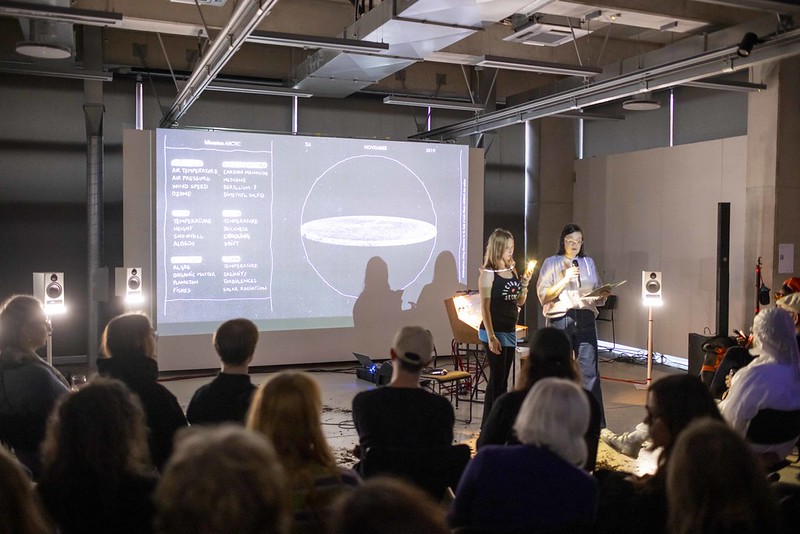
Day 1, Oct 17. RIXC Art Science Festival 2025: Plants Intelligence. Photo: Didzis Grodzs
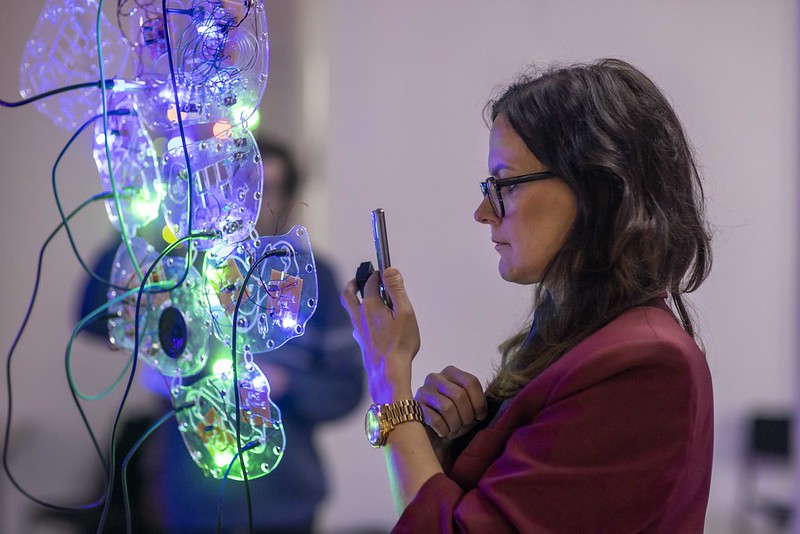
Opening Day, Oct 16. RIXC Art Science Festival 2025: Plants Intelligence. Art Academy of Latvia. Photo: Didzis Grodzs
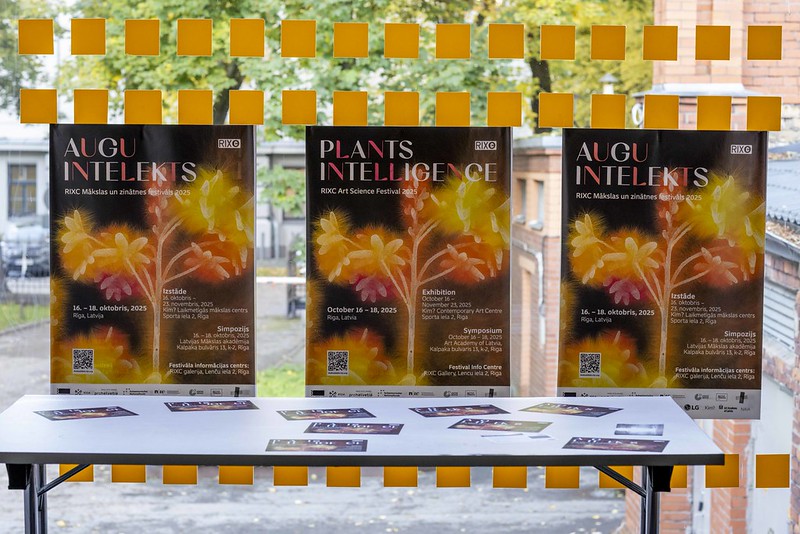
Day 1, Oct 17. RIXC Art Science Festival 2025: Plants Intelligence. Photo: Didzis Grodzs
This year, Riga-based RIXC Center for New Media Culture not only celebrated its 25th anniversary, it also dedicated the theme of its festival to Plants Intelligence. The exhibition, symposium, screenings and workshops called upon the fields of art, science, ecology and philosophy to explore how vegetal life challenges the way we think and inhabit the planet.
Rather than focus solely on the cognitive capabilities of plants, the event also probed into the agency and political significance of plants. What can plants teach us in the context of the climate and ecological catastrophe? What is the untapped critical and creative potential of plants? What are the ethical and social consequences of our cultural marginalisation of plants?
The RIXC festival theme was developed in collaboration with Yvonne Volkart and her research project Plants_Intelligence. Learning Like a Plant at the Institute Art Gender Nature HGK Basel FHNW, which has investigated how plant ‘thinking’ and vegetal intelligence can inspire new methods, knowledge and aesthetic approaches in both lifestyle change and the arts. The recordings of the symposiums are online (Plants Intelligence Symposium. RIXC Festival 2025 and Plants Intelligence Symposium. RIXC Festival. Day 2) but i’ve written down a few notes from some of (my favourite parts of) the talks:
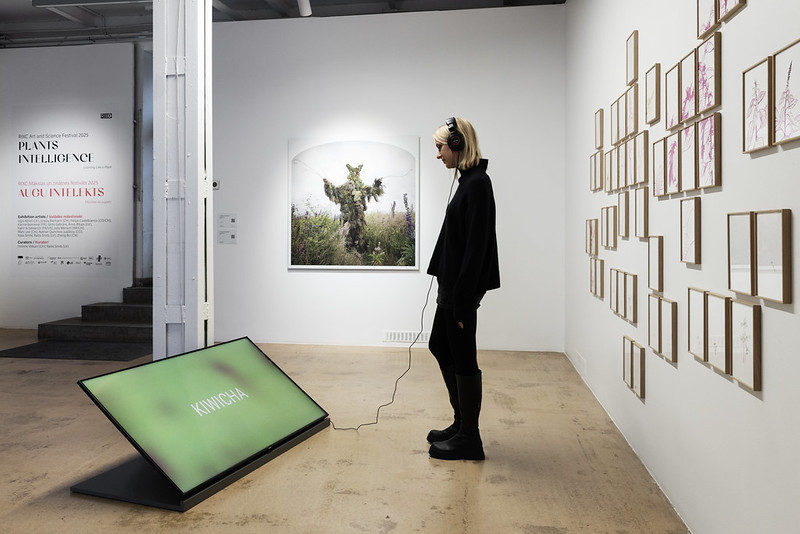
Julia Mensch, Field Drawings, part of Amaranth as Political Agent, 2023–2025. RIXC Art Science Festival 2025: Plants Intelligence Exhibition. Photo: Kristīne Madjare
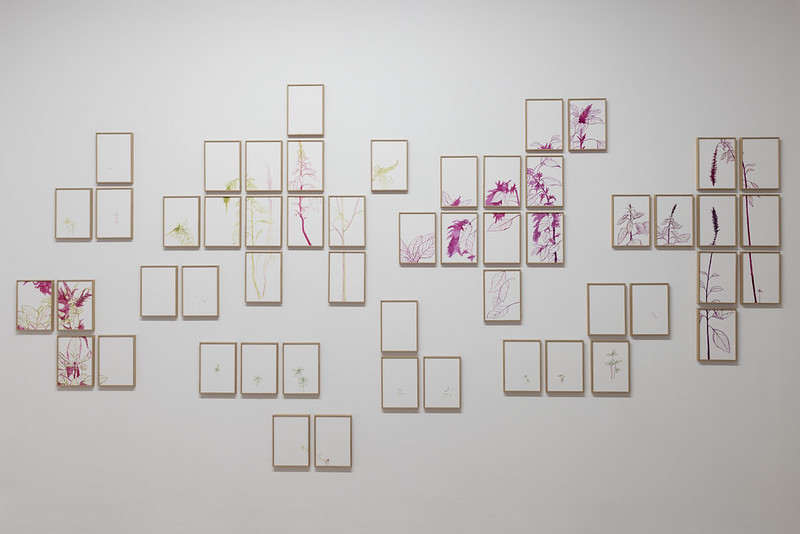
Julia Mensch, Field Drawings, part of Amaranth as Political Agent, 2023–2025. RIXC Art Science Festival 2025: Plants Intelligence Exhibition. Photo: Kristīne Madjare
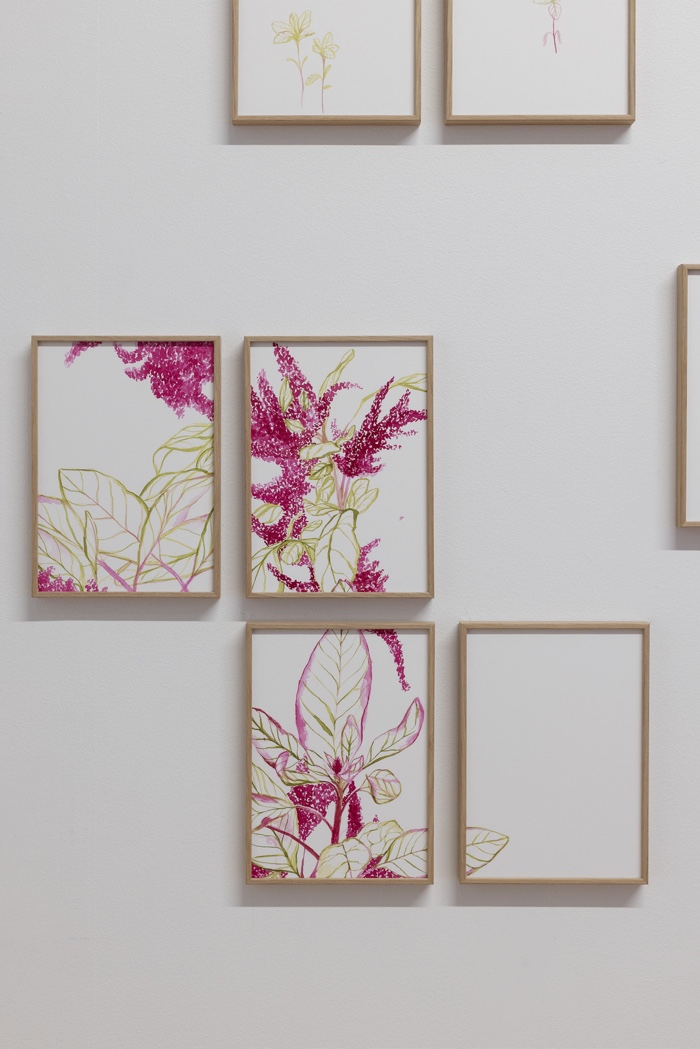
Julia Mensch, Field Drawings, part of Amaranth as Political Agent, 2023–2025. RIXC Art Science Festival 2025: Plants Intelligence Exhibition. Photo: Kristīne Madjare
Julia Mensch presented Amaranth as Political Agent, a research project that explores the political agency of amaranth, based on her fieldwork in Argentina and close observation of its vegetal behaviour. To accompany her research, the artists also made field drawings of the amaranth plant, her “vegetal companion”. She eschews technology because, she says, hand drawing helps her recover the human perceptivity we used to have. Her research scrutinises the implementation and consequences of the neo-extractivist model of transgenic agriculture in Argentina since 1996, the year that the first genetically modified crop was released for commercialisation in Latin America. It was the 40-3-2 Roundup Ready soybean, a crop resistant to the herbicide glyphosate.
GMO agriculture has found in amaranth a formidable opponent in Argentina (and elsewhere in America.) Also known as kiwicha, aroma, and colorado, this very nutritious perennial plant is native to the continent. During the invasion of the Americas, the Spanish attempted to banish it because the plant played a prominent role in religious ceremonies. Despite the interdiction to grow amaranth, indigenous people preserved and shared its seeds until it was safe again to grow the plant. Today, very few people cultivate amaranth in Argentina. Yet, the plant can be found in abundance in millions of hectares of monoculture GM crops.
A new glyphosate-resistant strain of amaranth has appeared that cannot be killed by any agrotoxin. It mutates so fast that agents of transgenic agriculture cannot develop chemicals fast enough to eradicate amaranth. Its uncontrollable spread causes great reduction in soybean yields. The neuroscientist and environmental activist Andrés Carrasco called amaranth “America’s revenge”.
Glyphosate was engineered to erase every life in the soil, except the ones grown in labs to resist. According to their proponents, GMOs would be a perfect tool in the fight against hunger. The irony is that, to achieve this, they kill other plants that could provide nutritional food.
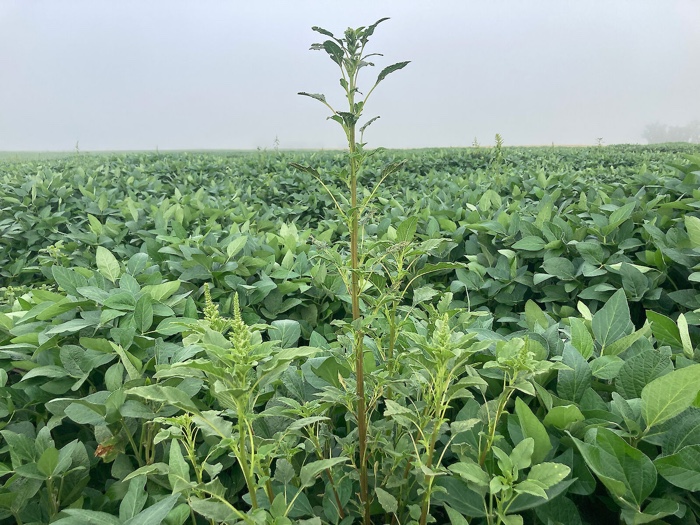
Julia Mensch, Polyculture (amaranth colorado & GM soybeans). Photo taken during field research for the project Amaranth as Political Agent, 2022–2025
Through its development of mechanisms to resist the agrochemicals used in GM crop production, amaranth transforms the landscape of soybean monoculture and disrupts the homogeneity that capital purports to achieve. This model of agriculture has an impact on the diversity of insects and other animals too. Mensch explained that the smell of GM soybean plants, for example, is far less intense than the smell and aroma of non-GM soybeans. Insects presents in a field of GM soybeans are attracted by the presence of the amaranth, not by the soy.
Mensch sees in the agro-industrial model a continuation of the terricide that began with Spanish colonisation, further entrenching .
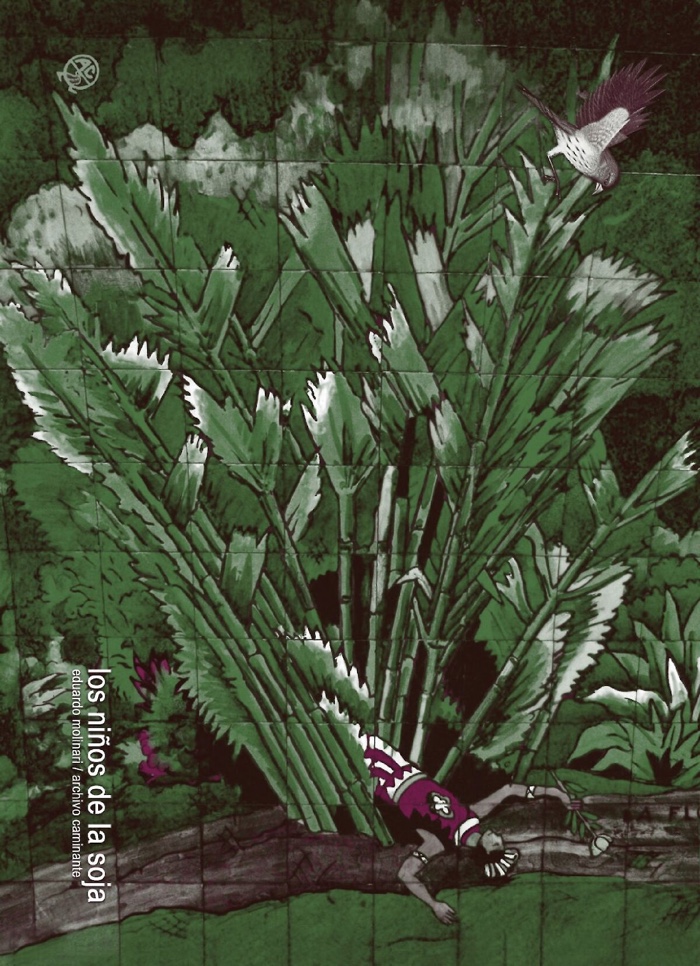
Eduardo Molinari, Los niños de la soja, book cover
In her keynote, Noelia Billi, a doctor in philosophy and a researcher at Universidad de Buenos Aires, exposed the ambiguities of the expression open-air laboratory.
A space where technoscience ecology and politics intersect, the “open-air lab” evokes curiosity and experimentation but also the violence of dispossession, exposure and extraction. In Latin America especially, the expression carries a specific weight. In Argentina, for example, mainstream media used the expression to describe a double reality. On the one hand, the biodiversity of wetlands and forests that are celebrated as natural laboratories where nature experiments on itself. On the other hand, the genetically modified soybean fields that surround rural communities who denounce the unpleasant aspects of living inside a massive open-air experiment.
What does this ambivalence say about our contemporary moment, where the boundaries between environment and lab have become porous?
Experimentation has never been neutral: it is distributed unevenly across the world and frequently imposed across inherited colonial and economical geographies. Some bodies and territories become privileged sites of knowledge production, while others are reduced to mere subjects of experimentation.
The more we claim to study the environment, the more we participate in its reconfiguration. The earth becomes an experimental surface monitored, optimised and rearranged through instruments of measurement, data and control but also counter-practices that unfold within and against the open-air laboratory regime. These practices turn exposure into attention, observation into resonance and measurement into care.
Billi revisited the history of agriculture as a technological practice and form of thought to help us understand how the open-air lab has become the dominant mode of world organisation. She explained that modern philosophy and modern science are rooted in what Timothy Morton calls agrilogistics. Agrilogistics thrives on the predictability of the environment, on controlling contingency through planning of the field. In this framework, the field becomes a prototype for modern rationality, a grid where variability is tamed and time synchronised. In Latin America, the has radicalised this logic, amplifying its reach through .
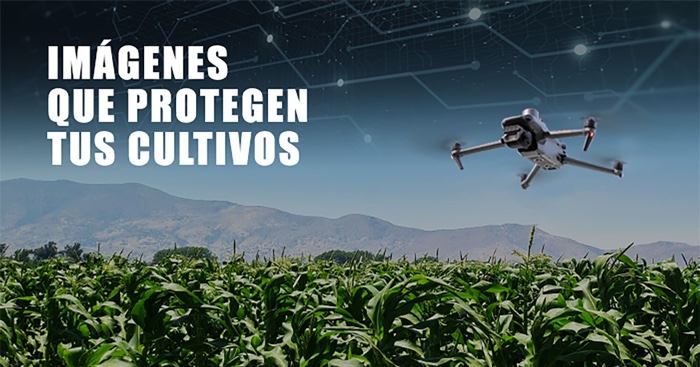
Imágenes que protegen tus cultivos (images that protect your crops), image to the article by Marco Acosta/ASDRONES: Agricultura de precisión con drones. Prácticas agrícolas más eficientes y sustentables (Precision Agriculture with Drones: More Efficient and Sustainable Farming Practices), on the website Portal Fruticola
The open-air laboratory model extends the agrologistical programme into the atmosphere where it is monitored by satellites, drones and predictive algorithms. It uses the same logic of optimisation to govern every element, including weather patterns. This expansion is also aesthetics, as it influences how we see the world. Aerial imagery, for example, is not neutral; it produces a perspective of mastery, it transforms seeing into a form of planning. In this regime, plants are no longer beings that grow; they are indicators, parameters or units of measurement. It’s an aesthetic of uniformity that equates visibility with control.
In Latin America, the open-air laboratory model has recast territories as both production sites and contested epistemological battlegrounds: monocultures of perception that systematically efface heterogeneity.
Artistic and ecological counter-practices can reintroduce rhythm and difference, re-attune us to the vegetal and recover the unprogrammable dimension of life through other modes of relation and attention.
Even the transgenic soybean plant, standardised to perform in global logistics, maintains residual agency. It mutates, adapts and records its environment. The GM plant is not a mere victim of technoscience but also a witness and participant.
Billi also talked about the “artefact sensorium”, a system of perception in which biological and technological agencies are intertwined. In Latin America, the air, the soil and the seeds are monitored by systems that belong to distant corporations. They become part of a global system of data and control.
What happens when growth becomes an algorithmic function? Can we imagine algorithms that learn from the indeterminacy of matter rather than seek to eliminate it? These questions have concrete implications for how we understand art and technology.
Life itself has always been technical. Photosynthesis, for example, is a natural technology that converts light into energy. The vegetal and the technical share common ground: both are modes of translation and forms of transformation. Every root is a sensor, every leaf a solar interface, every seed a storage device of potential.
To think with plants, Billi concluded, is to acknowledge that life itself is technical, that technicality is not an invention of modernity but a property of matter in relation. The problem is not the existence of technology but the narrowness of our imagination of what technology can, may or should be. Vegetal techniques propose another imagination, one that learns from the temporalities, sensititivities and relational capacities of plants.
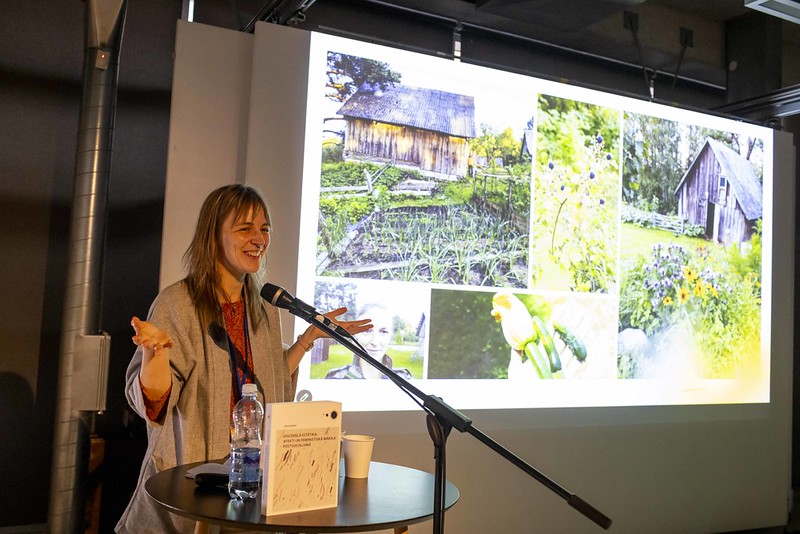
Opening Day, Oct 16. RIXC Art Science Festival 2025: Plants Intelligence. Art Academy of Latvia. Photo: Didzis Grodzs
Jana Kukaine, a scholar of feminist theory and feminist art and a senior researcher and lecturer at Riga Stradiņš University, presented the concept of feral intimacy. Developed in collaboration with Zita Kārkla, feral intimacy frames walking in the forest as a feminist act.
Her analysis of the gendered perception of the forest was particularly compelling. In traditional Western culture, the forest is not a place for decent women. They are too domesticated for such an unruly space. Only women who eschew their domestic roles go to the forest: the widows, the unmarried and childless women, or those deemed economically independent or possessing knowledge of alternative healing practices. These are the very women history once branded as witches. Likewise, leisure time and walking-based activities, especially if performed alone, have historically been denied to women, who were encouraged to stay indoors.
Forest walks have traditionally been reserved for men. Yet, for some women, forests have become a place of affective resistance and change of perspective. The intimate relationship between women and the forest challenges and unsettles traditional notions of domesticated femininity. Kukaine and Kārkla call this form of intimacy feral because it engenders unruly feminine subjects who resist cultural definitions of the “clean and proper” identity of womanhood; an identity often shaped by domestic and familial roles and encapsulated in Virginia Woolf’s concept of the “angel of the house”.
For more details about Kārkla and Kukaine’s research, check out their paper Feral Intimacy: Feminist Transformations Through Solitary Forest Walks.
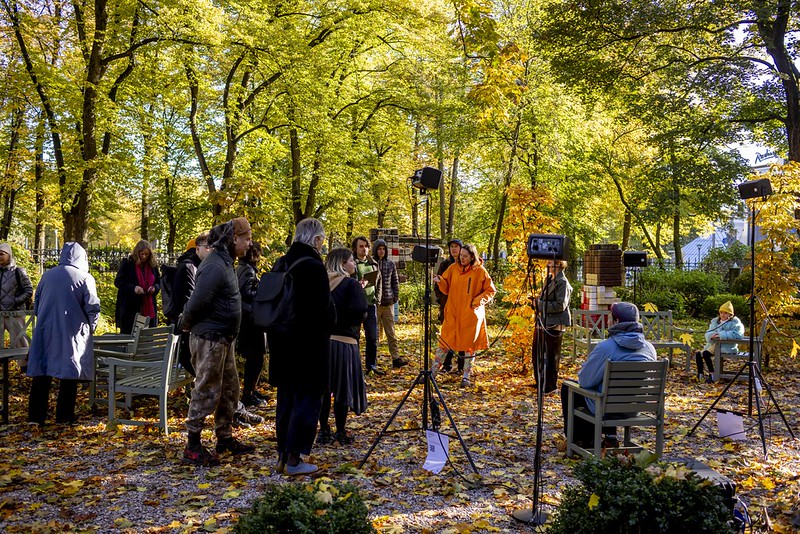
Day 2, Oct 18. RIXC Art Science Festival 2025: Plants Intelligence. Photo: Didzis Grodzs
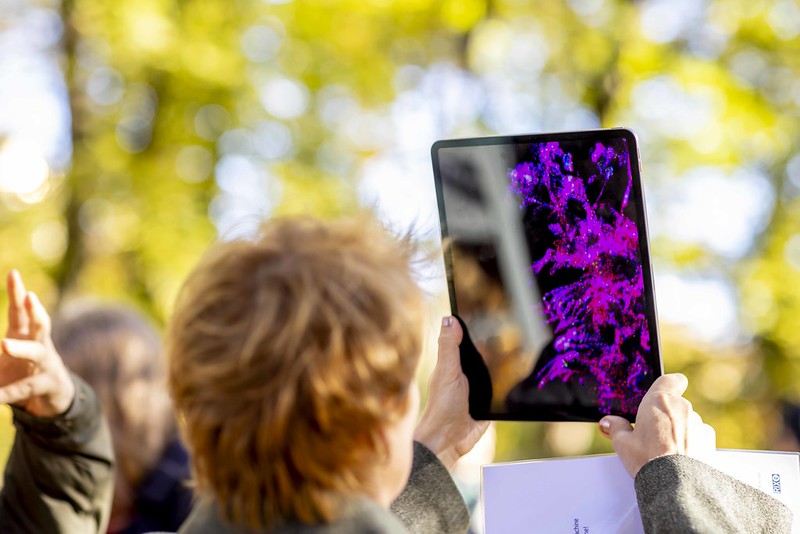
Day 2, Oct 18. RIXC Art Science Festival 2025: Plants Intelligence. Photo: Didzis Grodzs
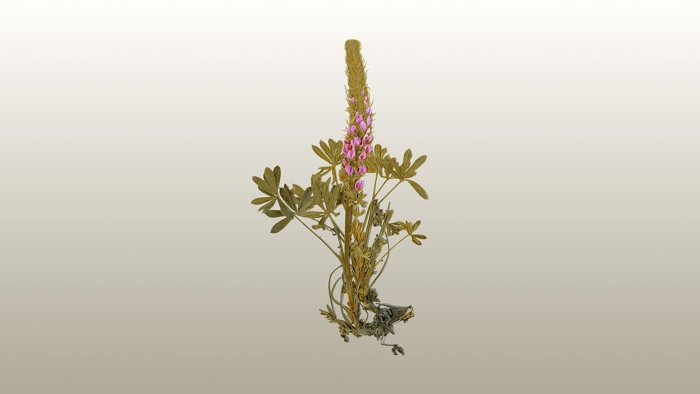
Rasa Smite and Raitis Smits, AI Herbarium. Inventors of Their Own Existence, 2025, still
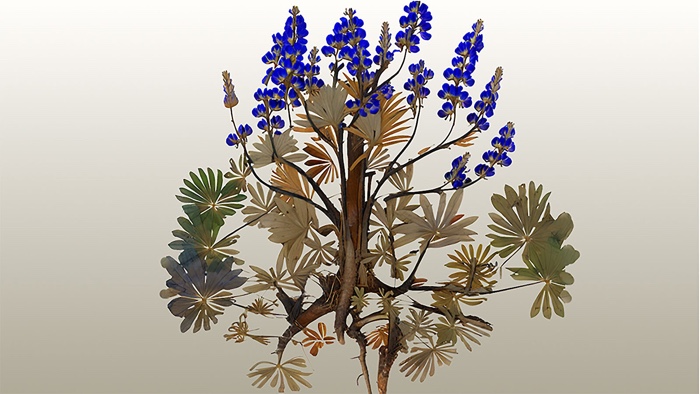
Rasa Smite and Raitis Smits, AI Herbarium. Inventors of Their Own Existence, 2025, still
“I argue that science would be much richer if it were multisensory,” said philosopher of science and technology Don Ihde. The quote guided Light Resonances, exploring plant-Light Interactions through Augmented Data, a collaboration between Raitis Smits, Krista Dintere, Rasa Smite and Patrick Borgeut.
According to Smite, we are moving from beautiful data to multisensory, emotion-evoking experiences. In an environment where everything is “datafied”, the task of the designer is make the subtle and the difficult visible and to show the complexity of the environment. It is only by bringing vast amounts of data to a human scale that we can communicate knowledge and contribute to a kind of “climate imagination” that gives us novel perspectives on climate change.
I was particularly fascinated by Rasa Smite and Raita Šmits’ works on lupins. Their AI Herbarium, for example, uses AI/ML models trained on herbarium specimens of wild Andean lupins, a plant with an incredible ability to adapt and diversify. The artistic experiment attempted to simulate past evolutionary patterns of the flowering plant and create speculative visions of how future lupin species might evolve in the era of accelerating anthropogenic climate change. As Smite concludes in her essay, the project could open new ground for understanding the role of plasticity in plant adaptation (in an evolutionary sense) today. By visualizing flowering plants’ efforts to survive through floral diversification as a key strategy, this study suggests that flowers’ intelligent behavior—plastic responses across their lifespans—may play a more essential role in longer-term survival than previously thought.
I’ll end with my notes on the Symbiotic Futures sessions which presented SensUs, a Baltic-Nordic network of organisations that explore sustainable art practices to address climate-related challenges.
Julijonas Urbonas, Lawn Centrifuge, a hybrid of kinetic land art, an asttrobotanical machine and a green amusement rise for everyone including plants, humans and insects
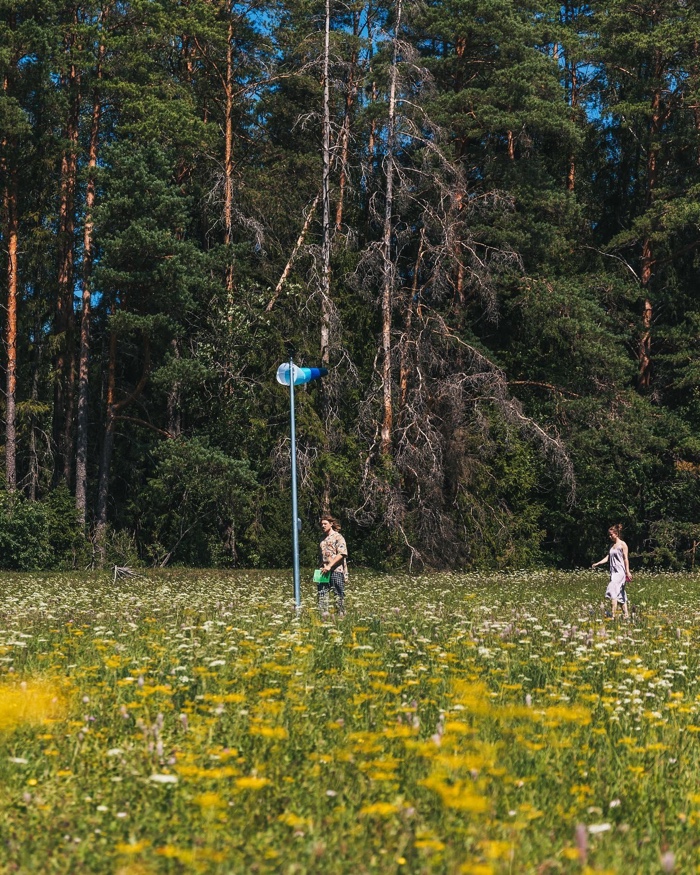
Jeanne Harignordoquy, World Wind Radio, a wind sock that plays a radio station from different parts of the world depending on the speed and direction of the wind. Developed at a Wild Bits Residency
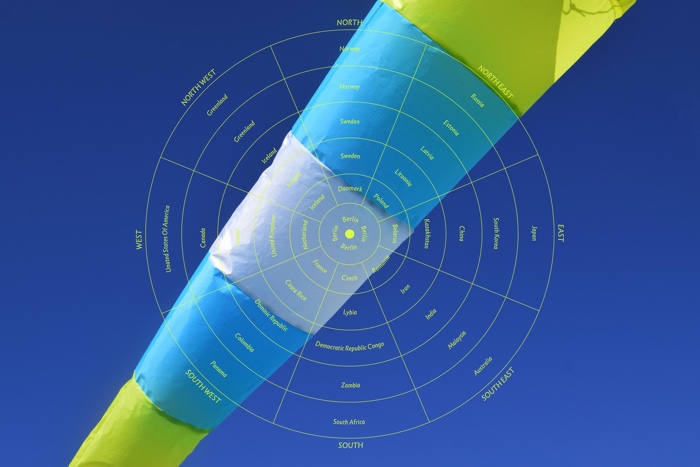
Jeanne Harignordoquy, World Wind Radio, a wind sock that plays a radio station from different parts of the world depending on the speed and direction of the wind. Developed at a Wild Bits Residency
Mari-Liis Rebane presented maajaam, a farm for art and tech that she founded in 2013 together with artist Timo Toots. Located in the Southern part of Estonia, the residency space invites artists to explore connections between nature and digital technology.
maajaam also organises the wild bits, an outdoor art exhibition that extends across 20 hectares. The artworks above were developed or exhibited at maajaam.
Mindaugas Gapševičius and Kristina Zakutauskaite presented Institutio Media, an art research organisation founded in Vilnius in 1998. Since 2014, they’ve been organising DIY workshops, each exploring different fields: embroidery about networks, analogue electronics workshops, extraction of DNA, work with algae, discussion on live organisms in art, kombucha material art, traditional Chinese tea brewing, discussion about bio art and its implications, political science exchange, counter-narrative workshops, etc.
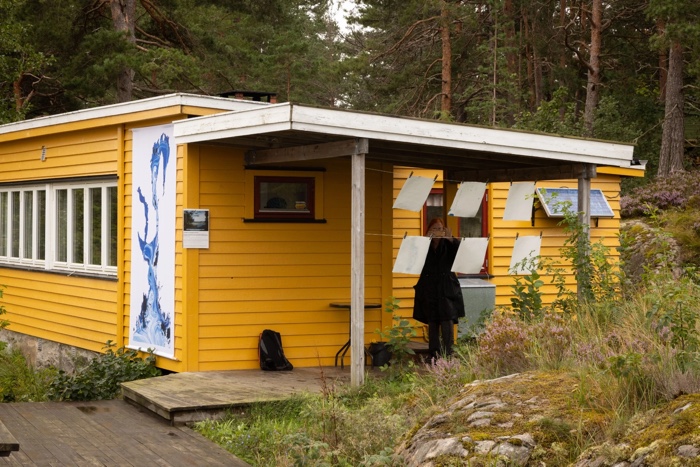
Oslofjord Ecologies Archive: Kristin Bergaust, Stephanie Rothenberg, Eva-Maria Lopez, Cesar & Lois
Kristin Bergaust introduced the audience to what she called more “a life hack” than an organisation. Her artist-run space is called SENT (Site Ecology Nature and Technology) is located in a rural area outside of Oslo with access on foot to large forests and the Oslofjord. Bergaust uses it for small projects that combine art, ecology, research and technology. One of these projects is the Oslofjord Triennale she curated in 2024 on an island without electricity or water.
Bergaust co-edited Oslofjord Ecologies. Artistic Research on Environmental and Social Sustainability which you can download from the RIXC website.
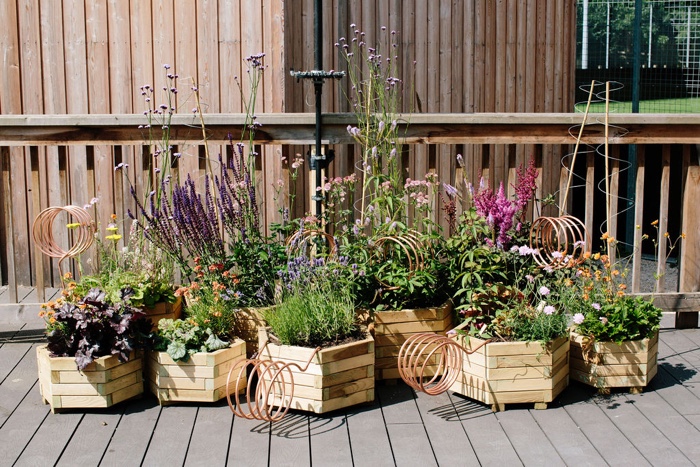
Magz Hall, Radio Air Garden taps into traditions of electroculture, which involve capturing and directing atmospheric electricity into the soil to enhance plant growth
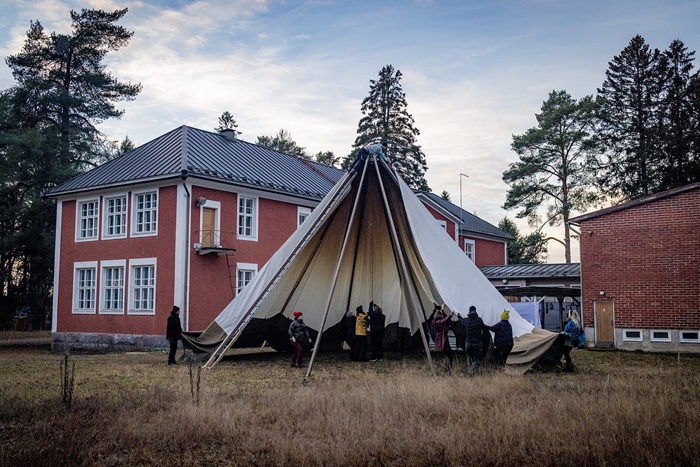
Kubu. Photo: Kulturhus Björkboda
Ronja Tammenpää presented KUBU, an old school turned into artist-run cultural house by Sari Kippila and Tuomo Tammenpää in 2022. They organise exhibitions on an island where there had never been exhibitions before. Among them are Home Libraries are the New Black and The Garden and the Edge. For the former, Andrew Paterson made public his private library collection as a way to reach out to the local community through the sharing of books, reading aloud sessions, online radio broadcasts, etc. Even vermicomposting using donated old books.
As for The Garden and the Edge, it is an international summer exhibition programme curated by Teresa Dillon. This year’s theme was earth. It looked at soil care; not just its environmental significance, but how it intertwines with our broader ecological, sociocultural and political landscapes. The upcoming themes will look at the other elements: water, air, fire, aether.
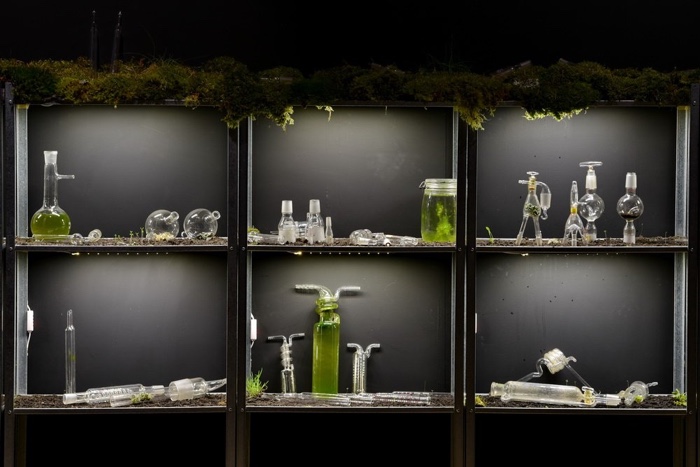 ISOP, KIN
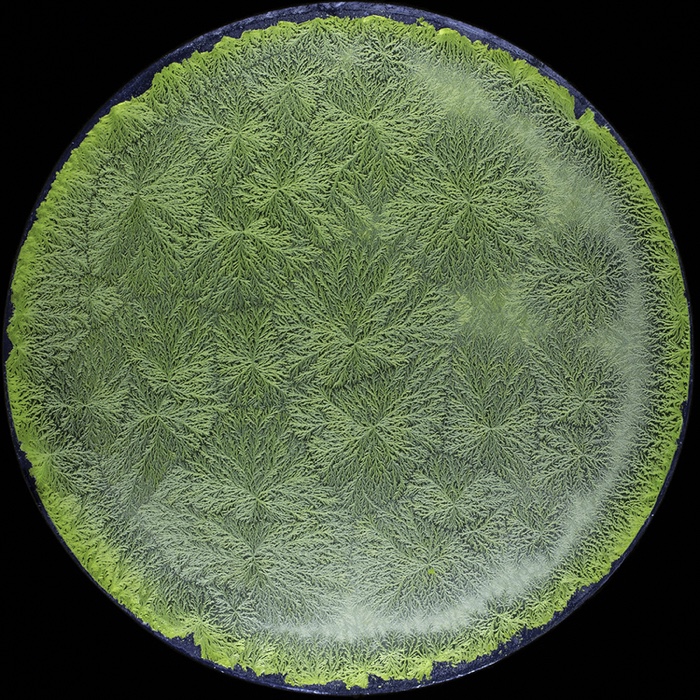 ISOP, KIN. Biocrystallisation of Cyanobacteria on glass plate
ISOP (aka Sissel Thastum & Line Thastum) is an artist duo and art organisation from Denmark. Their ongoing research project is KIN which focuses on the interaction between species (human and more-than-human) “in a deep time and holistic perspective”.
KIN looked at 6 different bodies or entities: cyanobacteria, moss, lichen, codfish, nettle and human blood (to represent the human entity). They worked with scientists on biocrystallization, a method where you liquefy an organic substance and put it in contact with copper chloride, a compound that is very toxic to any organic material. Once inside the petri dishes, the organic material gets into a fight for its life. Each organism forms its complete unique crystallisation. The artists used an image-making method to reveal the unique life fingerprint of each of these bodies.
And that’s it for me. I’ll leave you with a few images from Plants Intelligence:
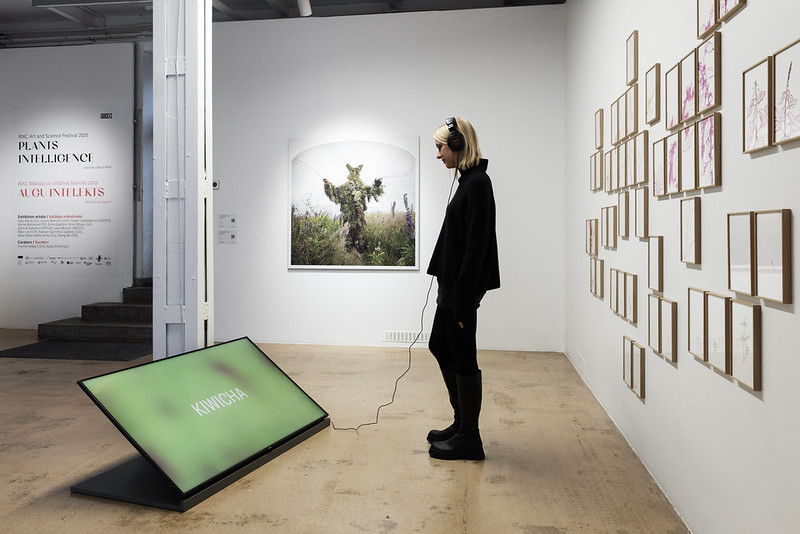
RIXC Art Science Festival 2025: Plants Intelligence Exhibition. Photo: Kristīne Madjare
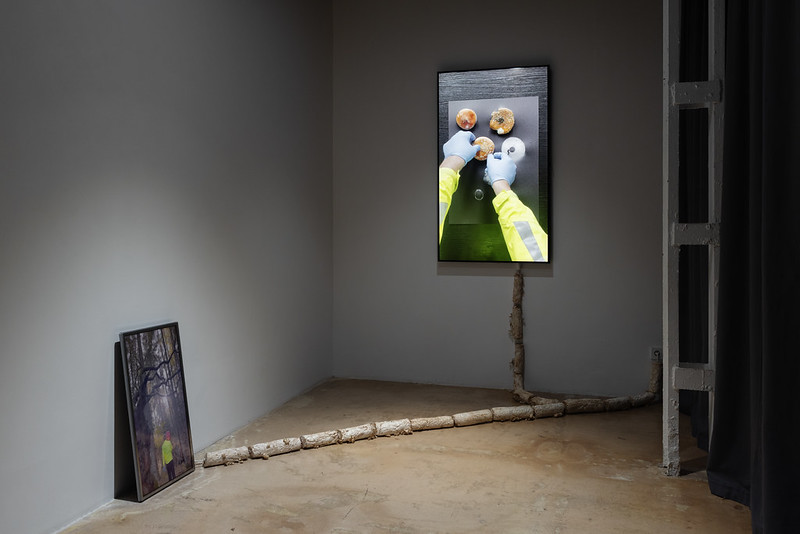
RIXC Art Science Festival 2025: Plants Intelligence Exhibition. Photo: Kristīne Madjare
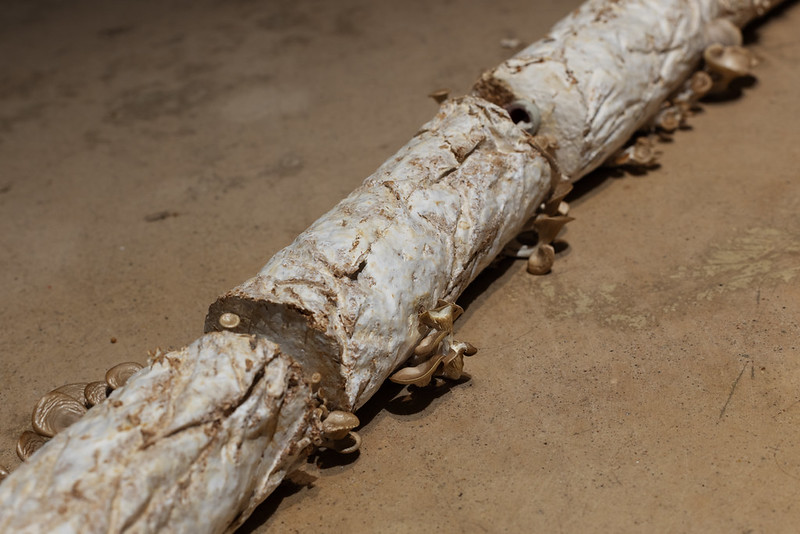
RIXC Art Science Festival 2025: Plants Intelligence Exhibition. Photo: Kristīne Madjare
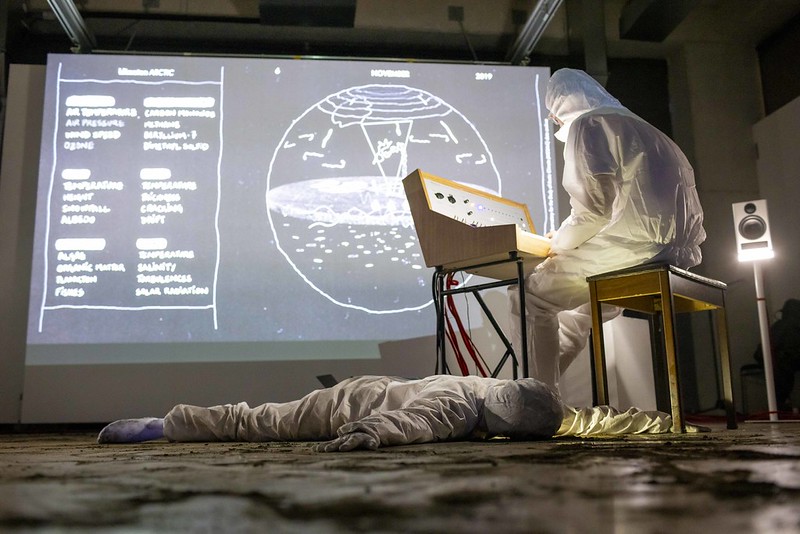
Day 1, Oct 17. RIXC Art Science Festival 2025: Plants Intelligence. Photo: Didzis Grodzs
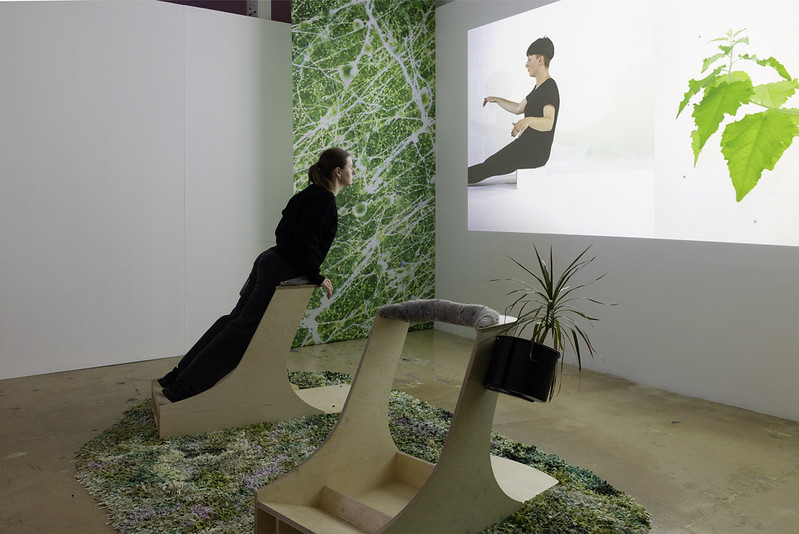
Karine Bonneval with Emilie Pouzetin in collaboration with researcher Eric Badel, Vertimus, 2019. RIXC Art Science Festival 2025: Plants Intelligence Exhibition. Photos by Kristīne Madjare
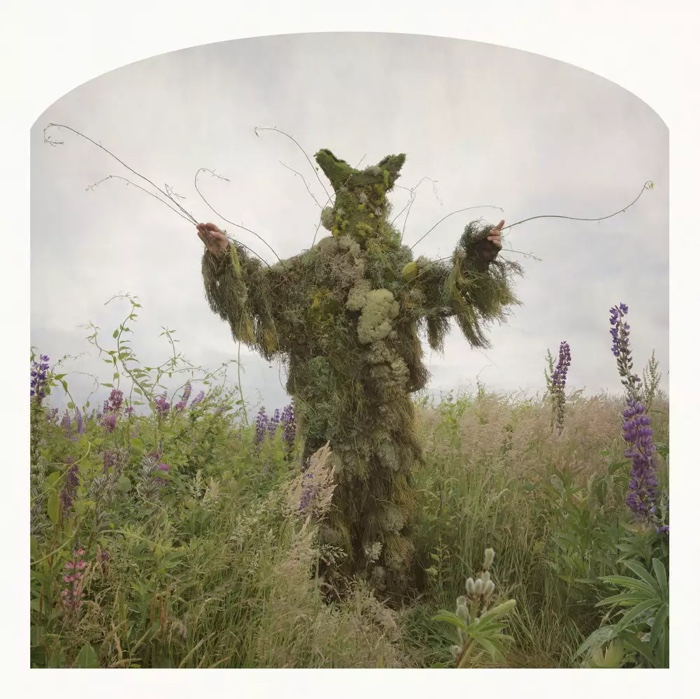
Nicholas Kahn & Richard Selesnick, King of Weeds, 2012
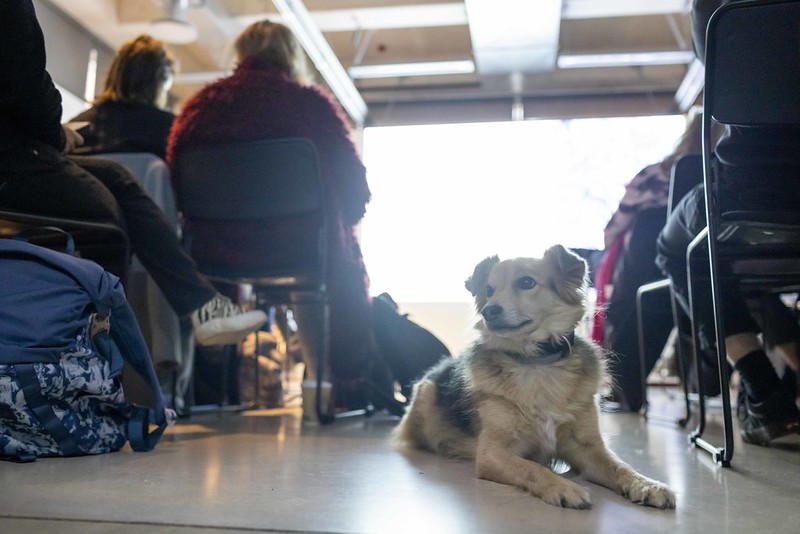
Opening Day, Oct 16. RIXC Art Science Festival 2025: Plants Intelligence. Art Academy of Latvia. Photo: Didzis Grodzs
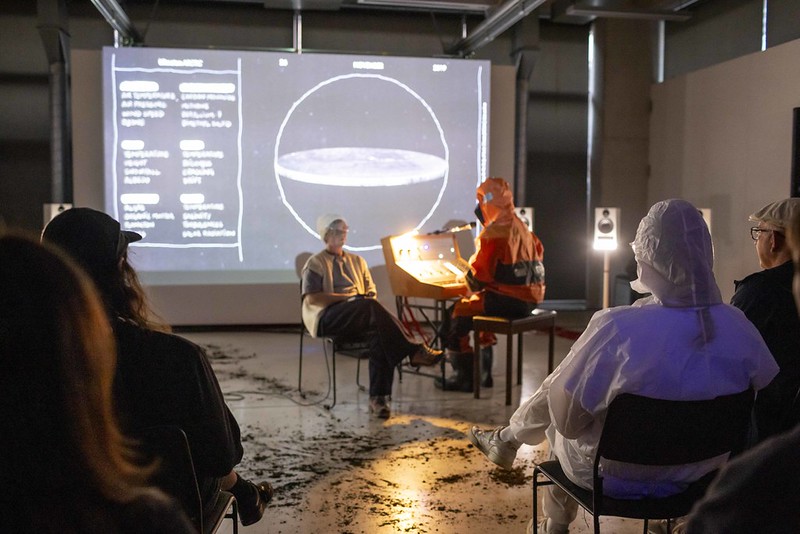
Day 1, Oct 17. RIXC Art Science Festival 2025: Plants Intelligence. Photo: Didzis Grodzs
Related stories: Green Revisited: Encountering Emerging Naturecultures, Symbiotic Sense(s). Queer plants, polar bears and peatland, Symbiotic Sense(s) part 2: lazy robots, AI-designed ceramics and cosmic radiations, RIXC Art Science exhibition: Splintered Realities, Global control, macho technology and the Krampus. Notes from the RIXC Open Fields conference, Global Control And Censorship. A quick tour of the RIXC festival exhibition.