The Venice Art biennale, like many contemporary art affairs, has never been big on tech. This year, the omission is more conspicuous than ever. At a moment when anxieties around the evils of technology are intensifying, the art event continues to resist engaging with issues such as the environmental costs of AI, the devaluation of human labour, the uncontrollable spread of misinformation, cyber(in)security, screen addictions and many guises of digital colonialism.
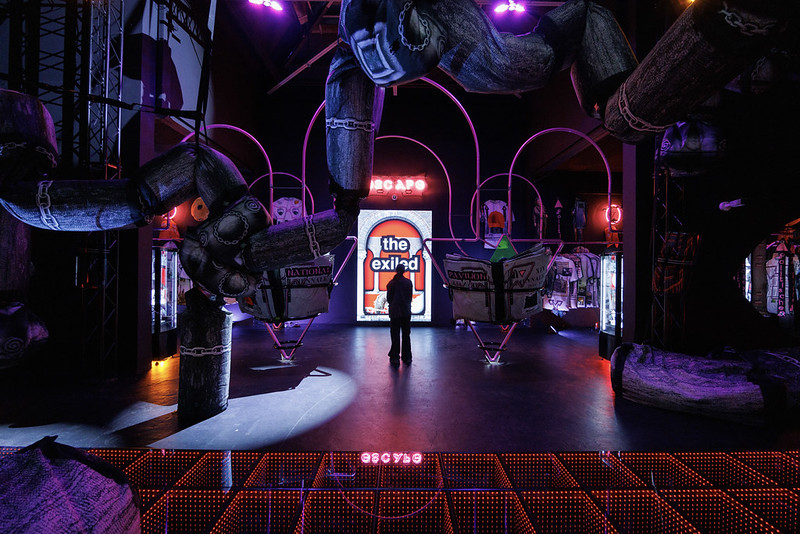
Andreas Angelidakis, Escape Room. Pavilion of Greece. 61st International Art Exhibition – La Biennale di Venezia, In Minor Keys. Photo by Jacopo Salvi. Courtesy: La Biennale di Venezia
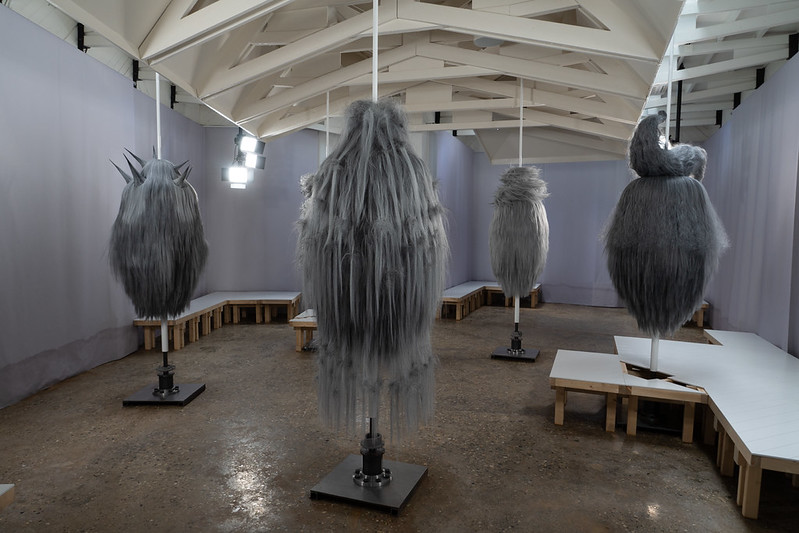
Jenna Sutela, Aeolian Suite, 2026, Pavilion of FINLAND (AALTO). 61st International Art Exhibition – La Biennale di Venezia, In Minor Keys. Photo by Luca Zambelli Bais. Courtesy: La Biennale di Venezia
And yet this year, I found myself less surprised than ever by the disregard. The curator of the main exhibition, Koyo Kouoh, had decided to have visitors pause and attune to the “persistent signals of earth and life.” The exhibition “intends neither a litany of commentary on world events, nor an inattention or escape from compounding and continuous intersecting crises. Rather, it proposes a radical reconnection with art’s natural habitat and role in society: that is the emotional, the visual, the sensory, the affective, the subjective.” It is a curatorial position I admire, especially given the sensitivity and vitality with which it is realised.
That said, artists who engage with technology and science were present in the Biennale, though they appear more prominently in the national pavilions than in the central exhibition. Their works explored reproductive technology, online porn, extractivism, daimon in technological systems, automated economy, etc. Here are some of their works:
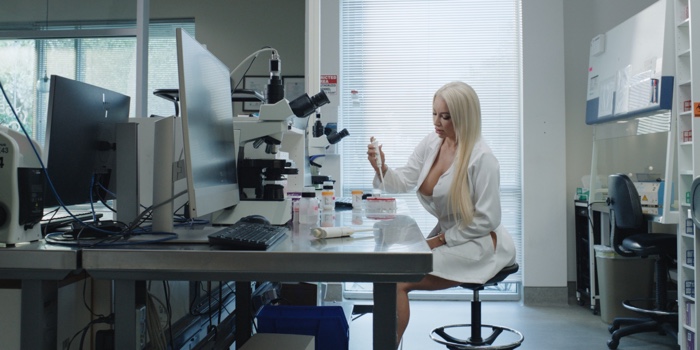
Maja Malou Lyse, DIS, Things to Come (video still), 2026. Photography by Zoe Chait. Courtesy of the Artist and the Danish Pavilion
Maja Malou Lyse, DIS, Things to Come, 2026. Photography by Zoe Chait. Courtesy of the Artist and the Danish Pavilion
Maja Malou Lyse, Things to Come. Pavilion of DENMARK. 61st International Art Exhibition – La Biennale di Venezia, In Minor Keys. Photo by Jacopo Salvi. Courtesy: La Biennale di Venezia
Maja Malou Lyse, Things to Come. Pavilion of DENMARK. 61st International Art Exhibition – La Biennale di Venezia, In Minor Keys. Photo by Marco Zorzanello. Courtesy: La Biennale di Venezia
Maja Malou Lyse, Things to Come. Pavilion of DENMARK. 61st International Art Exhibition – La Biennale di Venezia, In Minor Keys. Photo by Marco Zorzanello. Courtesy: La Biennale di Venezia
Maja Malou Lyse, Things to Come. Pavilion of DENMARK. 61st International Art Exhibition – La Biennale di Venezia, In Minor Keys. Photo by Jacopo Salvi Courtesy: La Biennale di Venezia
Maja Malou Lyse, Things to Come. Pavilion of DENMARK. 61st International Art Exhibition – La Biennale di Venezia, In Minor Keys. Photo by Marco Zorzanello. Courtesy: La Biennale di Venezia
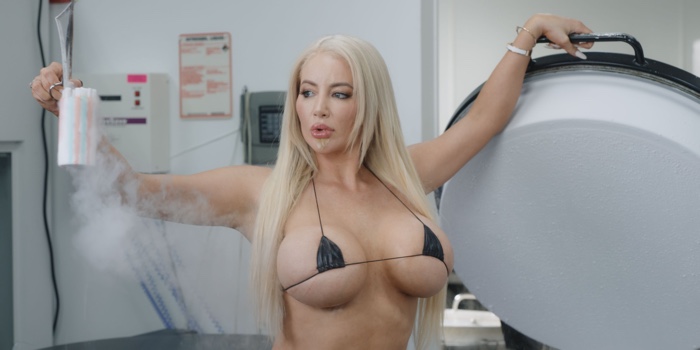
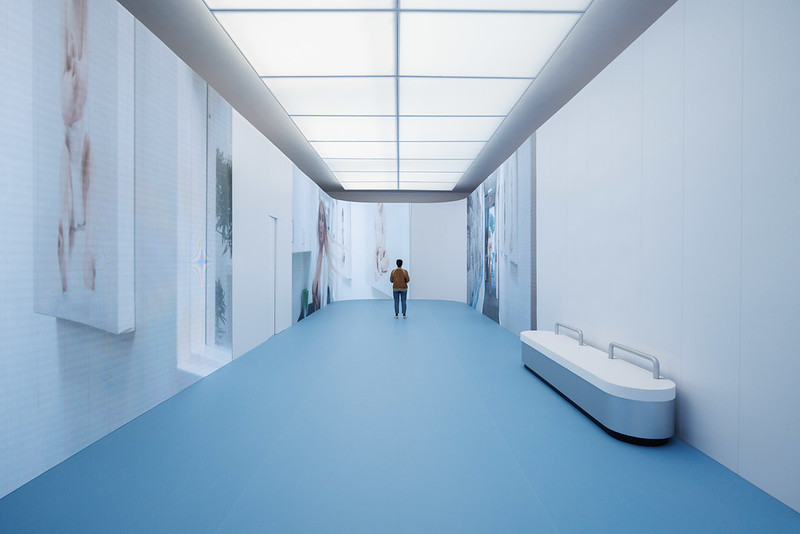
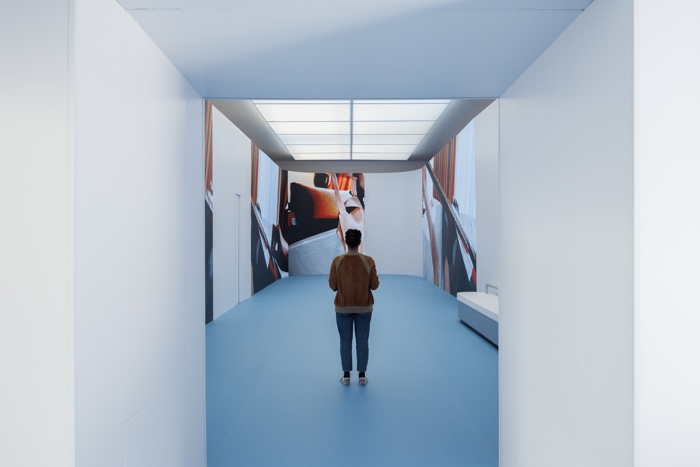
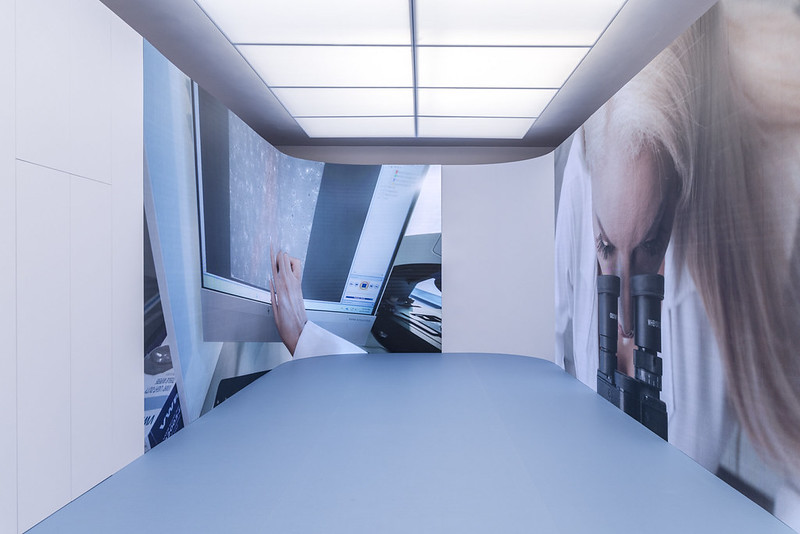
As Maja Malou Lyse noted, the Venice Biennale is the most visited exhibition in the world, attracting around a million visitors over seven months. Pornhub gets that kind of traffic in a matter of minutes. According to her, the inspiration for the Danish Pavilion was a scientific paper claiming that virtual sexual stimuli can increase sperm motility. She translated this idea into an immersive video environment and an installation in which pornographic fantasy and science intersect, prompting reflection on the future of human reproduction.
The video Things To Come was shot at Cryos, the world’s largest sperm bank, in collaboration with the collective DIS and with performers from the porn industry. On the screens, porn actresses work in a clinical setting, engaging with the protocols of sperm donation, instructing donors and playing up with the processes that underpin reproductive technologies.
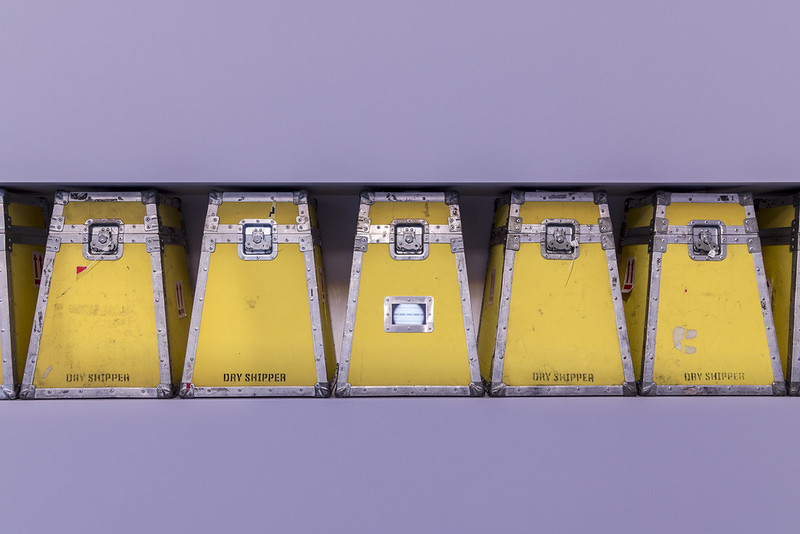
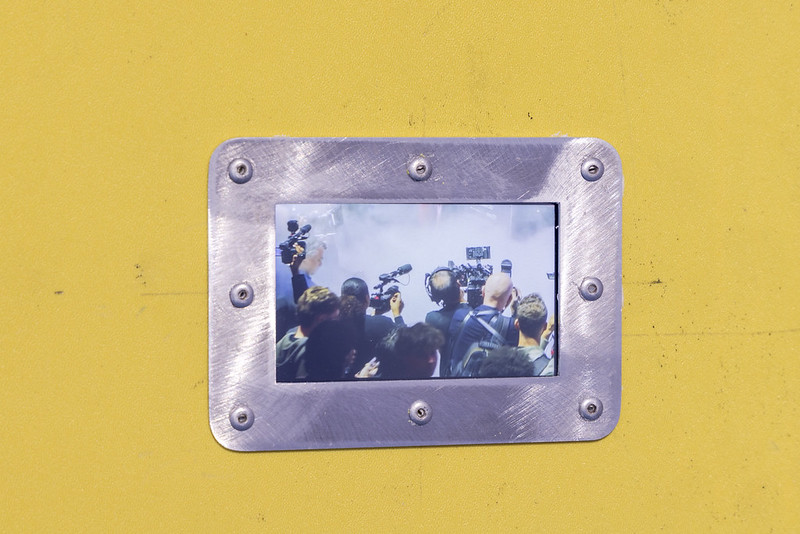
In the other room, yellow cryogenic containers used in fertility banks to store and transport donated semen are lined up. Some have been fitted with small LED screens showing material from Sperm Racing, a ludicrous sport associated with online male subculture.
Set against the backdrop of a decline in male fertility worldwide, Things To Come frames the fertility crisis not merely as a biological phenomenon but as a metaphor for a broader condition of societal and existential instability. In this context, the global decrease in sperm counts becomes emblematic of deeper anxieties about the future of the human species.
Ei Arakawa-Nash, Grass Babies, Moon Babies. Pavilion of Japan. 61st International Art Exhibition – La Biennale di Venezia, In Minor Keys. Photo by Luca Zambelli Bais. Courtesy: La Biennale di Venezia
Ei Arakawa-Nash, Grass Babies, Moon Babies. Pavilion of Japan. 61st International Art Exhibition – La Biennale di Venezia, In Minor Keys. Photo by Andrea Avezzù. Courtesy: La Biennale di Venezia
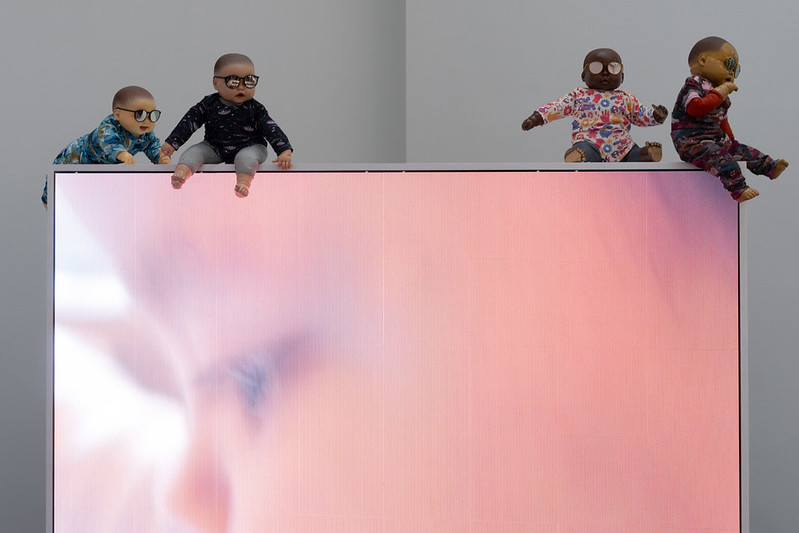
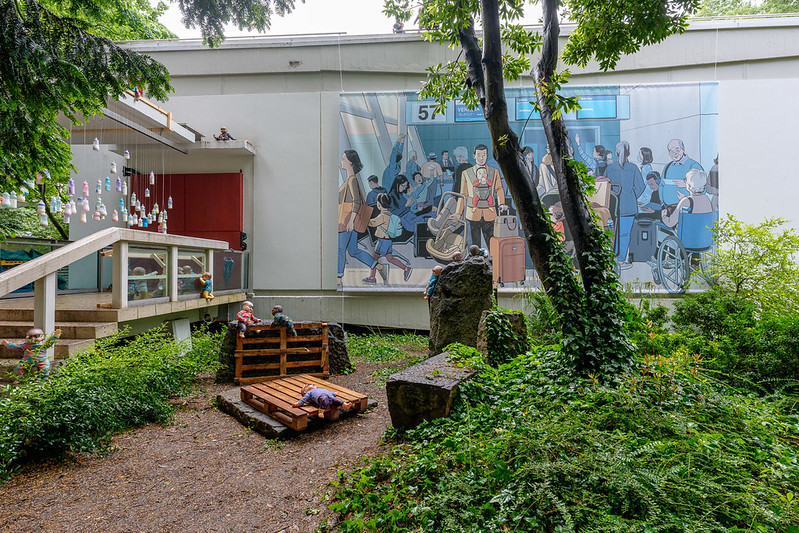
Maja Malou Lyse’s work finds a compelling counterpart in the nearby Japanese pavilion, where Ei Arakawa-Nash invites visitors to temporarily adopt a baby doll, change its diaper and carry it around the building. Declining birthrates in Japan and Europe inspired the artwork. Unfortunately, as the presentation text on the wall text explains, while visitors are caring for the silicone newborns, babies are born in refugee camps and war zones. Many are bombed to death shortly afterwards.
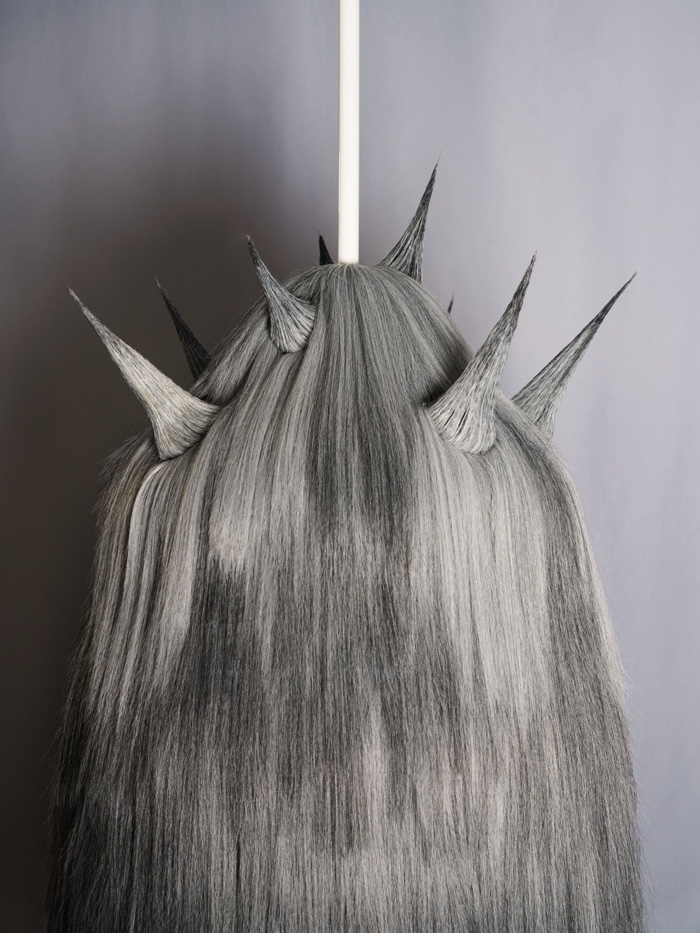
Jenna Sutela, Aeolian Suite (Detail), 2026. Pavilion of Finland at the 61st Venice Biennale. Photo by Clelia Cadamuro. Courtesy of FRAME & Contemporary Art Finland
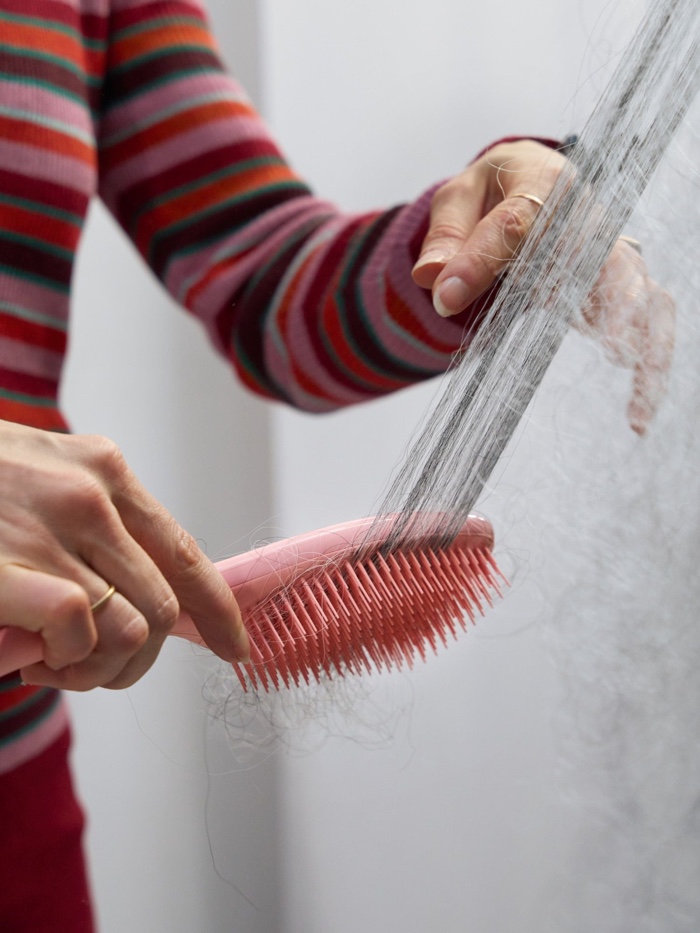
Jenna Sutela, Aeolian Suite (Detail), 2026. Pavilion of Finland at the 61st Venice Biennale. Photo by Clelia Cadamuro. Courtesy of FRAME & Contemporary Art Finland
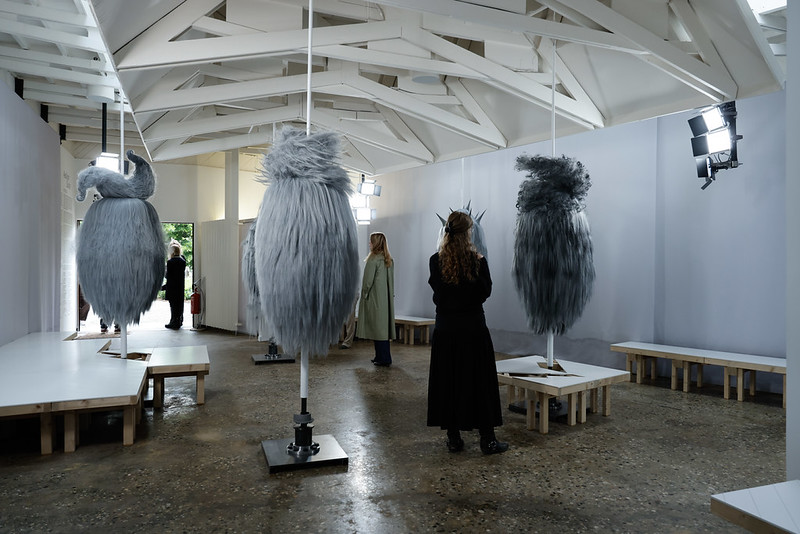
Jenna Sutela, Aeolian Suite, 2026, Pavilion of FINLAND (AALTO). 61st International Art Exhibition – La Biennale di Venezia, In Minor Keys. Photo by Jacopo Salvi. Courtesy: La Biennale di Venezia
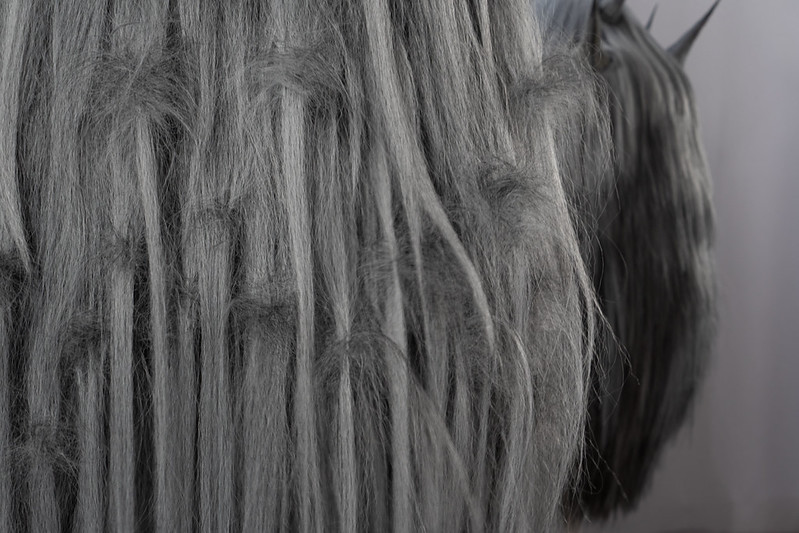
Jenna Sutela, Aeolian Suite, 2026, Pavilion of FINLAND (AALTO). 61st International Art Exhibition – La Biennale di Venezia, In Minor Keys. Photo by Luca Zambelli Bais. Courtesy: La Biennale di Venezia
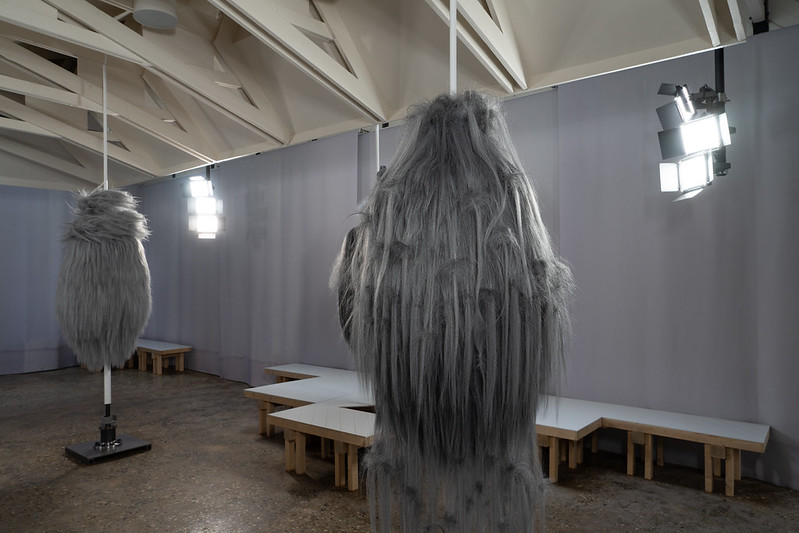
Jenna Sutela, Aeolian Suite, 2026, Pavilion of FINLAND (AALTO). 61st International Art Exhibition – La Biennale di Venezia, In Minor Keys. Photo by Luca Zambelli Bais. Courtesy: La Biennale di Venezia
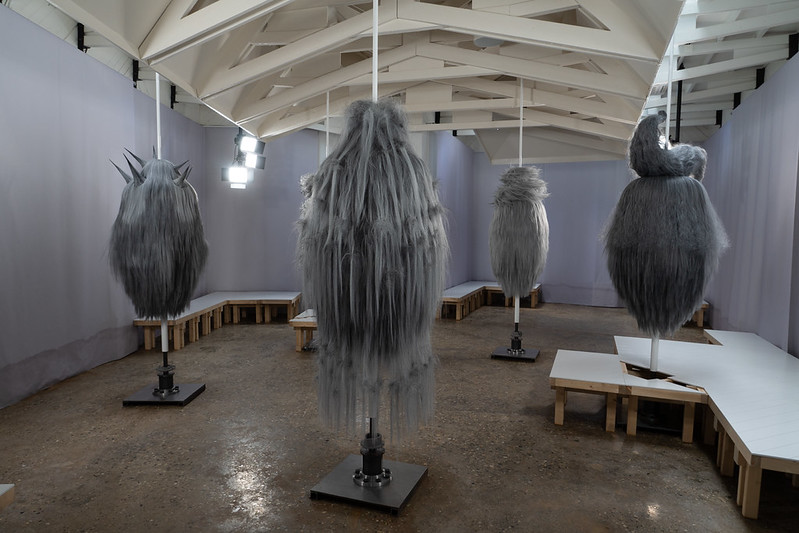
Jenna Sutela, Aeolian Suite, 2026, Pavilion of FINLAND (AALTO). 61st International Art Exhibition – La Biennale di Venezia, In Minor Keys. Photo by Luca Zambelli Bais. Courtesy: La Biennale di Venezia
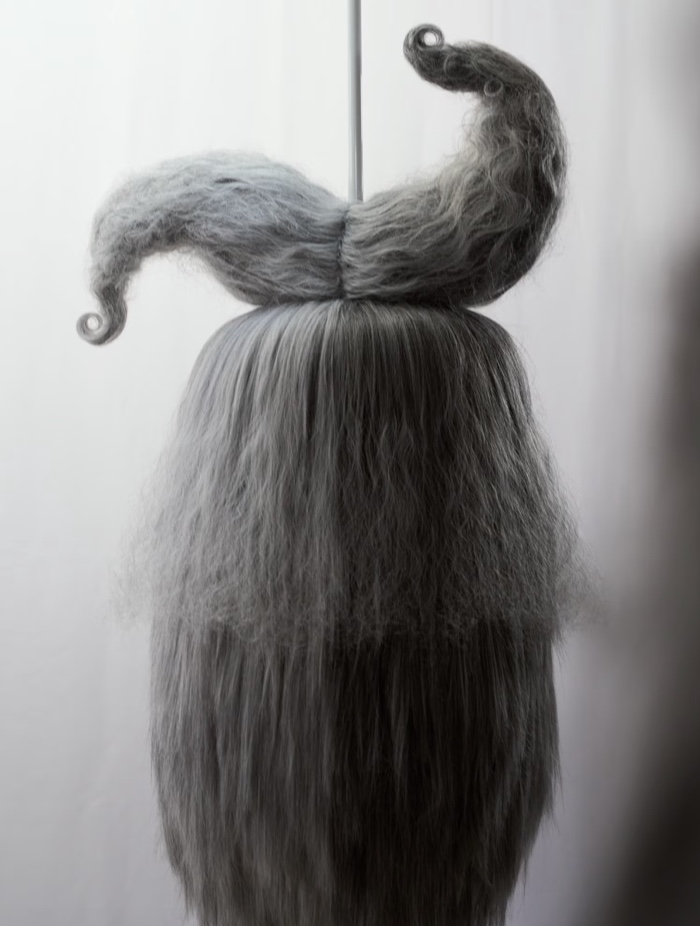
Jenna Sutela, Aeolian Suite, 2026. Detail. Pavilion of Finland at the 61st Venice Biennale. Photo by Clelia Cadamuro. Courtesy of FRAME Contemporary Art Finland
One of the main causes of Acqua alta (high water) in Venice is the wind. Especially the sirocco and the bora, which push Adriatic Sea water into the shallow lagoon of Venice.
Jenna Sutela filled the Finland pavilion with hairy characters that personify the five winds of Venice. With elaborated hairdos that give them distinct personalities, they look like overgrown, eccentric versions of the wind muffs used to shield microphones from environmental noises. Here, however, their function is reversed. Instead of blocking out interference, the muffs let the wind take over the microphone and the recording, allowing visitors to tune into registers that are beyond human experience and yet are also shaped by it.
The artists translated the meteorological data from the nearby Acqua Alta Oceanographic Tower into a composition that also includes a woodwind orchestra and field recordings of the winds in Venice, Helsinki and beyond.
The wind’s unpredictable force persistently resists human attempts to measure and record its behaviour. Paradoxically, the more computational power we deploy to forecast the weather, the more carbon dioxide is emitted, intensifying the very instability these models seek to predict. In this sense, shifting wind patterns mirror broader environmental and societal dynamics, situating the pavilion within a wider planetary system of circulation and exchange.
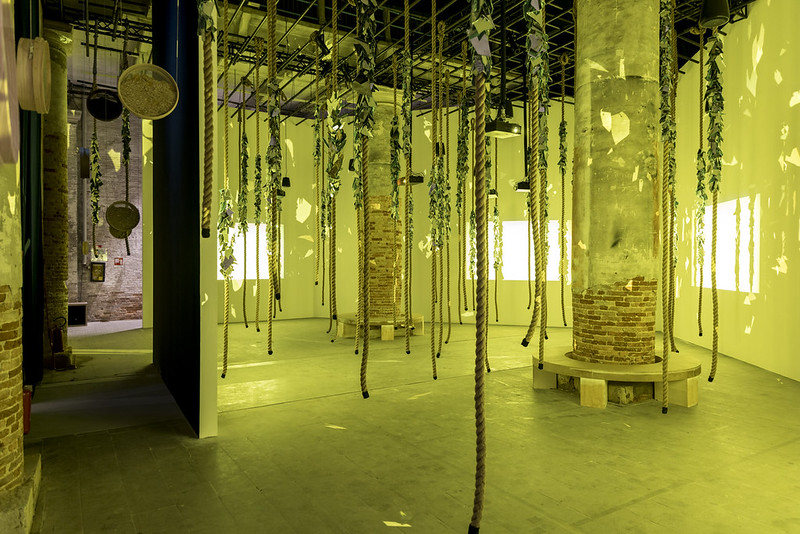
Kader Attia, Whisper of Traces, 2026. 61st International Art Exhibition – La Biennale di Venezia, In Minor Keys. Photo by Marco Zorzanello. Courtesy: La Biennale di Venezia
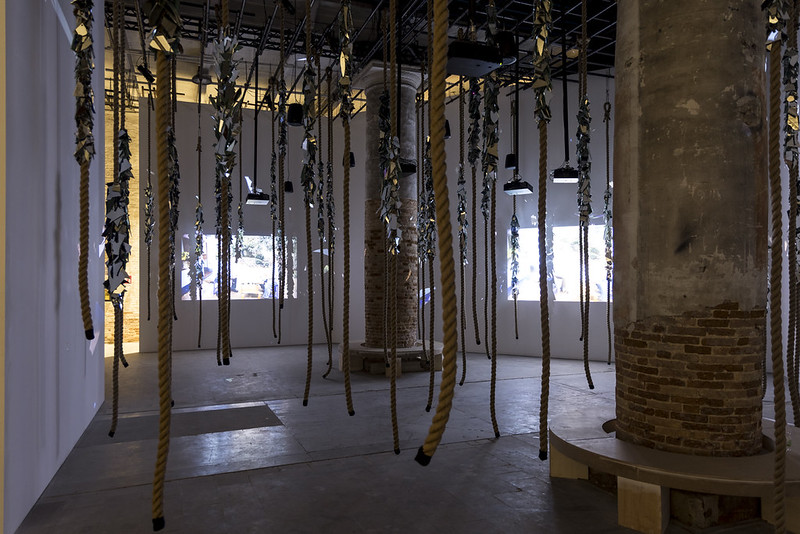
Kader Attia, Whisper of Traces, 2026. 61st International Art Exhibition – La Biennale di Venezia, In Minor Keys. Photo by Marco Zorzanello. Courtesy: La Biennale di Venezia
One of my favourite artworks in the massive exhibition curated by Koyo Kouoh and her team is Kader Attia‘s installation. The starting point of the artist’s research is a shaman’s conviction that digital technology is inhabited by “spiritual entities”. From this premise, Attia opens a series of provocative questions: What can we learn if we integrate ancestral beliefs into our critical engagement with technology? Is a daimon inhabiting our digital technologies? Might unseen forces use electricity to influence us? Isn’t technology a contemporary form of witchcraft?
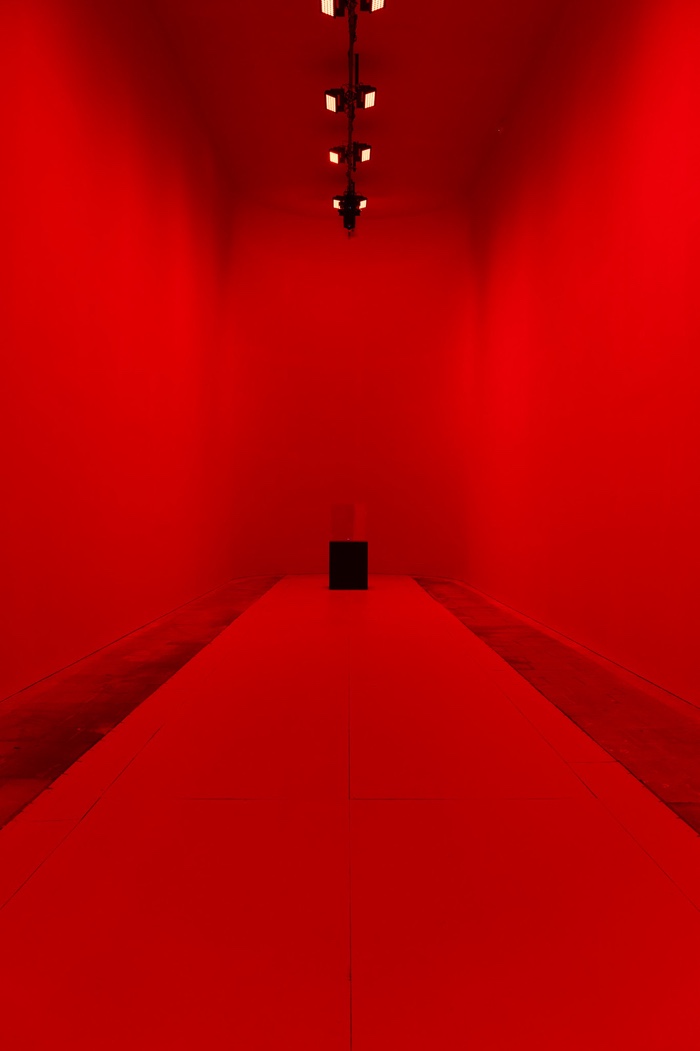
Alfredo Jaar, The End of the World, 2023-2024. 61st International Art Exhibition – La Biennale di Venezia, In Minor Keys. Photo by Luca Zambelli Bais. Courtesy: La Biennale di Venezia
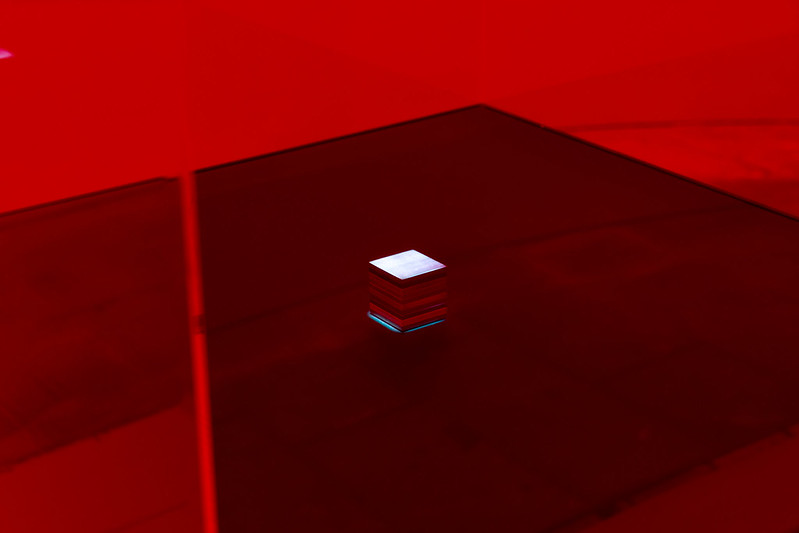
Alfredo Jaar, The End of the World, 2023-2024. 61st International Art Exhibition – La Biennale di Venezia, In Minor Keys. Photo by Luca Zambelli Bais. Courtesy: La Biennale di Venezia
Alfredo Jaar’s 21-metre-long nave, bathed in emergency-red light, leads you towards a plinth where, inside a vitrine, a 4 cm cube awaits. It is made of ten layers of the materials associated with some of the most ruthless extractivist practices in the world: cobalt, neodymium, copper, tin, nickel, lithium, manganese, coltan, germanium, platinum.
These minerals, indispensable for the green transition, the military industry and other signifiers of technological “progress”, have almost inevitably been called “critical” or even “the new gold” at some point in mainstream media. Yet, as political geologist Adam Bobbette (who collaborated with Jaar on the project) notes, “critical minerals are ‘critical’ not by nature but by politics.” Panels on one of the walls briefly present the geopolitical, environmental and humanitarian impacts of each mineral.
The section on rare earth elements, for instance, explains that their scarcity is not geological but geopolitical: China’s near-monopoly over their extraction and processing affords it considerable economic and political leverage. Another panel reports that approximately 75% of global platinum production is concentrated in South Africa, where mining perations are often marked by poverty and violence. Meanwhile, as the Arctic continues to thaw, Russia is positioning itself to exploit newly accessible resources by reactivating more than 50 former Soviet military bases to secure control over supply chains for platinum and other strategic minerals. The panel on manganese reveals that its growing use in battery production and steel manufacturing has prompted plans to mine manganese from the ocean floor, often with insufficient regard for fragile marine ecosystems. At the same time, control over manganese-rich regions carries significant geopolitical weight, playing a role in conflicts such as Russia’s invasion of Ukraine, particularly in areas like the Nikopol basin.
The vast empty space around the small cube made me think of the vast scale of deforestation, destruction, pollution and desolation that mining leaves in its wake. I exited the installation feeling utterly powerless.
Jaar’s installation is a bit at odds with the other artworks in the exhibition. The End of the World is in line with the traditional “white cube” aesthetic and language that the biennale curation set out to challenge. Elsewhere at the Arsenale, Carsten Höller’s Giant Triple Mushroom similarly stands apart. I see no reason to object to their presence. These are artistic approaches whose concepts and formal vocabularies I can readily grasp and respond to. In the midst of an exhibition that often defied my interpretative habits, they offer a sense of comfort.
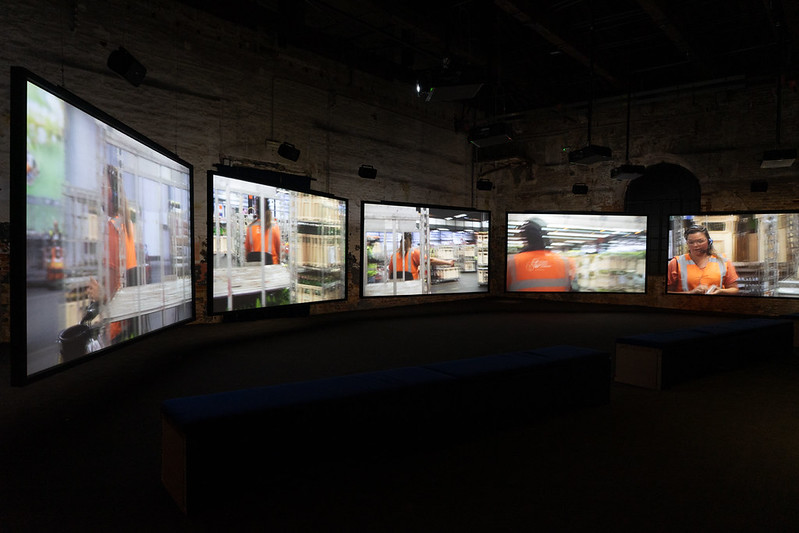
Éric Baudelaire, Death Passed My Way and Stuck This Flower in my Mouth, 2026. 61st International Art Exhibition – La Biennale di Venezia, In Minor Keys. Photo: Luca Zambelli Bais. Courtesy: La Biennale di Venezia
Éric Baudelaire, Death Passed My Way and Stuck This Flower in my Mouth (film still), 2026. Photo: © Poulet-Malassis Films – Les films du Worso
Éric Baudelaire, Death Passed My Way and Stuck This Flower in my Mouth (film still), 2026. Photo: © Poulet-Malassis Films – Les films du Worso
Éric Baudelaire. 61st International Art Exhibition – La Biennale di Venezia, In Minor Keys. Photo: Luca Zambelli Bais. Courtesy: La Biennale di Venezia
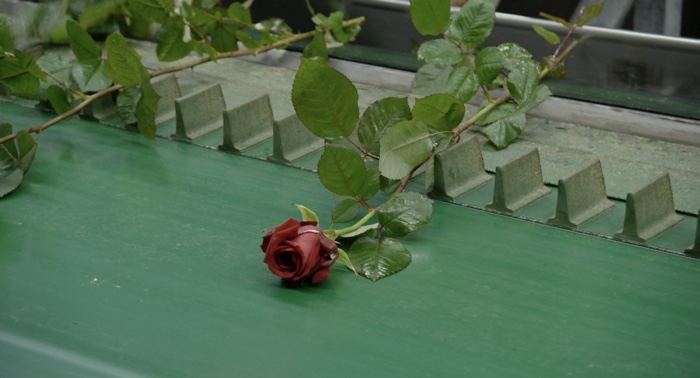
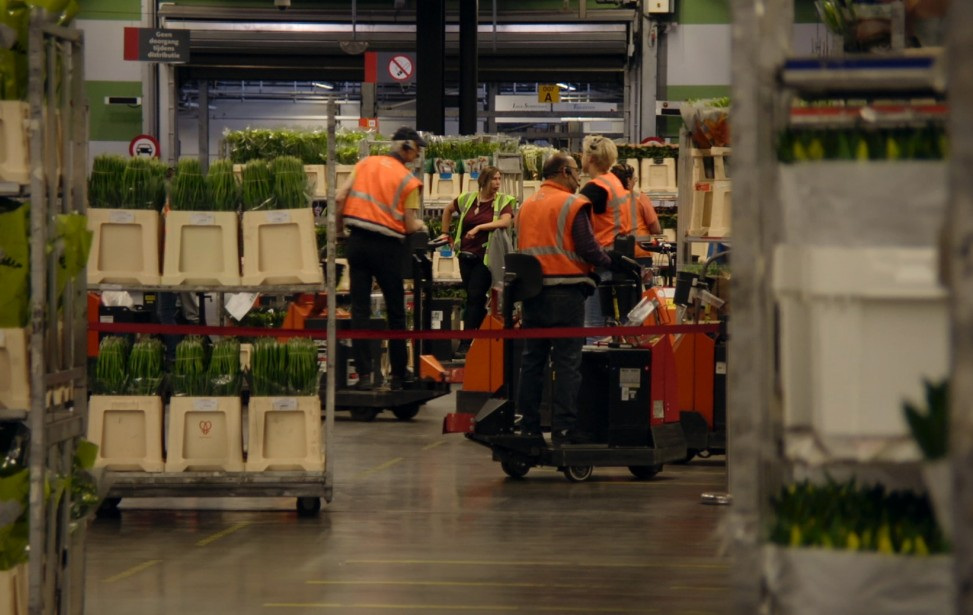
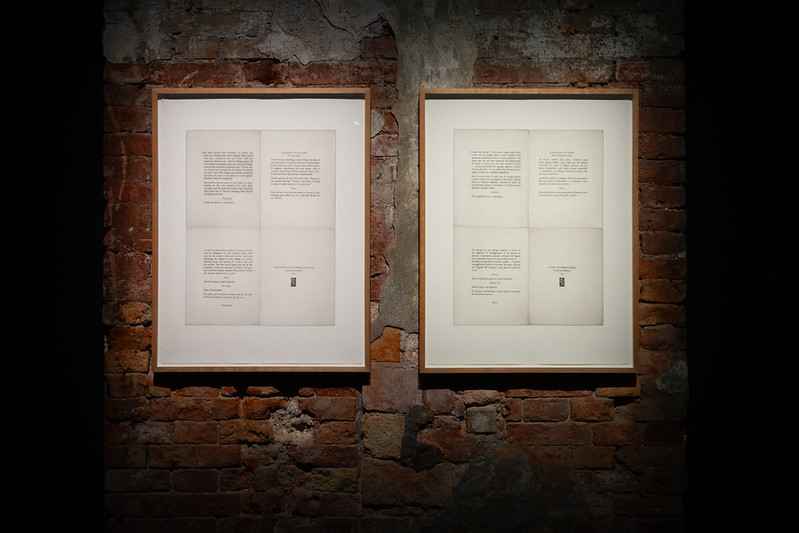
Éric Baudelaire filmed the gargantuan Aalsmeer Flower warehouse in the Netherlands where millions of flowers arrive from Africa and South America before they are auctioned off, then dispatched around the world. His camera goes from flowers to faces, from forklifts to conveyor belts, from fluorescent light to high visibility jackets. It flows, it is magnificent and portrays an increasingly automated economy operated by a few human figures. Flowers, long associated with beauty and delicacy, are here reframed through the infrastructures of global trade, dehumanised labour and computerised logistics.
Andreas Angelidakis, Escape Room. Pavilion of Greece. 61st International Art Exhibition – La Biennale di Venezia, In Minor Keys. Photo by Andrea Avezzù. Courtesy: La Biennale di Venezia
Andreas Angelidakis, Escape Room. Pavilion of Greece. 61st International Art Exhibition – La Biennale di Venezia, In Minor Keys. Photo by Andrea Avezzù. Courtesy: La Biennale di Venezia
Andreas Angelidakis, Escape Room. Pavilion of Greece. 61st International Art Exhibition – La Biennale di Venezia, In Minor Keys. Photo by Andrea Avezzù. Courtesy: La Biennale di Venezia
Andreas Angelidakis, Escape Room. Pavilion of Greece. 61st International Art Exhibition – La Biennale di Venezia, In Minor Keys. Photo by Andrea Avezzù. Courtesy: La Biennale di Venezia
Andreas Angelidakis, Escape Room. Pavilion of Greece. 61st International Art Exhibition – La Biennale di Venezia, In Minor Keys. Photo by Andrea Avezzù. Courtesy: La Biennale di Venezia
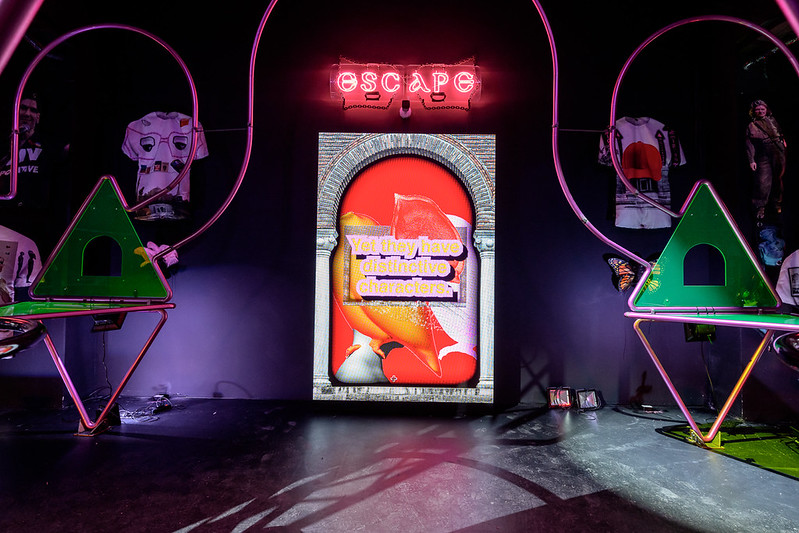
Andreas Angelidakis, Escape Room. Pavilion of Greece. 61st International Art Exhibition – La Biennale di Venezia, In Minor Keys. Photo by Andrea Avezzù. Courtesy: La Biennale di Venezia
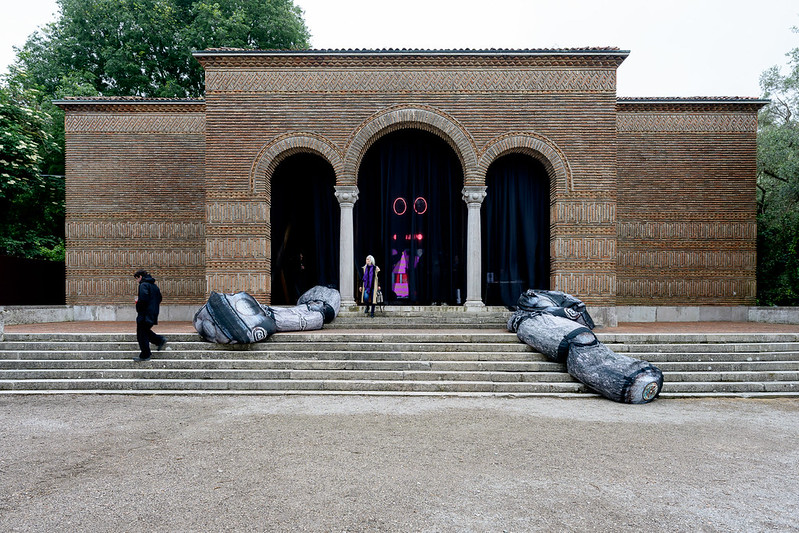
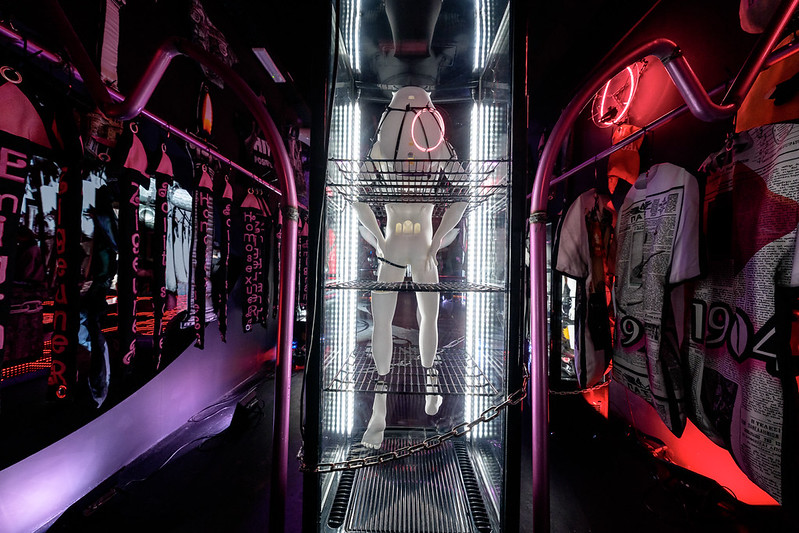
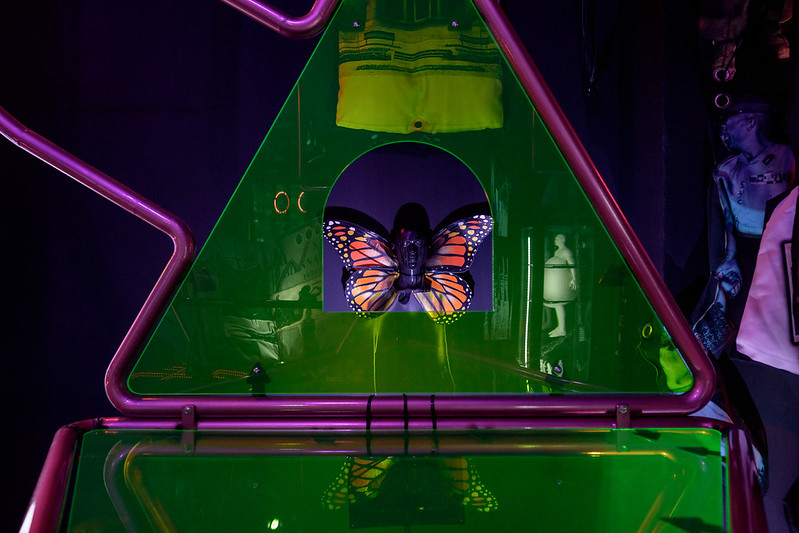
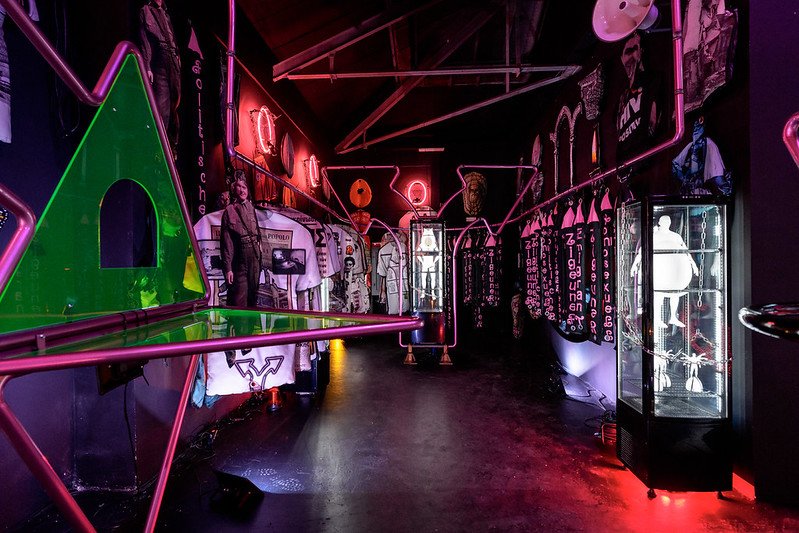
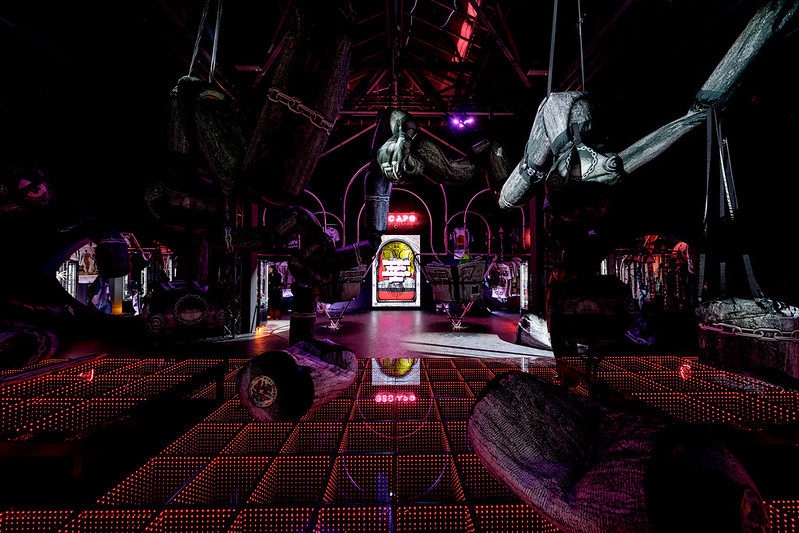
An LED floor, a CCTV camera, a display of t-shirts and 3d-printed statues… the Greek pavilion looked to me like a cross between a night club, a sex dungeon, a museum and a display of tacky touristic souvenirs. I couldn’t have been more mistaken. The first clue lies in its title: Escape Room! And two, it’s meant to evoke Plato’s cave. A cave for a time shaped by post-truth politics and screen addiction of course.
Andreas Angelidakis looked at the history and architecture of the Pavilion building and found out it haunted by nationalism, propaganda and national pavilions’ propensity to be little more than instrument of soft power. Their architectural languages project the myths and ideologies of the nations that built them.
The Greek pavilion was inaugurated in 1934, the year that Mussolini invited Hitler to the Venice Biennale for their first meeting. At the time, many people believed that fascism was the solution to their post-World War I problems.
With its Orthodox Church aesthetic, the building reflects a moment when Greece was looking back to the glory of the Byzantine Empire. Even the two main columns at the pavilion’s entrance are simplified copies of the pillars inside Hagia Sophia. Unfortunately for Greek imperialists, 12 years before the inauguration of the pavilion, the Treaty of Lausanne crushed their dream of reclaiming Istanbul (formerly Constantinople) as a Greek city. In this context, the Greek government used the pavilion as a political instrument, intended to symbolically reconnect modern Greece with its imperial past. For Angelidakis, this longing for vanished “glory days,” coupled with the resurgence of right-wing politics, reveals a striking parallel between 1934 and the present. Angelidakis calls the building “a souvenir of a MAGA moment for Greece.”
By appropriating the pavilion’s neo-Byzantine architecture, the artist stages a contemporary, digital version of Plato’s cave—one in which technology destabilises the boundaries between reality and illusion, between historical knowledge and nationalistic propaganda.
61st International Art Exhibition of La Biennale di Venezia runs until 22 November 2026 in the City of the gondolieri.