As the COP31 debacle has just demonstrated, being aware of the causes and consequences of climate change is painful but awareness and goodwill alone are not leading us anywhere. A number of writers, philosophers and scientists, from Ursula K. Le Guin to Amitav Ghosh, from Manjana Milkoreit to Michele-Lee Moore, have suggested that we need to dream up and visualise alternative futures if we are to make them happen. Scientific knowledge is invaluable, but so is art.
That’s exactly what the RIXC Art Science Festival sets out to explore this year. Its theme, Climate Imagination, approaches the climate breakdown as an environmental and scientific challenge, but also a cultural, social and philosophical one.
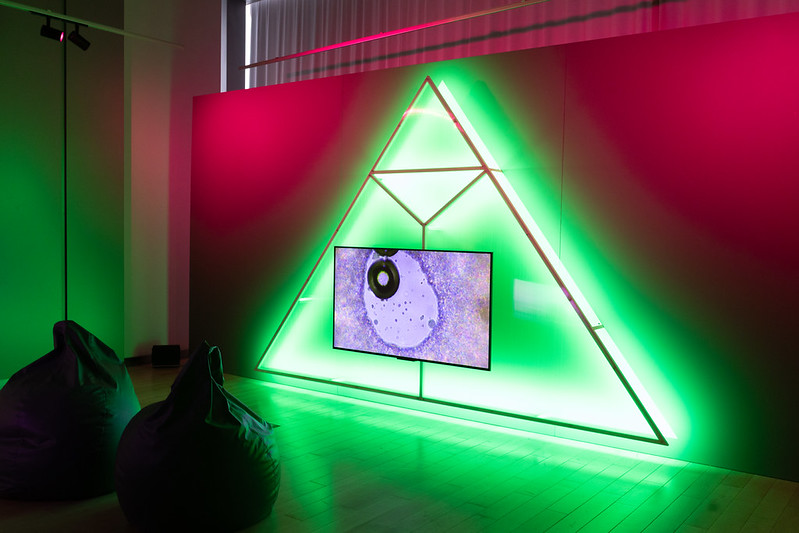
Patricia Domínguez, Matrix vegetal, 2021/2022. RIXC festival 2026 exhibition: CLIMATE IMAGINATION. Photo by Elizabete Ezergaile
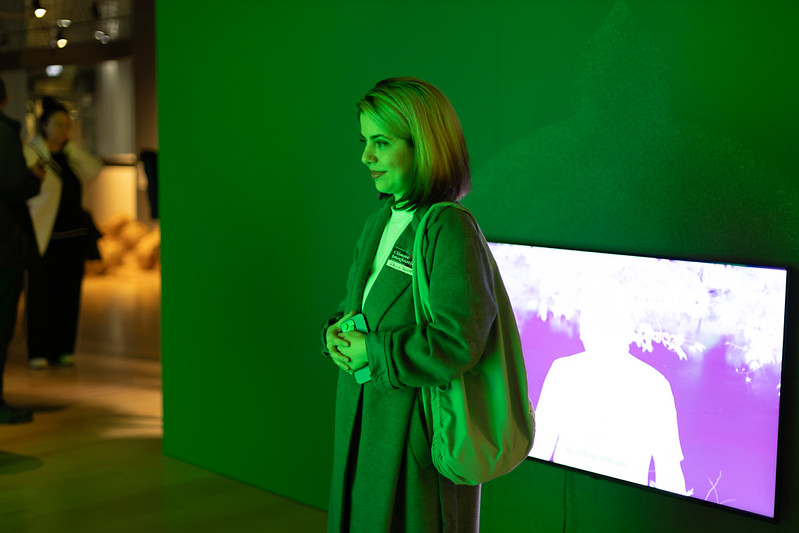
RIXC festival 2026: Climate Imagination, exhibition opening. Photo by Elizabete Ezergaile
Imagination allows us to think beyond existing systems and explore new ways of inhabiting the more-than-human world. The Climate Imagination exhibition makes space for botanical science fiction, life-giving fungal diseases, ingenious invasive species and unpleasant insects.
There are too many artworks and ideas i liked to fit into a single post so i’ll be sharing the second report about the exhibition in the coming days. This first chapter will focus on plants and multispecies convivialities.
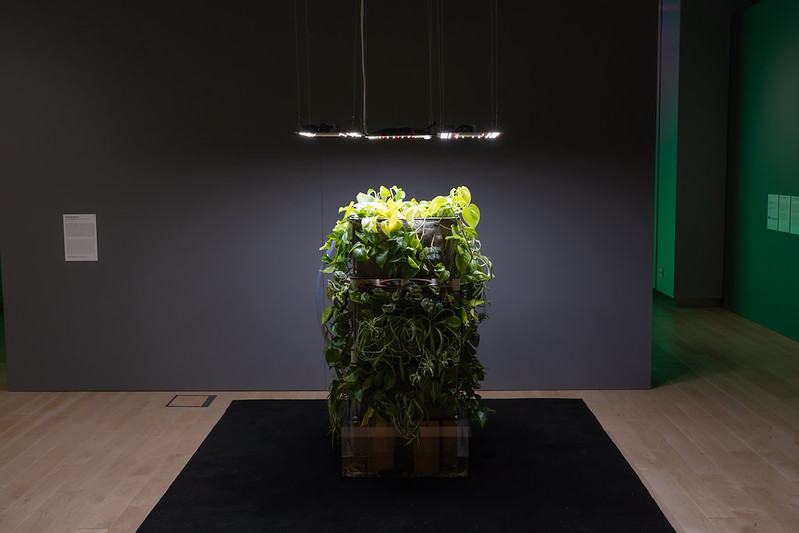
Maija Demitere, Symbiotic Microbiome, 2026. RIXC festival 2026 exhibition: CLIMATE IMAGINATION. Photo by Elizabete Ezergaile
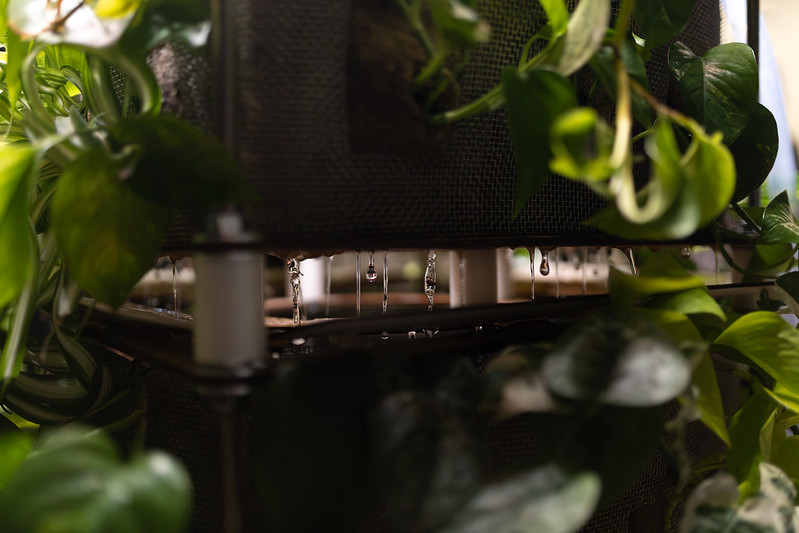
Maija Demitere, Symbiotic Microbiome, 2026. RIXC festival 2026 exhibition: CLIMATE IMAGINATION. Photo by Elizabete Ezergaile
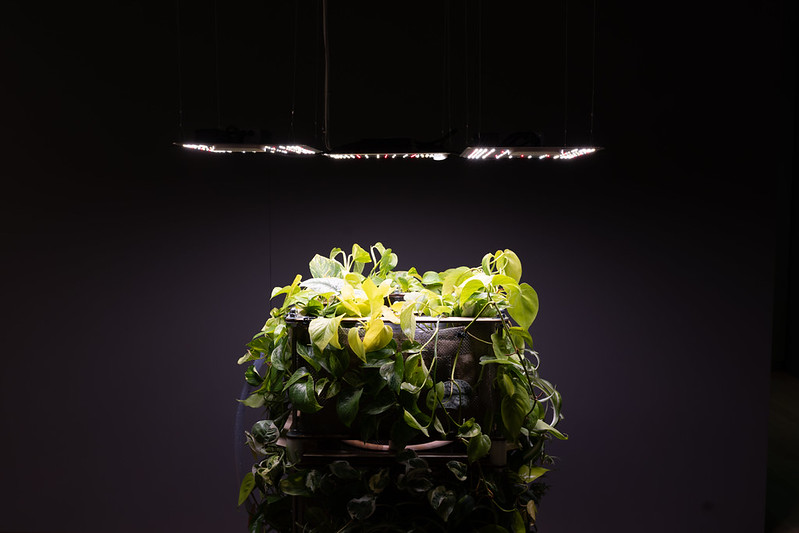
Maija Demitere, Symbiotic Microbiome, 2026. RIXC festival 2026 exhibition: CLIMATE IMAGINATION. Photo by Elizabete Ezergaile
Maija Demitere‘s installation Symbiotic Microbiome is a phytoremediation system that shows how plants form symbiotic communities with other life forms, in particular bacteria and other microorganisms.
The system draws air through layers of root and substrate. Whilst the plant’s foliage traps dust particles, microorganisms in the rhizosphere turn the volatile toxic compounds into nutrients. This natural filter helps neutralise pollutants, benefiting humans and other forms of life alike. Soil microorganisms can play an important role in purifying the air in urban and residential areas, where pollution often accumulates at low levels, precisely at the height of children’s noses and animals’ breathing zones. Here, fine particles and toxic gases can be inhaled and enter the bloodstream through the lungs.
Call me superficial, but this is the first time I’ve seen a natural air-purification system that looks this good.
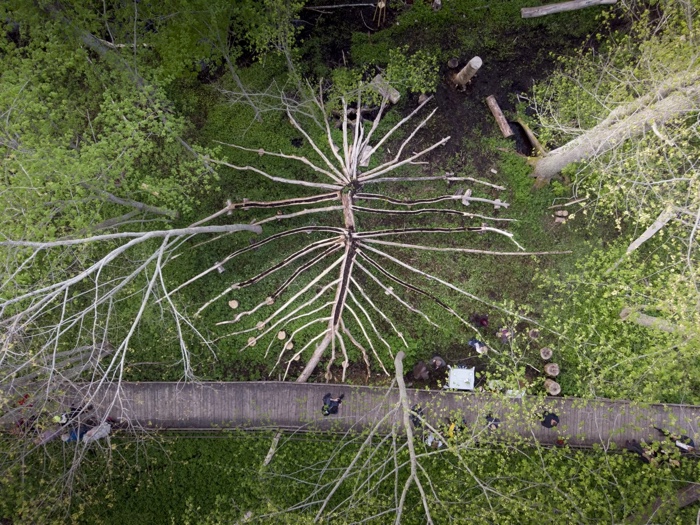
Anne Duk Hee Jordan and Pauline Doutreluingne, Brakfesten – La Grande Bouffe
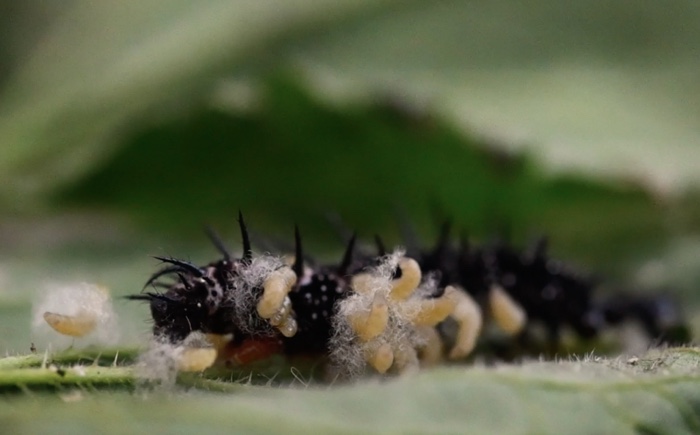
Anne Duk Hee Jordan and Pauline Doutreluingne, Brakfesten – La Grande Bouffe
Anne Duk Hee Jordan and Pauline Doutreluingne, Brakfesten – La Grande Bouffe
Anne Duk Hee Jordan and Pauline Doutreluingne, Brakfesten – La Grande Bouffe. RIXC festival 2026 exhibition: CLIMATE IMAGINATION. Photo by Elizabete Ezergaile
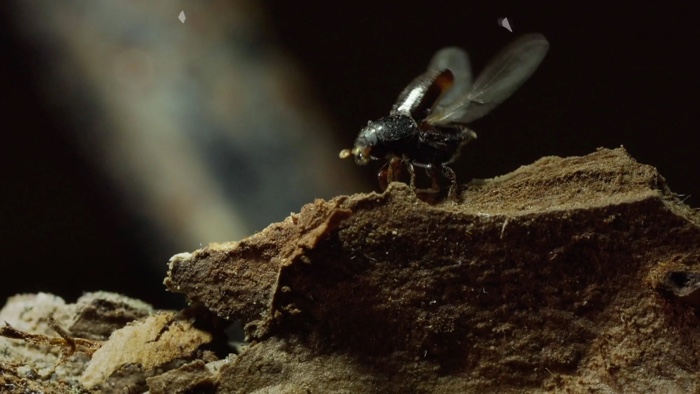
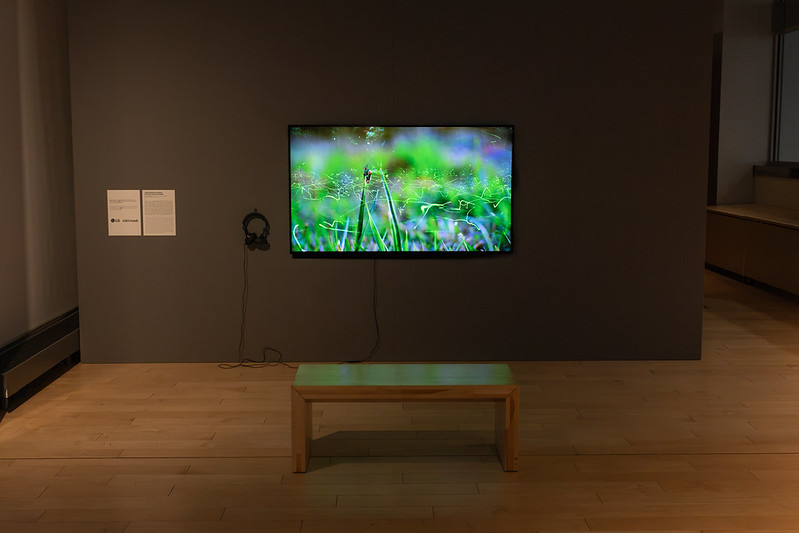
Brakfesten – La Grande Bouffe, by Anne Duk Hee Jordan and Pauline Doutreluingne, is set in the Södra Hällarna nature reserve in Sweden, where elm trees are threatened with extinction.
When elm beetles lay their eggs beneath the bark, the larvae develop a symbiotic relationship with fungi, causing Dutch elm disease. Infected trees are often felled to prevent the disease from spreading. But, as the film reveals, the felled elms continue to play an important role in the ecological cycle, new life will quickly thrive in and on what we see as dead matter.
The film explores the relationship between elm trees, bark beetles and fungi, revealing a world of interdependence, decay and regeneration.
Brakfesten – La Grande Bouffe began as an outdoor sculpture made from debarked branches from a felled elm tree, assembled to imitate the patterns that bark beetles leave on tree trunks. Local species are planted in the hollowed branches filled with soil. These plants, in turn, attract worms, larvae, beetles, birds and other slimy, winged or furry organisms. Other logs are turned into water basins and insect hotels, surrounded by birdhouses and huts for rabbits.
The sculpture becomes the stage for a film that makes us experience the world from other species’ perspective. The documentary uses animation and macro photography to reveal a world usually hidden from the human eye: insects as they fight, eat, mate, die and decompose.
The title refers to the French-Italian film La Grande Bouffe, a 1973 satirical comedy about a group of friends who decide to eat themselves to death. Gluttony is certainly part of Doutreluingne and Jordan’s work, but its subject is also something much bigger: the endless cycle of life, in which death and decay make room for new beginnings.
The title of the work is a reference to the French-Italian movie La Grande Bouffe, a 1973 satirical film, about a group of friends who decide to eat themselves to death. Gluttony is certainly part of Doutreluingne and Jordan’s work, but its subject is also something much bigger: the endless cycle of life, in which death and decay make room for new beginnings.
As I write these lines about their exquisite, slightly creepy film, somewhere in that Swedish forest, tiny creatures are still eating away at the remains of the tree, seeds are sprouting in its hollowed-out logs, and life goes on, fungal disease or not.
Rasa Smite & Raitis Smits, Prompted Evolution, at the RIXC Gallery. Photo by Elizabete Ezergaile
Rasa Smite & Raitis Smits, Prompted Evolution, at the RIXC Gallery. Photo by Elizabete Ezergaile
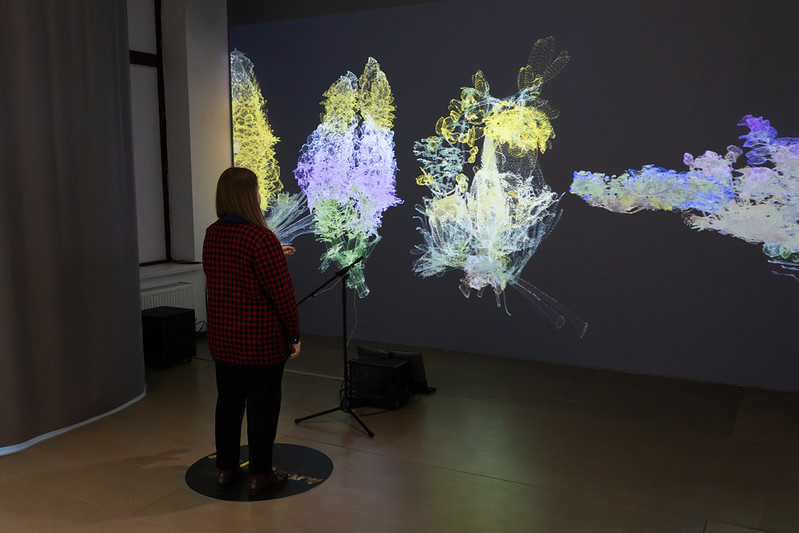
Rasa Smite & Raitis Smits, Prompted Evolution, at the RIXC Gallery. Photo by Elizabete Ezergaile
Rasa Smite & Raitis Smits, AI Herbarium, 2025 (Teaser)
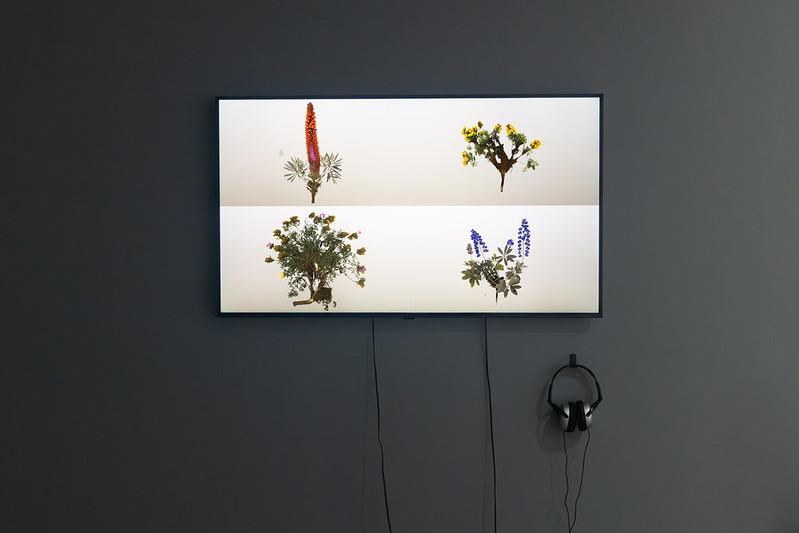
Rasa Smite & Raitis Smits, Prompted Evolution, at the RIXC Gallery. Photo by Elizabete Ezergaile
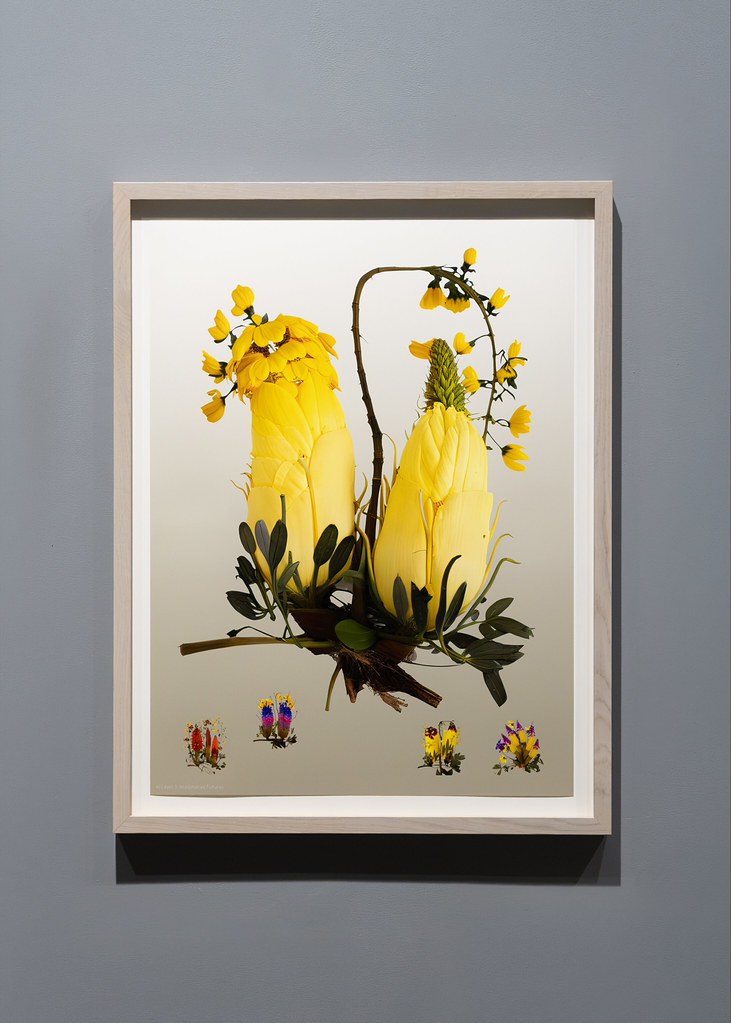
A study looking at the genetic and phenotypic diversity within Lupinus mutabilis (Andean lupin) showed the remarkable genetic and phenotypic diversity within this legume species, making it a valuable resource for developing varieties adapted to different climatic conditions and agricultural needs.
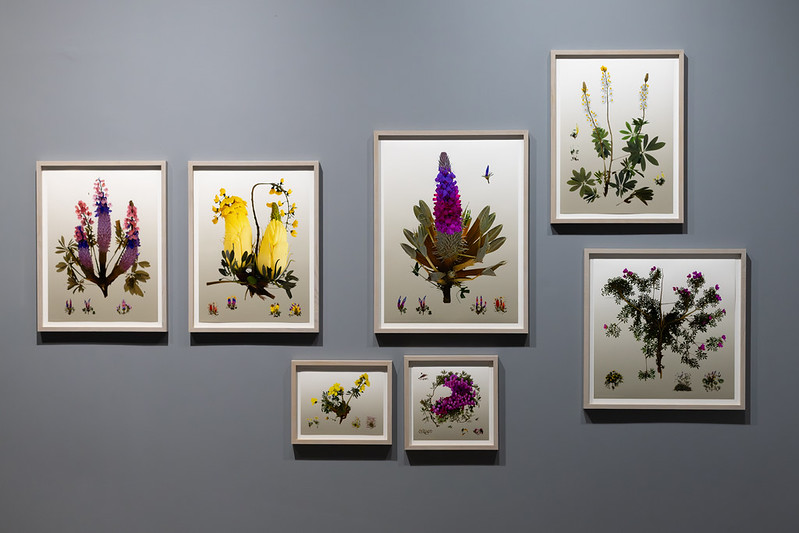
To explore possible futures of plant evolution, Rasa Smite & Raitis Smits combined botanical research, evolutionary biology and AI to investigate how they might adapt to rapid environmental changes. The artists collaborated with Colin Edward Hughes, a plant evolution scientist at the University of Zurich, to digitise 100 herbarium specimens of wild Andean lupines and and used them to train a generative AI model. The model transforms the specimens into speculative plant forms, drawing on past evolutionary patterns to imagine possible directions for future floral diversification.
In the video installation Prompted Evolution, AI models take this process further, transforming the generated forms into interactive virtual plants. The three-dimensional digital appearance give the plants the bodies they had lost when they were pressed into herbarium specimens. This regained volume and physical presence allows them to respond to their surroundings, reacting to environmental stimuli such as visitors’ hand movements.
The AI-generated plants are not scientifically validated predictions of future species. Nevertheless, the project explores the potential of AI models to create an interface between art and science, outlining directions for other interdisciplinary research into nature’s response to anthropogenic climate change.
Smits and Smite’s work also addresses a longstanding question in evolutionary biology: how flowering plants developed such an extraordinary diversity of shapes, colours and growth strategies, bringing to mind what Charles Darwin famously described as the abominable mystery of the rapid diversification of flowering plants in the fossil record.
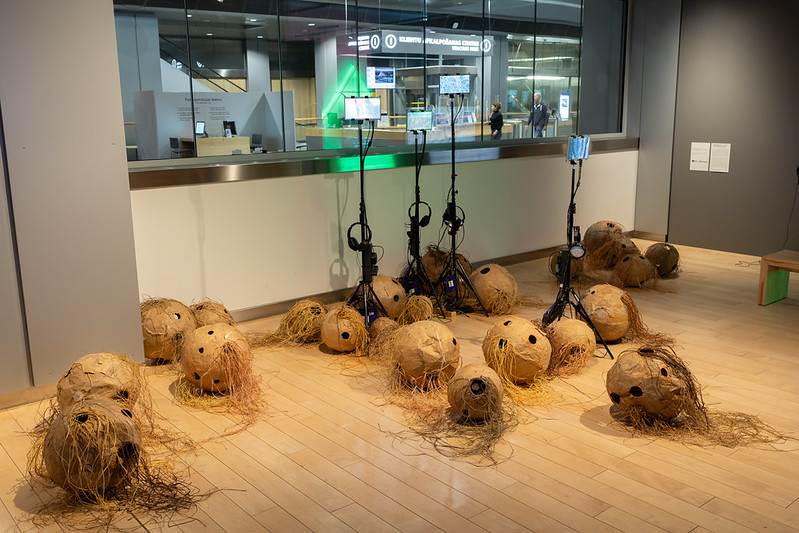
knowbotiq in collaboration with Pablo Torres, TUMBLE_needs – let’s play syncretic abundance, 2025. RIXC festival 2026 exhibition: CLIMATE IMAGINATION. Photo by Elizabete Ezergaile
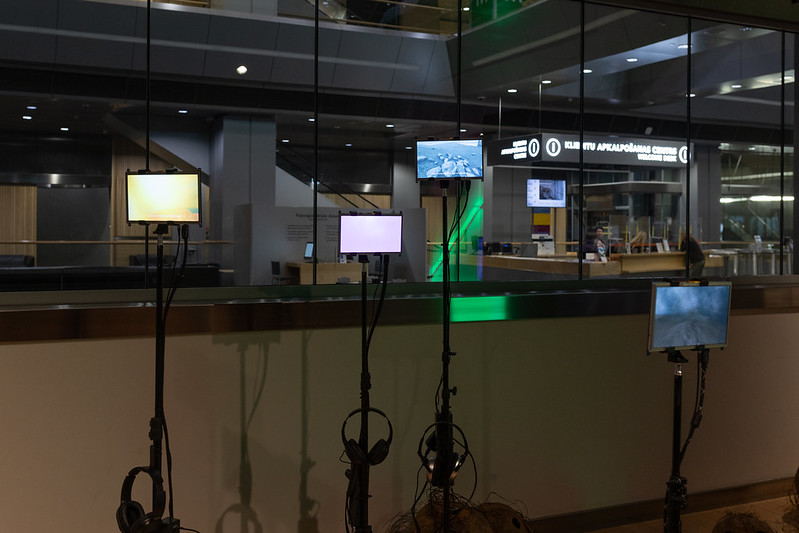
knowbotiq in collaboration with Pablo Torres, TUMBLE_needs – let’s play syncretic abundance, 2025. RIXC festival 2026 exhibition: CLIMATE IMAGINATION. Photo by Elizabete Ezergaile
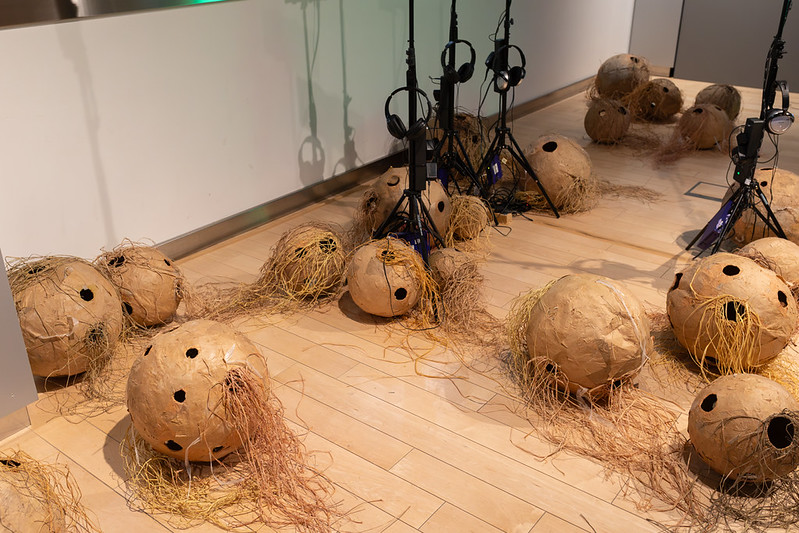
knowbotiq in collaboration with Pablo Torres, TUMBLE_needs – let’s play syncretic abundance, 2025. RIXC festival 2026 exhibition: CLIMATE IMAGINATION. Photo by Elizabete Ezergaile
TUMBLE_needs – let’s play syncretic abundance uses plants, bacteria and even imagined microscopic technologies to challenge the idea that humans can control the natural world.
Whether they are “invasive” plants, such as Kahili ginger; fugitive canola spreading aggressively beyond cultivated fields; nitrogen-fixing bacteria capable of restoring depleted soil; or self-replicating nano-organisms in artificial environments, these organisms thrive, multiply, adapt and disperse uncontrolled in both “nature” and in environments shaped by industrial activity. They reorganise ecosystems, defying our attempts at containment. We call these organisms disruptive and invasive. But these labels mostly reflect an anthropocentric (and even Eurocentric) understanding of what nature should look like and how it should behave.
knowbotiq’s work suggests that coexistence with other life forms doesn’t necessarily mean harmony or mutual understanding. Different species and systems can coexist through friction, instability, competition and transformation.
I don’t know what the beige balls scattered across the floor were supposed to represent but they made me think of tumbleweeds, those iconic rolling plants we associate with Far West movies. Tumbleweeds are not native in the U.S., they come from Eurasia, are highly invasive and are regarded as a threat to local ecosystems and economy. An interesting reminder that what we consider native or foreign is often a matter of perspective.
The exhibition Climate Imagination was curated by Raitis Smits. It remains open at the National Library of Latvia in Riga until December 12, 2026