I considered not visiting the Venice Biennale. Like most people, I am revolted by the double standard of the Italian Ministry of Culture (of the whole government actually): Russia bad, Israel friend. This year, as many of you probably know already, the two colonising countries have returned to the biennale; Israel has been provided with a new home in the Arsenale while its usual pavilion undergoes renovation. Russia was allowed to open its pavilion but only during the press view.
Tensions deepened when the Golden Lion jury announced that they would not consider pavilions from countries facing active International Criminal Court warrants. The members of the jury were forced to resign. Reportedly after being pressured by the artist selected for the Israeli pavilion.
The contemporary art community doesn’t stand on the side of the oppressor. Hundreds of artists, curators and arts workers taking part in the biennial have signed a letter calling for Israel to be excluded from the biennale.
Despite South Africa’s attempt to censor her performance, Gabrielle Goliath is exhibiting her tribute to murdered women independently at the Chiesa di Sant’Antonin. The South African minister of Sport, Arts and Culture had objected to the mention of Hiba Abu Nada in the tribute. An Israeli airstrike had killed the Palestinian poet in her home in the Gaza Strip in 2023. She was 32.
The opening of the biennial was marked by protests and the temporary closure of pavilions. There’s been more protests since. Claiming that the biennial is or should remain neutral when a genocide is being committed under everyone’s eyes is no sign of clairvoyance.
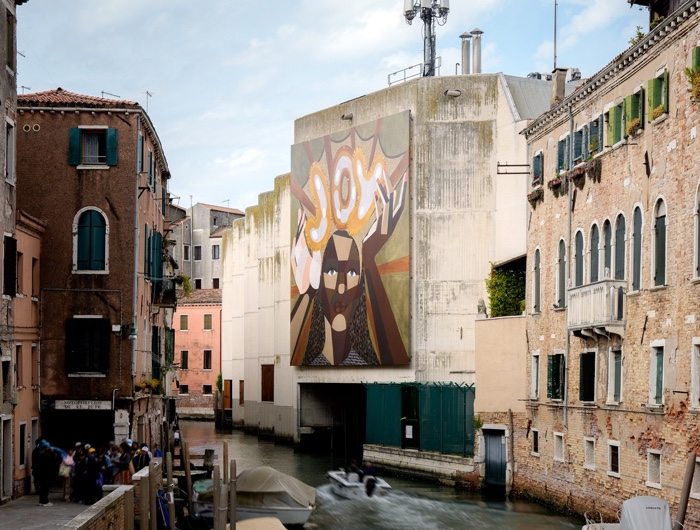
Derrick Adams, Heavy is the head that wears the crown, 2026. Image: Gagosian
What i didn’t know is that both the main exhibition curated by Koyo Kouoh and some of the national pavilions are presenting works that (more or less) subtly take a stance against Israel’s imperialism. Fortunately for anyone who abhors artwashing, the curating of the whole event has made it impossible to ignore the crimes committed by Israel in Palestine and Lebanon. Now contemporary art doesn’t have the massive audience and influence it wishes it had but I applaud any gesture that condemns the presence of a state committing genocide in an international cultural event. The first hint that the curators of the main exhibition refuse to ignore Israel’s crimes stares at visitors as they enter the Arsenale:
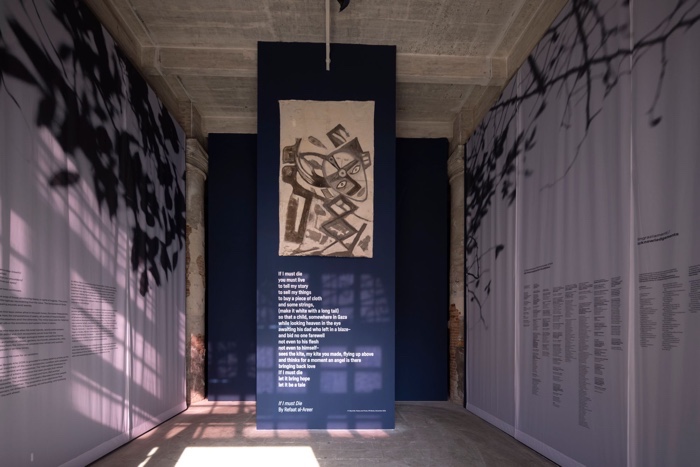
61st International Art Exhibition – La Biennale di Venezia, In Minor Keys. Photo by Marco Zorzanello. Courtesy: La Biennale di Venezia
Refaat al-Areer‘s If I must Die, written mere weeks before the poet and his family were killed by an Israeli airstrike in Gaza in December 2023, opens the exhibition at the Arsenale.
Elsewhere in the Arsenale is the temporary Israeli pavilion. Positioned directly opposite that of Saudi Arabia:
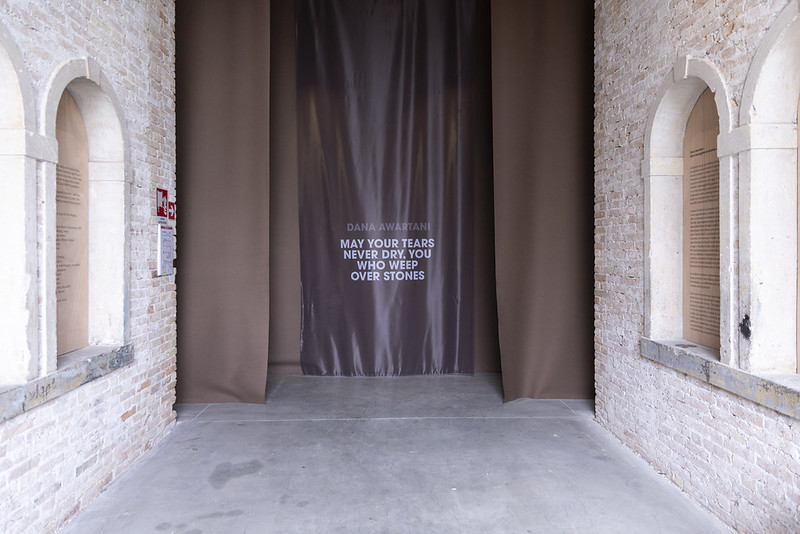
Dana Awartani, May your tears never dry, you who weep over stones. Pavilion of SAUDI ARABIA, 61st International Art Exhibition – La Biennale di Venezia, In Minor Keys. Photo by Marco Zorzanello. Courtesy: La Biennale di Venezia
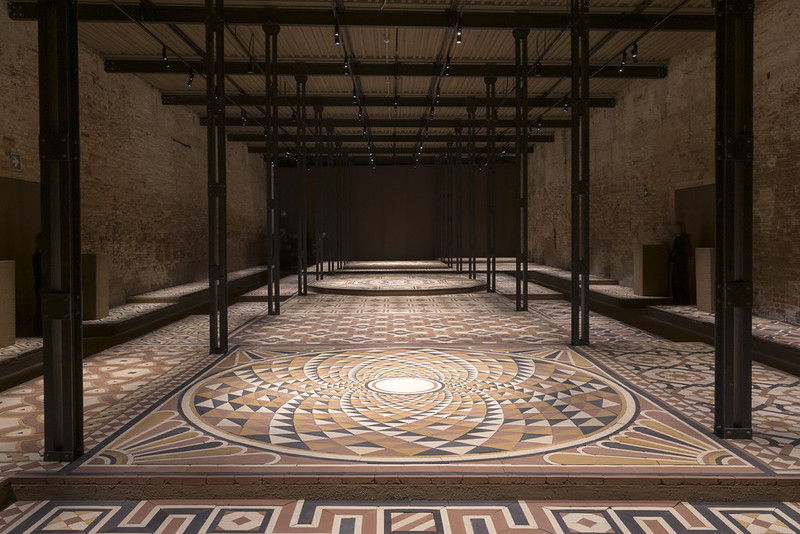
Dana Awartani, May your tears never dry, you who weep over stones. Pavilion of SAUDI ARABIA, 61st International Art Exhibition – La Biennale di Venezia, In Minor Keys. Photo by Marco Zorzanello. Courtesy: La Biennale di Venezia
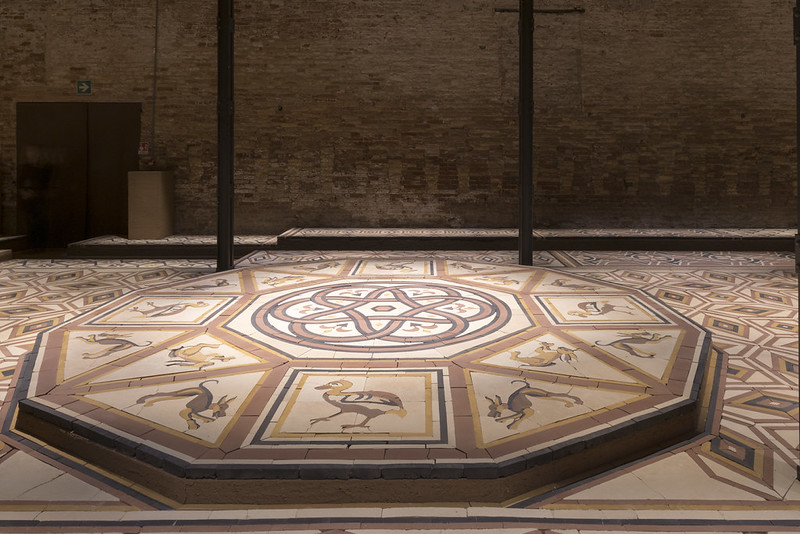
Dana Awartani, May your tears never dry, you who weep over stones. Pavilion of SAUDI ARABIA, 61st International Art Exhibition – La Biennale di Venezia, In Minor Keys. Photo by Marco Zorzanello. Courtesy: La Biennale di Venezia
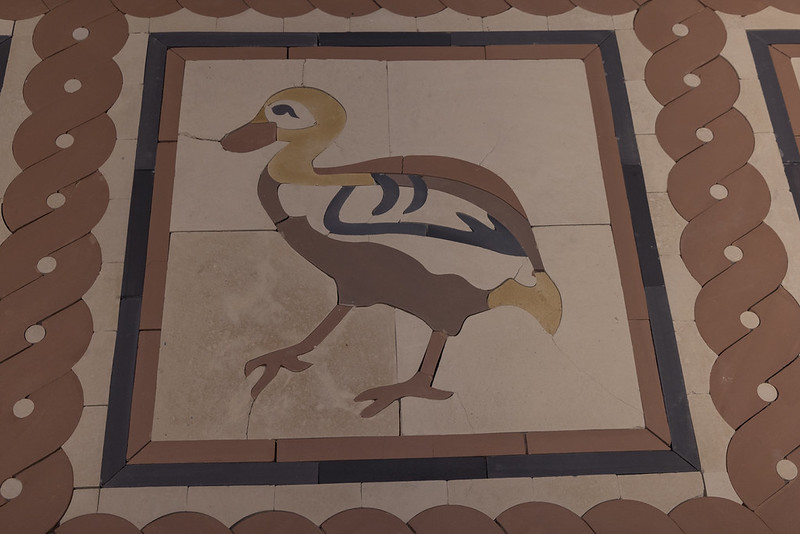
Dana Awartani, May your tears never dry, you who weep over stones. Pavilion of SAUDI ARABIA, 61st International Art Exhibition – La Biennale di Venezia, In Minor Keys. Photo by Marco Zorzanello. Courtesy: La Biennale di Venezia
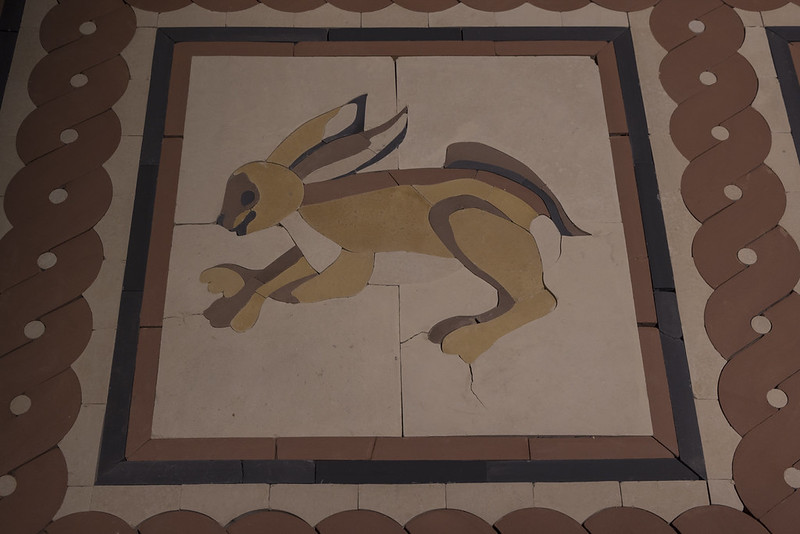
Dana Awartani, May your tears never dry, you who weep over stones. Pavilion of SAUDI ARABIA, 61st International Art Exhibition – La Biennale di Venezia, In Minor Keys. Photo by Marco Zorzanello. Courtesy: La Biennale di Venezia
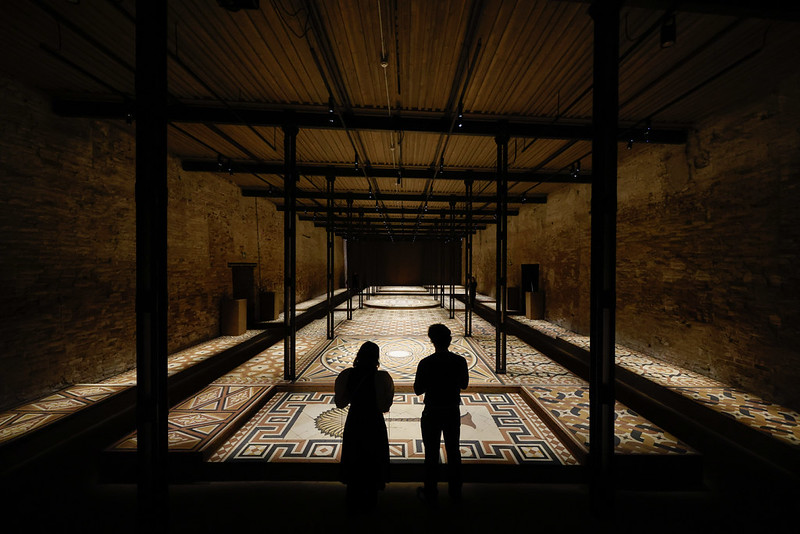
Dana Awartani, May your tears never dry, you who weep over stones. Pavilion of SAUDI ARABIA, 61st International Art Exhibition – La Biennale di Venezia, In Minor Keys. Photo by Jacopo Salvi. Courtesy: La Biennale di Venezia
With May your tears never dry, you who weep over stones, Dana Awartani offers the most elegant snub to Israel. She transformed the Pavilion of Saudi Arabia into an homage to the archaeological heritage of the Arab world that has been destroyed in war.
After the Arab Spring, the artist started documenting the destruction of cultural sites across the Middle East. Between 2014 and 2017, for example, Daesh vandalised and looted the Raqqa Museum in Syria. More recently, the Saint Hilarion Monastery, an ancient Christian monastery in Gaza, was among the many cultural landmarks damaged or destroyed by Israel since the beginning of its war against Hamas and the innocent civilian population of the region. When a building is destroyed, you lose a part of the history of a people but you also lose crafts practices. Wars displaces craftspeople and turn them into refugees in Western countries where they often do menial jobs that have nothing to do with their skills and talent.
In order to contribute to the preservation of the heritage and the fight against cultural cleansing, the artist worked with some twenty craftspeople, all economic migrants to the Saudi region to reproduce the mosaics that were found on sites that have been damaged or destroyed.
The work not only brings traditional crafts into the contemporary art canon, it also invites visitors to meditate on the fragility of material memory and the relationship between craft, history and loss.
The work’s title, May Your Tears Never Dry, You Who Weep over Stones, comes from a poem by Abu Nuwas. He was criticising people who cry over ruins instead of people.
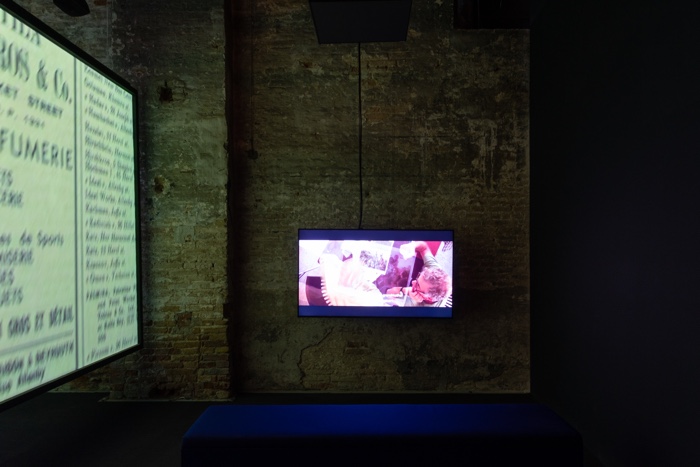
Avi Mograbi, Between a river and a sea, 2026. 61st International Art Exhibition – La Biennale di Venezia, In Minor Keys. Photo by: Luca Zambelli Bais. Courtesy: La Biennale di Venezia
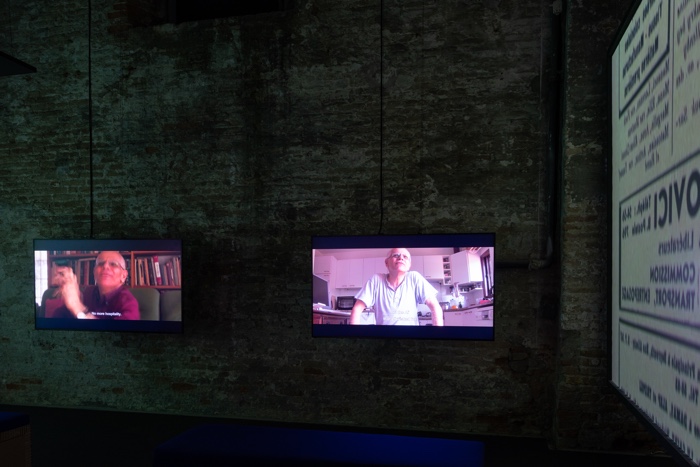
Avi Mograbi, Between a river and a sea, 2026. 61st International Art Exhibition – La Biennale di Venezia, In Minor Keys. Photo by: Luca Zambelli Bais. Courtesy: La Biennale di Venezia
Avi Mograbi is an Israeli documentary filmmaker, a political activist and a board member of Breaking the Silence. His work exposes the human cost of conflict in Palestine and Israel. “The First 54 Years – An Abbreviated Manual for Military Occupation” (which you can watch here), for example, combines testimonies and archival video from Breaking the Silence to dissect the strategies employed to control, demoralise and divide Palestinians.
The installation he presents in Venice, Between a river and a sea, is a collaboration with Ali Al-Azhari, his Arabic teacher. Their personal histories are deeply entangled with the region’s past: Al-Azhari’s father, a Palestinian, fought against Mograbi’s father, a Jewish activist, in 1948. Following the establishment of the State of Israel, both families were severed from their original communities. Mograbi’s family chose to relocate to Tel Aviv, while the al-Azharis were expelled by Israelis from the village of Safuriyya, becoming “internal refugees” within their own homeland. Together, the two men retrace the contours of a Middle East once shared by their grandparents.
The work Between a river and a sea features projections of two business directories. The first one is Dalil Gédéon, a business and trade directory in French and Arabic that covered Lebanon, Palestine and Syria in 1938; the other is the Yellow Pages from Gaza in 2023.
The 1938 directory, projected onto the screen, paints the picture of a society in which Muslims, Christians and Jews are listed without any hierarchical, religious or national divisions. That world has ceased to exist. The list of businesses operating in Gaza in 2023 is even more disheartening. All the offices of the doctors and lawyers, the restaurants, carpentry workshops, shoe shops… We can infer that all of them have been destroyed by Israeli soldiers.
Both directories are evidence of the ongoing work of destruction and erasure undertaken by Israel since 1948.
The installation also features a video where Mograbi and al-Azhari look at the 1938 directory and at old photographs of the Nakba. They try to follow the traces of their families through Damascus, Beirut, Safuriyya, Jaffa and Tel Aviv, places that were once part of a single region before it was divided by the creation of the State of Israel.
As Mograbi said, the work is “an opportunity to find a way to express the horror of genocide without surrendering to the pornography of images we live under the attack of. To seek the minor key in the midst of destruction is not a simple challenge, but a political decision – one that aligns with both my work as a filmmaker and my long-standing engagement as an activist.”
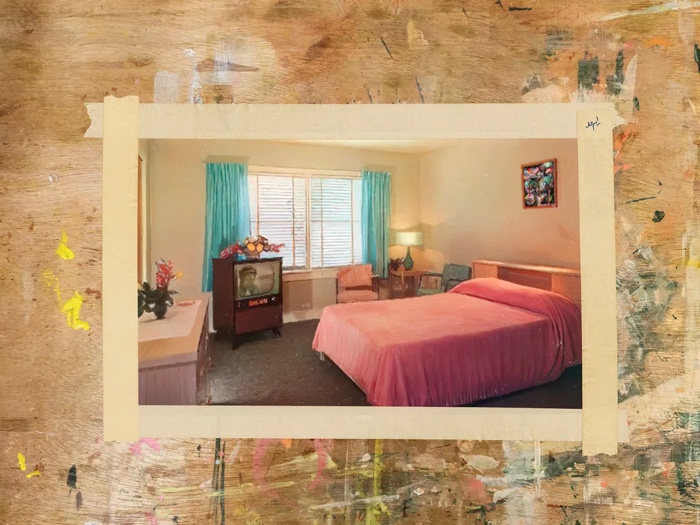
Walid Raad, Far from Quieting, 1969-2026- Photo: 104
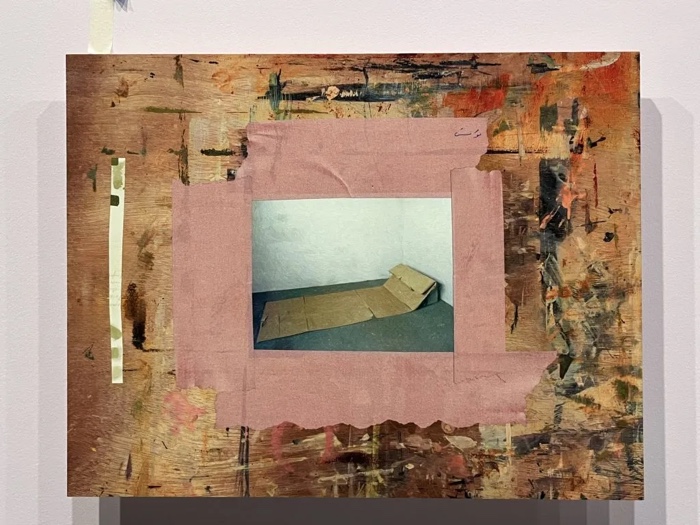
Walid Raad, Far from Quieting, 1969-2026. Photo: antinomie
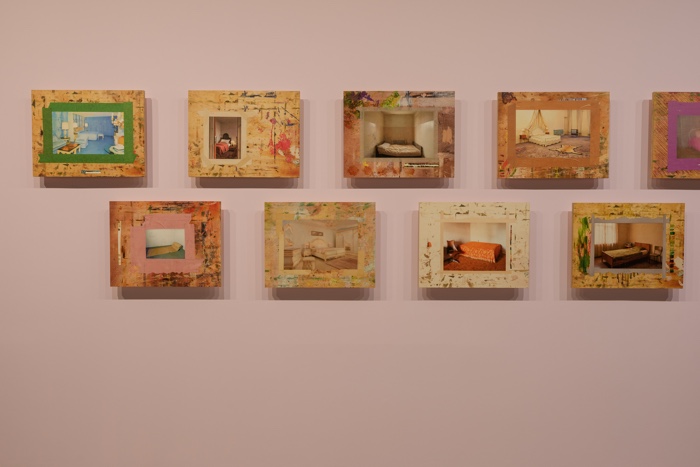
Walid Raad, Far from Quieting, 1969-2026. 61st International Art Exhibition – La Biennale di Venezia, In Minor Keys. Photo by Andrea Avezzù. Courtesy: La Biennale di Venezia
Walid Raad painted and drew beds in which he imagined that Yasser Arafat, leader of the Palestine Liberation Organization from 1969 to 2004, may have slept during his life. It is said that Arafat spent most of his life on the move for fear of being assassinated. There was nothing paranoid about the precaution given the number of times Israel unsuccessfully attempted to kill him.
Though speculative in nature, the works probe the conditions of confinement, the tactics of survival and the vulnerability of bodies entangled in geopolitical conflict. The bed, ordinarily a site of rest, becomes instead a space marked by the persistent threat of violence.
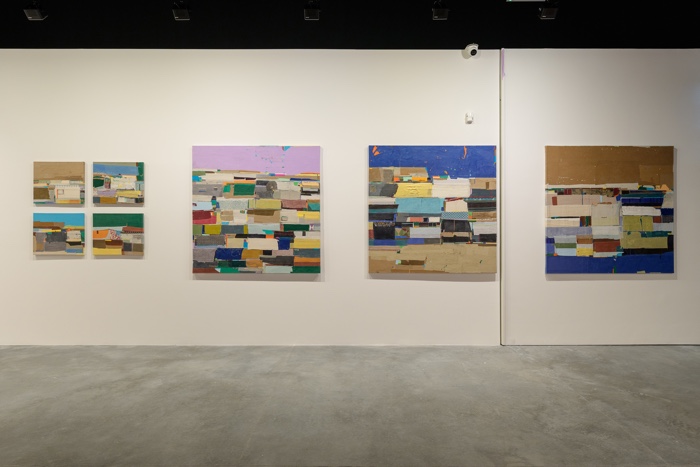
Mohammed Joha, No Shelter, 2025. 61st International Art Exhibition – La Biennale di Venezia, In Minor Keys. Photo by Andrea Avezzù. Courtesy: La Biennale di Venezia
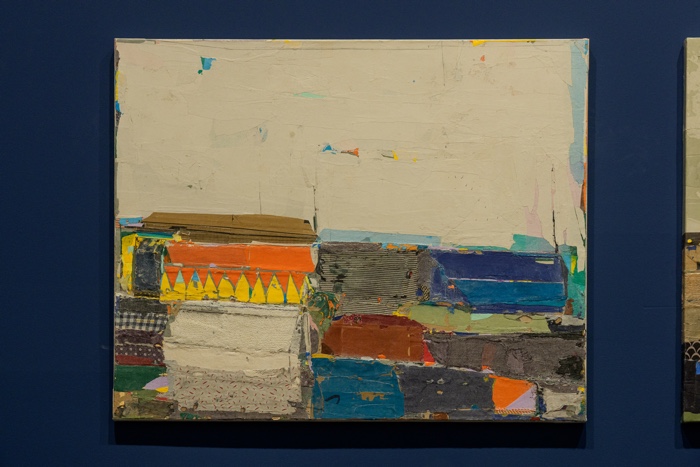
Mohammed Joha, No Shelter, 2025. 61st International Art Exhibition – La Biennale di Venezia, In Minor Keys. Photo by Andrea Avezzù. Courtesy: La Biennale di Venezia
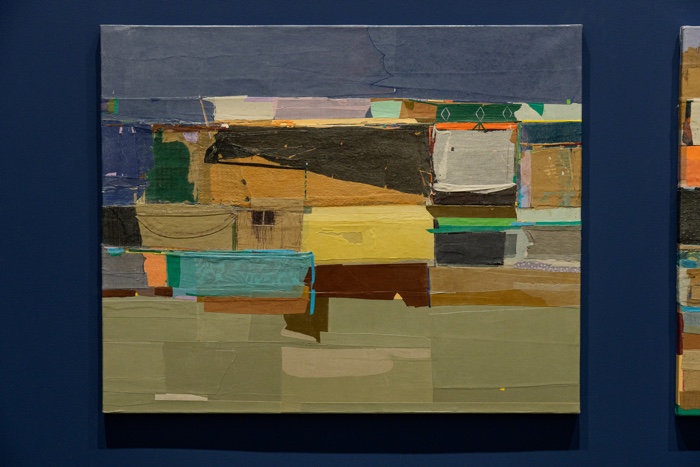
Mohammed Joha, No Shelter, 2025. 61st International Art Exhibition – La Biennale di Venezia, In Minor Keys. Photo by Andrea Avezzù. Courtesy: La Biennale di Venezia
Mohammed Joha‘s work is informed by his memories of Gaza, where he grew up. His No Shelter collage series is made of reclaimed materials: fabric, paper, cardboard, plastic. they evoke both the destruction of homes, place and architecture and the ingenuity of people who must rebuild their lives from what little remains at hand.
The collages recall refugee camps and informal shelters seen from above. They draw on the everyday practices of Gazans caught in relentless cycles of destruction and reconstruction. The act of repurposing materials becomes a testament to the creative resilience of a population left to endure while the powerful look on with indifference. In these works, memory becomes a material rather than an abstraction. “No shelter” signifies the existential condition of those who are without houses, yet not without a homeland.
61st International Art Exhibition of La Biennale di Venezia runs until 22 November 2026 in the City of the gondolieri.
See also: Venice Biennale: Wind orchestra, sperm banking, critical minerals and haunted tech and The Venice Biennale: Canicula. Oppressive temperatures and societal suffocation.