
I’ve always associated videos at the Venice Biennale with boundless frustration. So many videos, so little time to watch them; even less patience for prolonged stays in airless, humid overcrowded dark rooms. Yet, when asked about what not to miss during the Biennale, my number one recommendation is Canicula, an exhibition with 8 new video installations commissioned and produced by Fondazione In Between Art Film. This show plays with light, soundproofing and the extraordinary architecture of a 16th-century church complex to give a different physical, auditory and spatial dimension to each artwork. This, however, would mean little to me if the videos themselves were not exceptionally good.
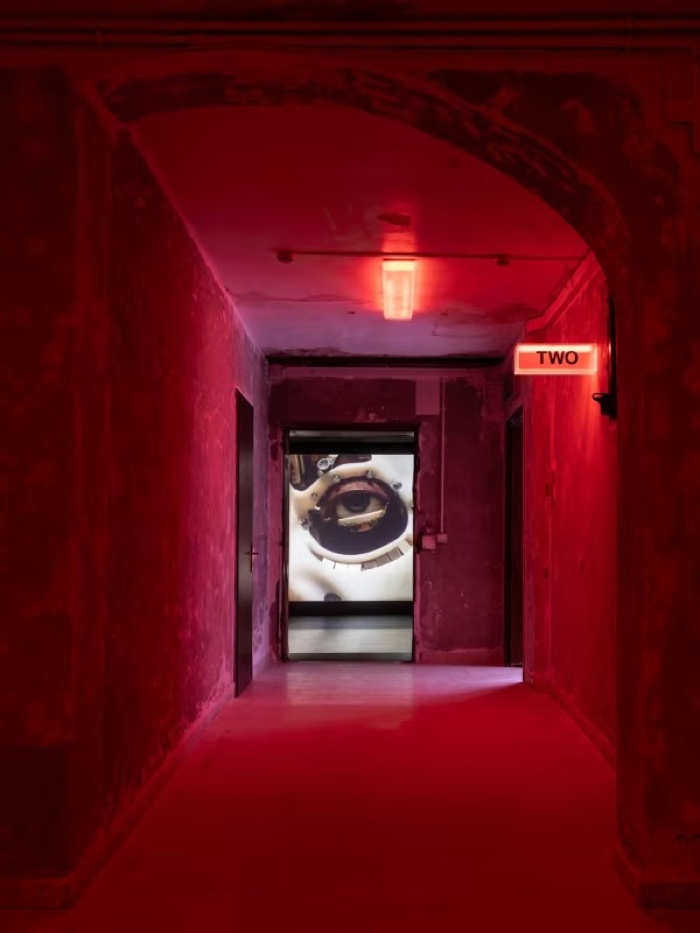
Yuyan Wang, Boring Billion, 2026 in “Canicula”_Fondazione In Between Art Film at Complesso dell’Ospedaletto, Venice. Photo Marco Cappelletti Studio
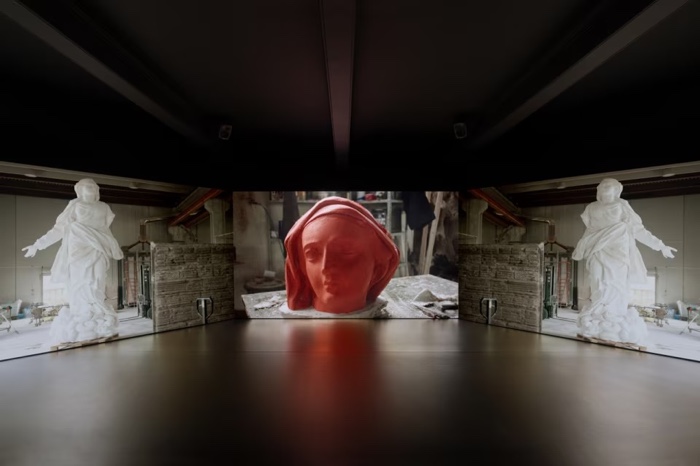
Massimo D’Anolfi and Martina Parenti, 24 Landscapes + A Vision, 2026
The translation for “canícula” in English is heatwave or, more evocatively, “dog days of summer”. Oppressive temperatures can severely impact mental health. They disrupt sleep, impair brain function and can make people feel more irritable or aggressive. Heatwaves test our limits. Rising temperatures and their consequences from wildfires to drought will increasingly affect everyone, even climate change deniers. Canicula considers extreme heat metaphorically, evoking states of suffocation, pressure and strain that feel so disorientating that they could push societies to the brink of collapse. The exhibition is about excess of heat but also excess of light, information, noise, violence, technology, images, complexity and the overlapping crises of our time.
Set inside a historic church complex incorporating both hospital and chapel spaces, the eight new site-specific video installations create spaces for reflection, for considering complexity without simplifying it.
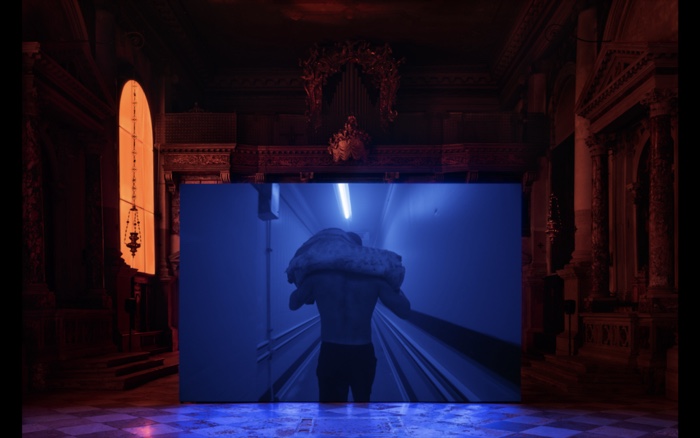
Janis Rafa, Baby I’m Yours, Forever, 2026. Fondazione In Between Art Film at Complesso dell’Ospedaletto, Venice, 2026. Photo © Marco Cappelletti and Giuseppe Miotto / Marco Cappelletti Studio
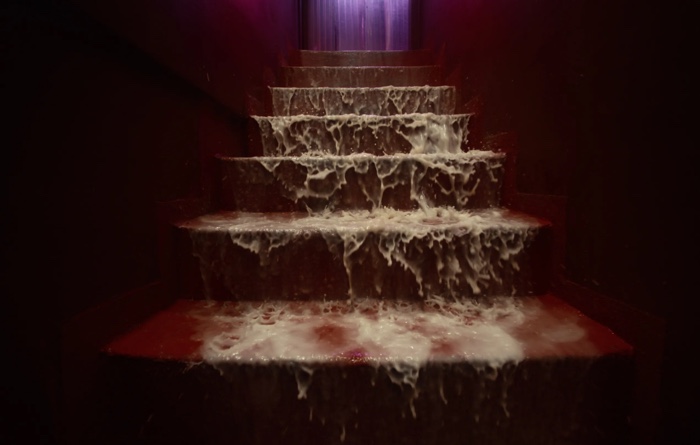
Janis Rafa, Baby I’m Yours, Forever, 2026
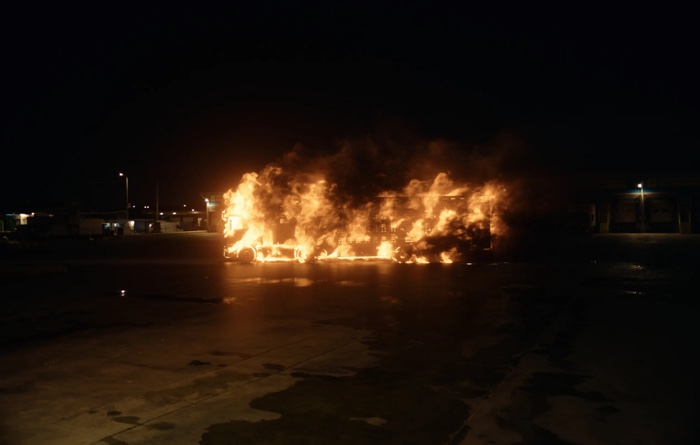
Janis Rafa, Baby I’m Yours, Forever, 2026
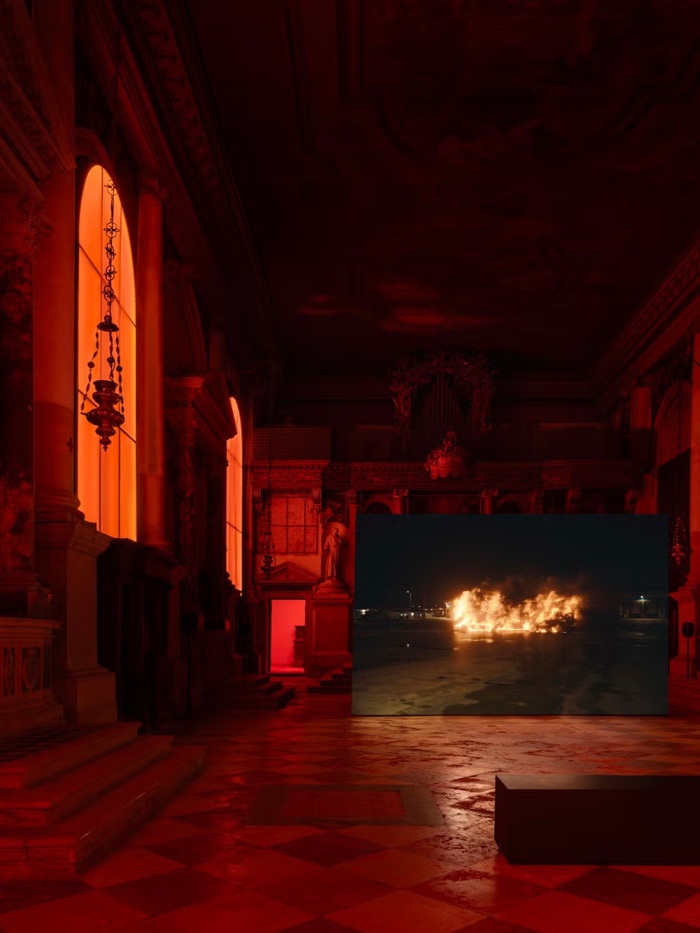
Janis Rafa, Baby I’m Yours, Forever, 2026. Fondazione In Between Art Film at Complesso dell’Ospedaletto, Venice, 2026. Photo © Marco Cappelletti and Giuseppe Miotto / Marco Cappelletti Studio
The first video you encounter is as spectacular as its mode of display. Janis Rafa’s Baby I’m Yours, Forever materialises on a large freestanding screen that cuts across the nave of the church, bathing the space with alternatively red, blue or purple halos of light.
Ironically for an exhibition titled after the hottest days of the Summer, the film is set inside an industrial meat refrigeration facility. Rafa’s work explores the material, economic and symbolic mechanisms of the commodification of both non-human and human bodies, offering a meditation on the tension between nourishment and cruelty. In a single-take, the film takes you through the system of machinery, corridors and rooms dedicated to dismembering, cutting, packaging, storing and transporting corpses.
In a sequence of allegorical scenes, the brutality of the meat industry is alluded to, rather than displayed in all its horror. In one chamber, the muscular torsos of young call up carcasses. In another, a body contorted on a dance pole conjures images of a slab of meat on a hook. On a staircase nearby, floods of milk cascade down the steps suggesting overconsumption and wastefulness. It is nighttime and no one is at work. Even the bodies of the animals seem to be absent, save for a couple of barking dogs and the magnificent head of a bull offered on a platter like John the Baptist.
These bodily fragmentsmirror the psychological dissociation and distancing required to accept the monstrous scale of animal suffering that the meat and dairy industry relies on. The video is a subtle but powerful plea to open our eyes to the ruthless, sanitised and invisibilised exploitation of other sentient beings.
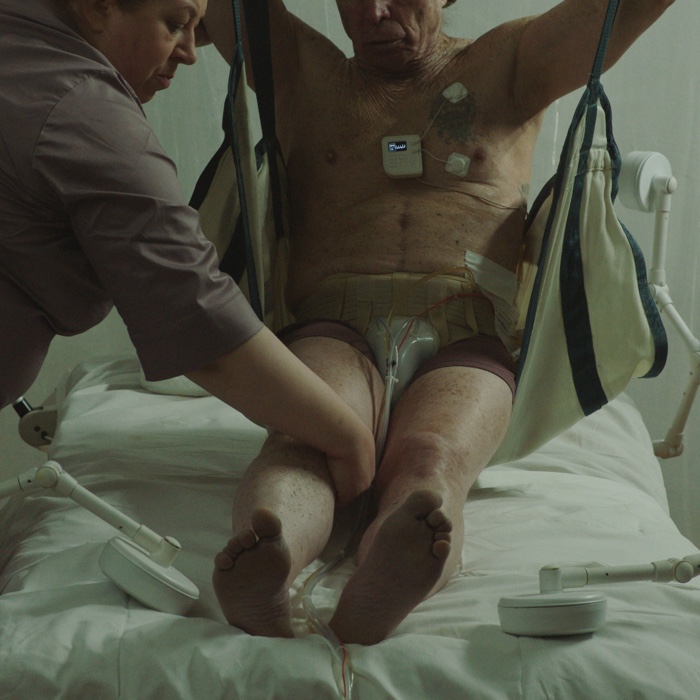
Roman Khimei and Yarema Malashchuk, Wishful Thinking, 2026
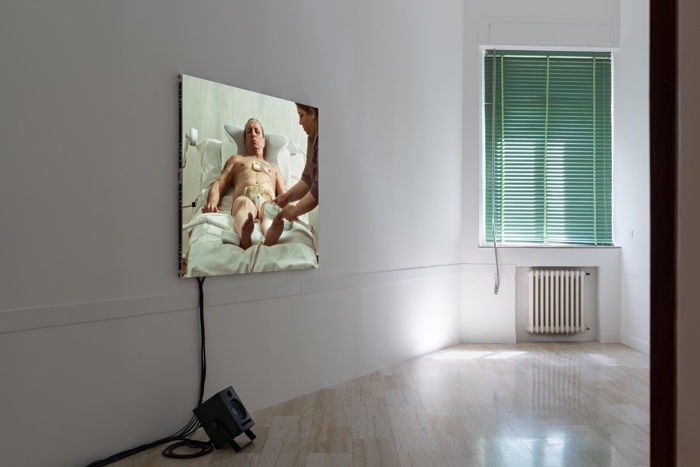
Roman Khimei and Yarema Malashchuk, Wishful Thinking, 2026. “Canicula,” Fondazione In Between Art Film at Complesso dell’Ospedaletto, Venice, 2026. Photo © Marco Cappelletti and Giuseppe Miotto / Marco Cappelletti Studio
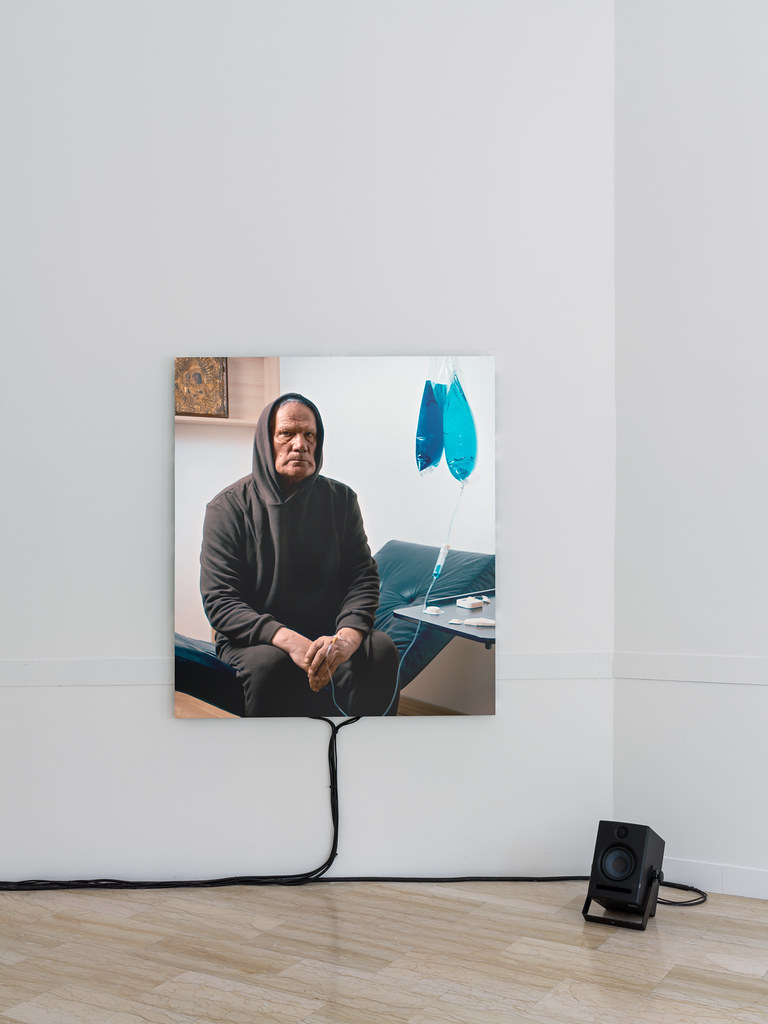
Roman Khimei and Yarema Malashchuk, Wishful Thinking, 2026. “Canicula,” Fondazione In Between Art Film at Complesso dell’Ospedaletto, Venice, 2026. Photo © Marco Cappelletti and Giuseppe Miotto / Marco Cappelletti Studio
Wishful Thinking imagines an unspecified future when Russia’s assault on Ukraine is over and four Russian soldiers reminisce about their role in the war. Installed in rooms that look like hospital wards, the three Russian men and the woman interviewed are old and frail. They variously regret, justify, refute or ignore their responsibilities. They talk about the trauma of war, the myth of the “Russian soul” and the propaganda they fell for. There are long silences and questions that are left unanswered. There are also moments when you feel genuinely sorry for the (fictional) ex-soldiers. Some, not all, admit their foolishness, deplore the absurdity of the war, condemn the indoctrination.
Roman Khimei and Yarema Malashchuk’s multichannel video examines how collective memory is reshaped when propaganda and state violence distort perception. None of the soldier appears to be a reliable narrator but the work is magnificent and moving. The framing of bodies in the video interviews, the modulation of light and the compositional structure recall Italian and Northern Renaissance paintings.
The soldiers’ parts are performed by Ukrainian actors who made a career by playing characters from Russian literature and drama in the theatres of Soviet Ukraine. As if they too were summoned before us and the day of the reckoning had come.
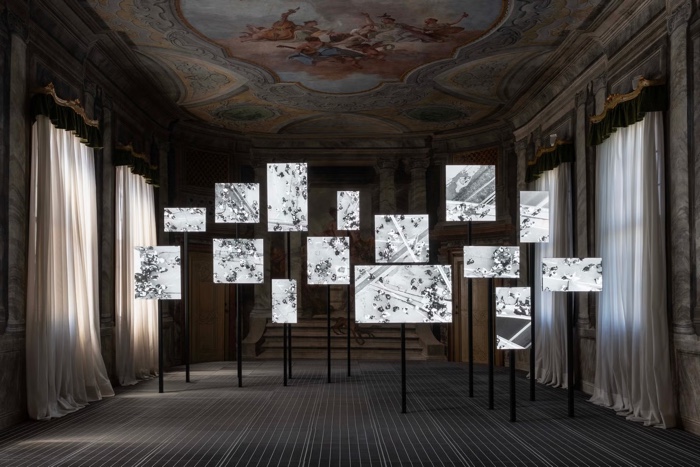
Lawrence Abu Hamdan, 450XL: The Story of a Fugitive Sound, 2026. Installation view. Photo: Marco Cappelletti and Giuseppe Miotto. Marco Cappelletti Studio
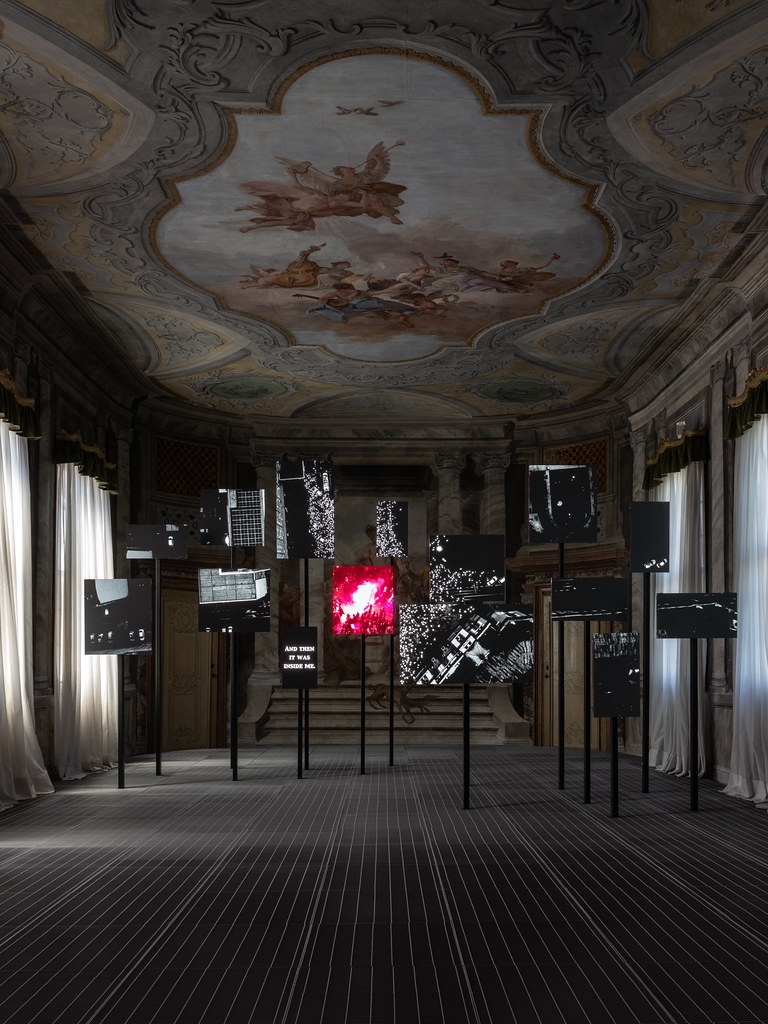
Lawrence Abu Hamdan, 450XL: The Story of a Fugitive Sound, 2026. Installation view. Photo: Marco Cappelletti and Giuseppe Miotto. Marco Cappelletti Studio
On March 15, 2025, around 300,000 people participated in a silent vigil in Belgrade to protest against corruption. Until suddenly and without warning, the crowd abruptly dispersed, as if fleeing from an invisible and terrifying force.
With his forensic audio agency Earshot, Lawrence Abu Hamdan tried to understand the strange phenomenon of a sound that no recording device was able to capture. Drawing on 15 earwitness interviews, 19 videos and 3,244 written testimonies, the investigation pointed to LRAD 450XL, a directional long-range acoustic crowd control weapon allegedly deployed against a civilian population for the first time on record. Illegal in Serbia, the weapons emit concentrated sound waves capable of causing sharp ear pain, disorientation, ruptured eardrum and even irreversible hearing damage.
Using the former concert room of the Ospedaletto as a backdrop, Abu Hamdan’s video installation is deployed across 15 screens, each standing on a pole like a protest sign. Black-and-white intertitles similar to the ones used in silent movies display the earwitness testimonies in alternance with drone footage of the the peaceful gathering. The only non original sound in the work is a one-second clip of the weapon as reconstructed by Earshot. The remainder of the audio is a score composed by James Hoff.
Through the fragmented yet cohesive composition of this chorus of earwitnesses, the work reflects not only on a weapon designed to undermine solidarity and collectivity, but also on the power of silence as a means of resistance.
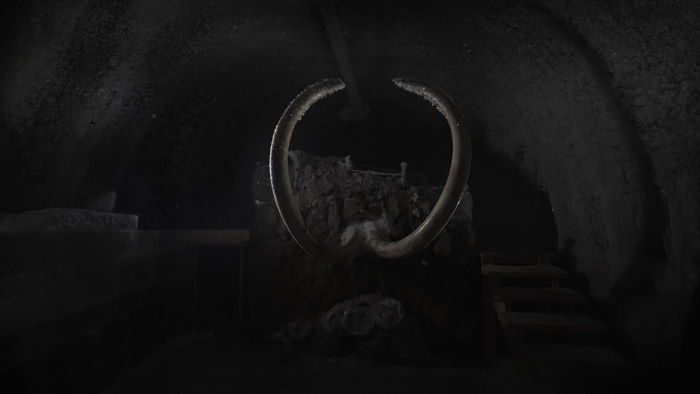
Maya Watanabe, Jarkov, 2026
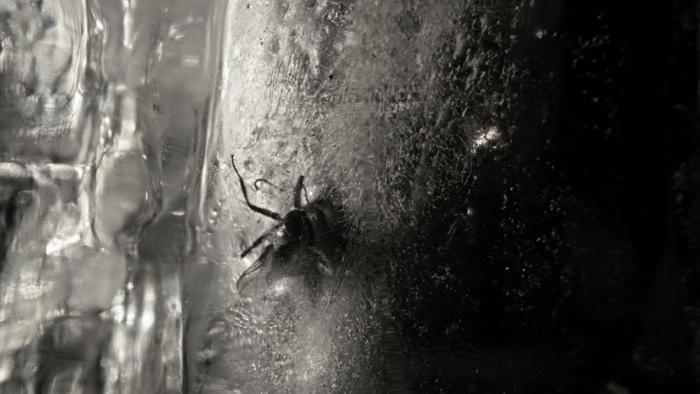
Maya Watanabe, Jarkov, 2026
The Arctic region is heating up as much as four times as quickly as the global average. As the earth gets warmer and the ground thaws in the normally ice-cold region, the permafrost reveals bodies from the Pleistocene Epoch. Jarkov is one of them. The remarkably well-preserved woolly mammoth died 20,000 years ago. In 1999, two years after its discovery, Jarkov and the surrounding sediments were extracted as a single, massive 23-ton cube of frozen soil, with only two visible tusks protruding from it. The block in which the woolly mammoth remains embedded is stored for scientific purposes in a cave carved out of the permafrost in northern Siberia.
Maya Watanabe travelled to Siberia to visit the underground storage. Her camera slowly moves through the tunnel system until it encounters the few visible fragments of Jarkov and other mammoth remains.
The slow pace, tight close-ups and changes of scales make the images almost illisible. You can barely distinguish fur, icy surfaces, a wall made of rock, corridors. It creates a sense of disorientation
Watanabe’s artwork is the only one in the show set in absolute darkness, echoing the dark depths of the Arctic ice, our stubborn blindness to the degradation of the planet and the darkness of our time.
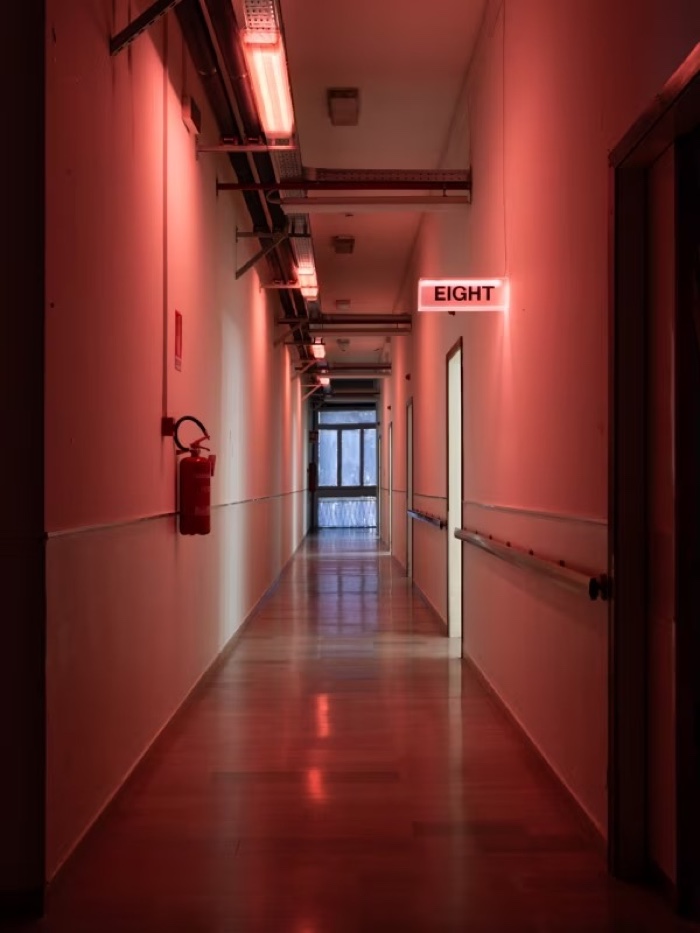
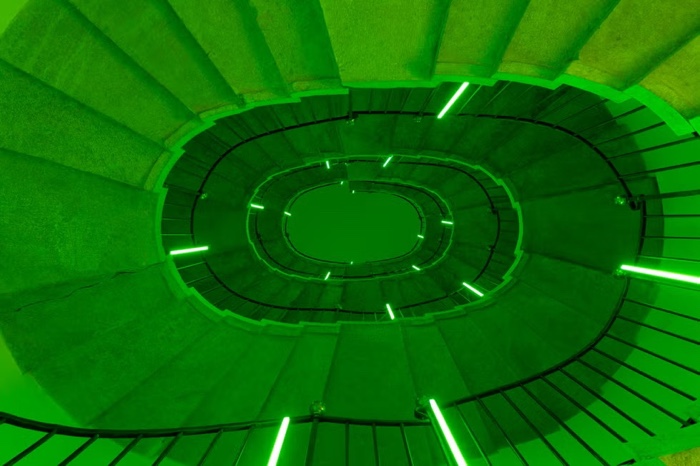
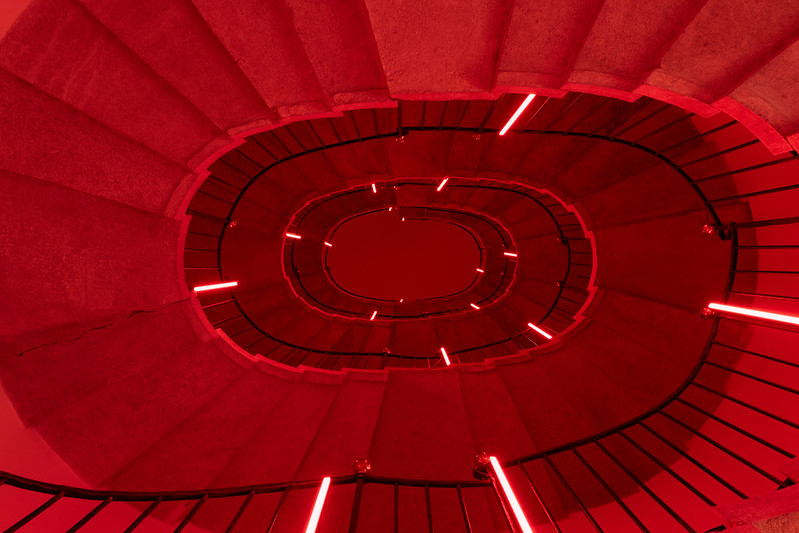
2050+, Canicula. Installation View at Fondazione In Between Art Film at Complesso dell’Ospedaletto, Venice, 2026. Photo: Marco Cappelletti and Giuseppe Miotto. Marco Cappelletti Studio
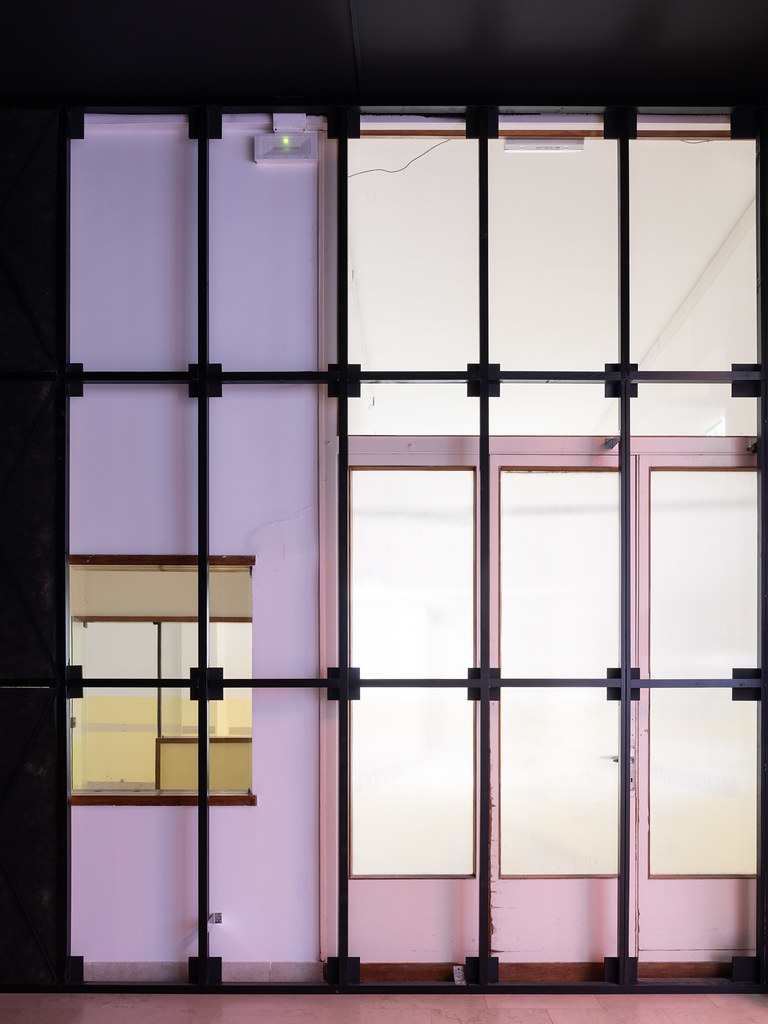
2050+, Canicula. Installation View at Fondazione In Between Art Film at Complesso dell’Ospedaletto, Venice, 2026. Photo: Marco Cappelletti and Giuseppe Miotto. Marco Cappelletti Studio
studio 2050+ designed the exhibition’s scenography with remarkable sensitivity. Their manipulation of light, volume and the internal architecture of the Complesso dell’Ospedaletto elevates each work, to the point that the display itself feels like an artwork in its own right.
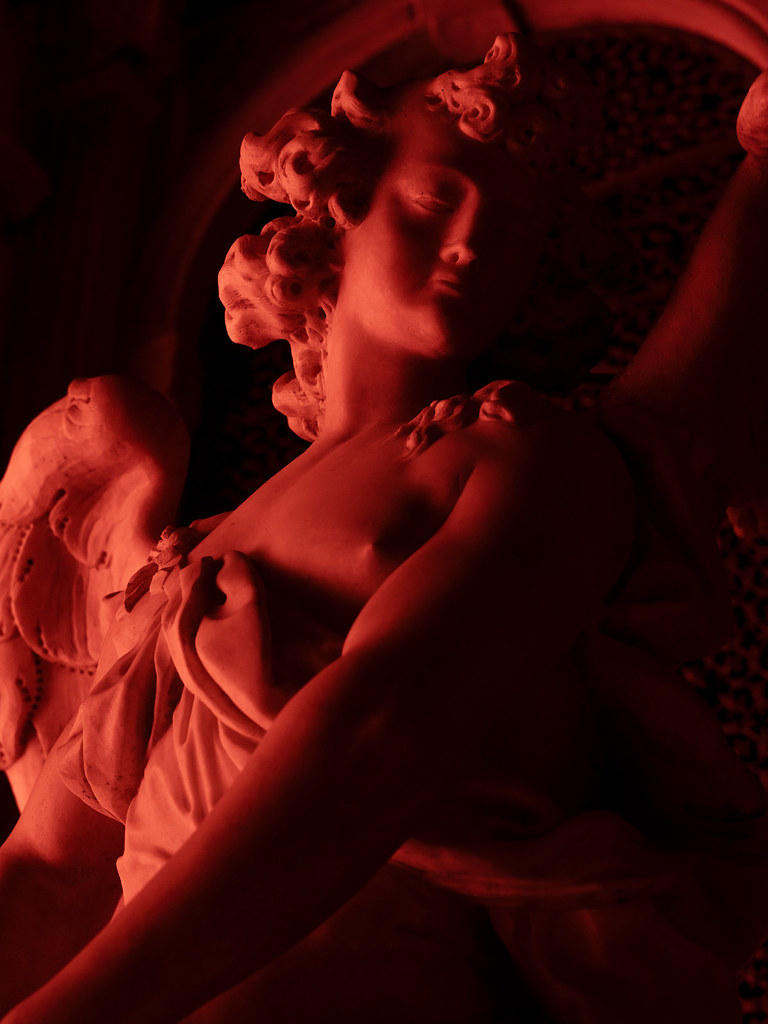
2050+, Canicula. Installation View at Fondazione In Between Art Film at Complesso dell’Ospedaletto, Venice, 2026. Photo: Marco Cappelletti and Giuseppe Miotto. Marco Cappelletti Studio
P. Staff, Terminal Lucidity, 2026. Photo: Marco Cappelletti and Giuseppe Miotto. Marco Cappelletti Studio
P. Staff, Terminal Lucidity, 2026. Photo: Marco Cappelletti and Giuseppe Miotto. Marco Cappelletti Studio
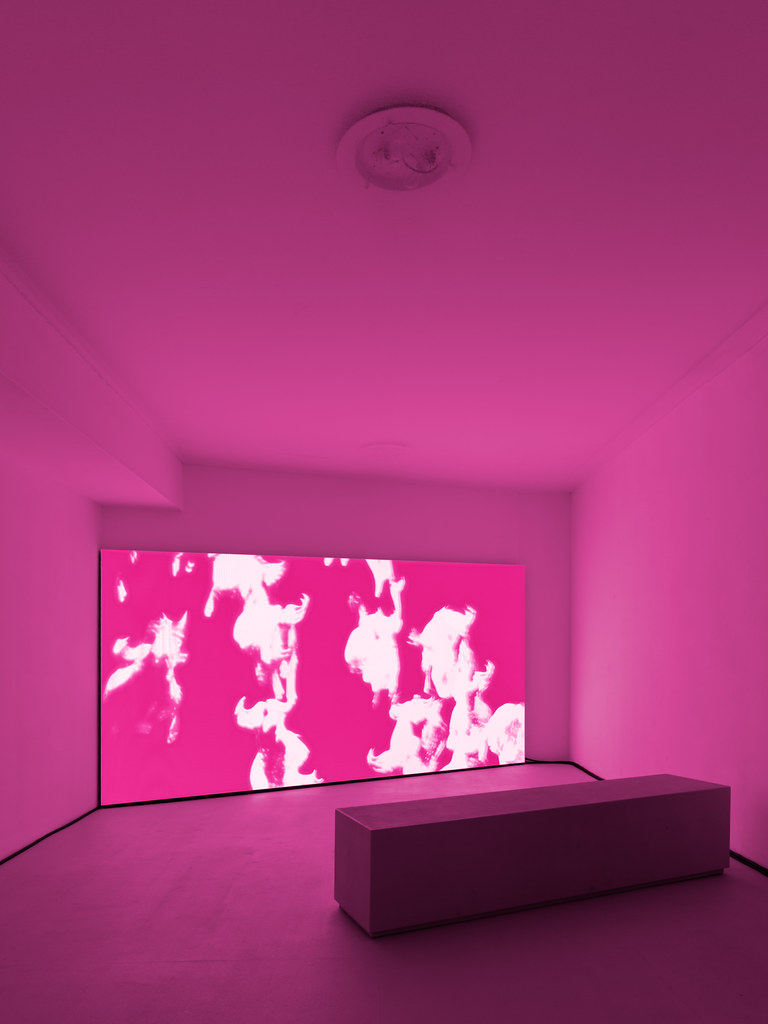
P. Staff, Terminal Lucidity, 2026. Photo: Marco Cappelletti and Giuseppe Miotto. Marco Cappelletti Studio
More artworks from the exhibition:
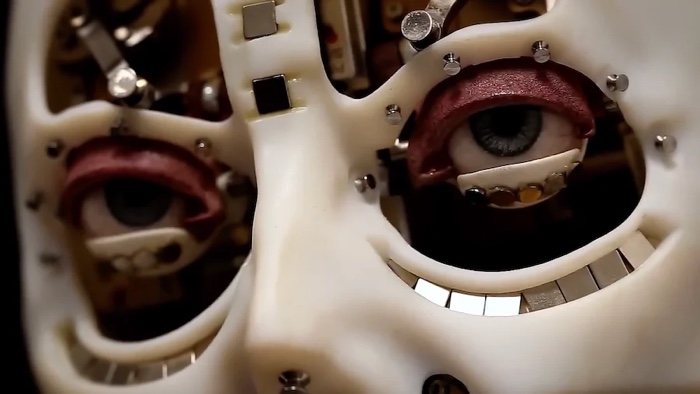
Υuyan Wang, Boring Billion, 2026. Still
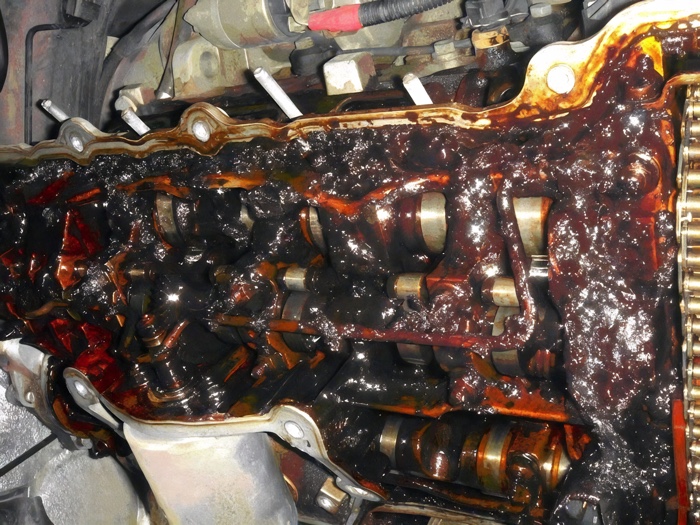
Υuyan Wang, Boring Billion, 2026. Still
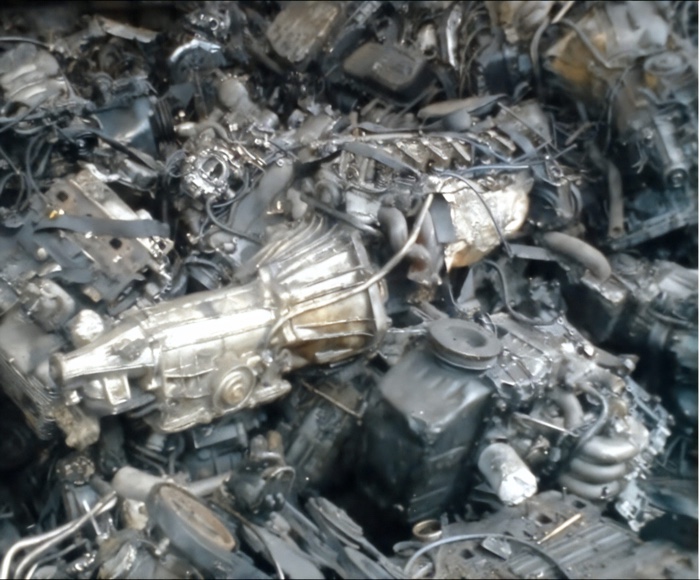
Υuyan Wang, Boring Billion, 2026. Still. Courtesy of the artist and Fondazione In Between Art Film
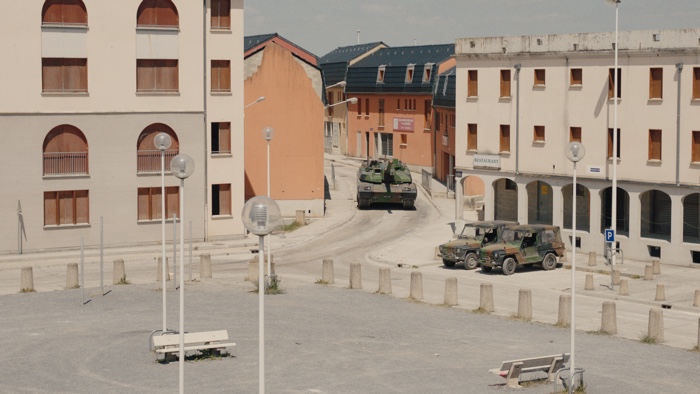
Massimo D’Anolfi and Martina Parenti, 24 Landscapes + A Vision (video still), 2026
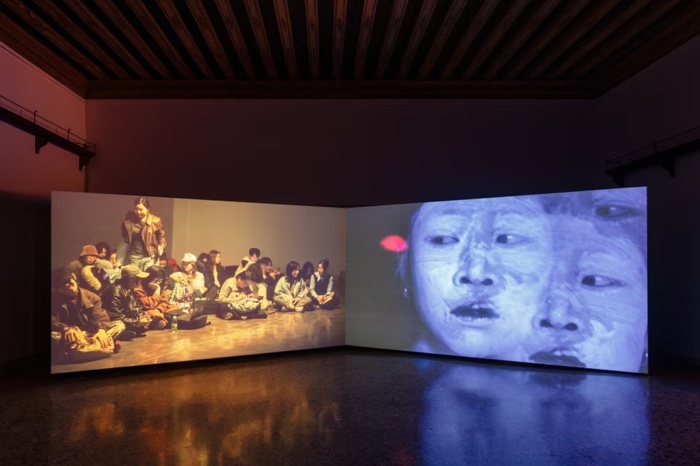
Wang Tuo, The Experimental Paradigm of Ownership and Autonomy, 2026. Production still
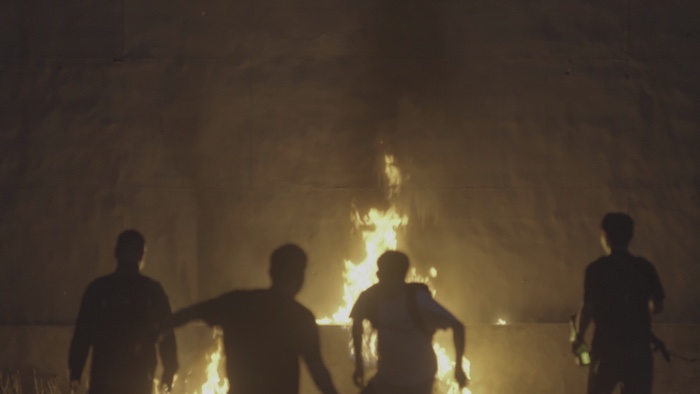
Wang Tuo, The Experimental Paradigm of Ownership and Autonomy, 2026. Production still
Canicula, curated by Alessandro Rabottini and Leonardo Bigazzi, will be open at the Complesso dell’Ospedaletto, Venice until November 22nd. It will be visitable from Wednesday to Monday from 10:00 a.m. to 6:00 p.m. Closed on Tuesdays.