Rehearsing the Unexpected. What an appropriate title for our time! It is the guiding theme of the first Climate Biennial: Art, Industry and Territory which will open on June 12, in Avilés, Asturias.
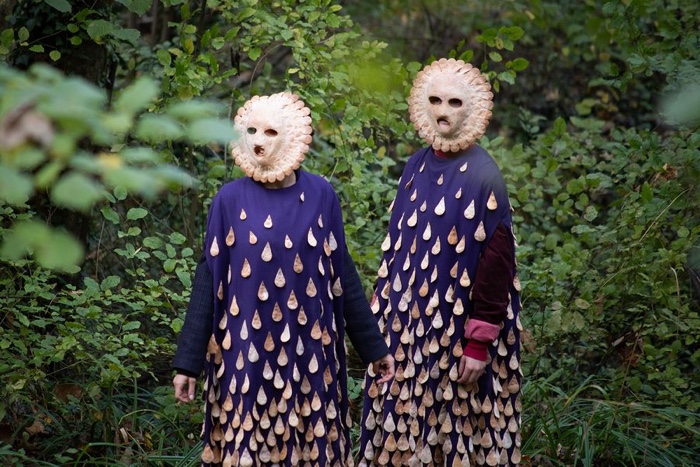
Sara García, Duelos y júbilos, 2025–2026
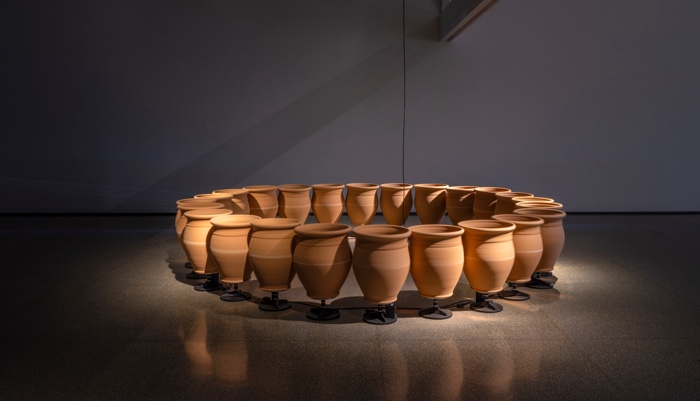
Abelardo Gil Fournier, Hacendera, 2023. Colección Estatal Arte y Clima
Abelardo Gil Fournier, Hacendera, 2023. Colección Estatal Arte y Clima
The biennal postulates that we do not inhabit a single climate, but many overlapping one: environmental, social, political, affective and spiritual. A kind of collective atmosphere that shapes contemporary life.
The event’s subtitle, Rehearsing the Unexpected, captures the biennial’s central idea: learning to navigate moments like ours, when the present is shaky and the future uncertain. In this context, art doesn’t have solutions or answers, but it can be a formidable guide, a tool for orientation that force us to look at the distressing while suggesting sensitive ways to inhabit uncertainty without succumbing to despair.
The choice of Avilés as host city is particularly resonant. Historically one of Spain’s major industrial centres, the city is still shaped by its legacy of steel and heavy industry while transitioning toward a hybrid economy driven by culture, technology and new forms of social life.
The biennial unfolds across multiple venues in Avilés. In cultural centres, industrial heritage sites, historic spaces, but also in rural enclaves across Asturias. Developed through collective research and in dialogue with local actors, the biennial does not impose its own narrative on the territory. Instead, it acts as an amplifier of the energies and ideas already brewing within the community.
The Climate Biennial: Art, Industry and Territory opens next month. I wish I could visit the show, not only for its content but also for the way it was conceived. It is a massive art event that not only showcases but also implements more sustainable ways to inhabit the planet, respectfully and imaginatively. An art event that practices what it preaches: now that’s revolutionary.
My life is absurd enough without me taking a plane to write about the Climate Biennial, so I’ll have to enjoy it from afar. In the meantime, I’ve interviewed Amanda Masha Caminals, the Artistic director of the event.
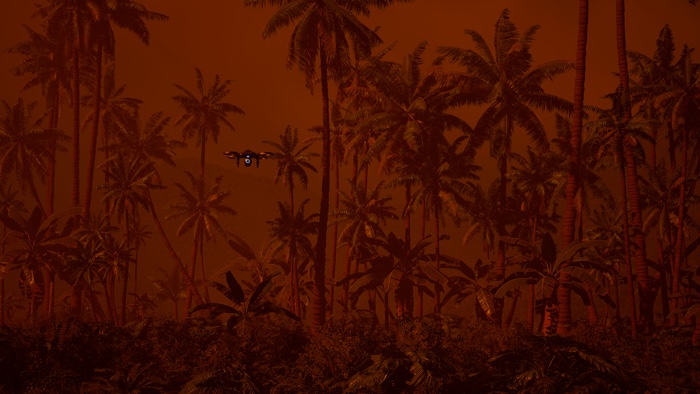
Priyageetha Dia, Lament H.E.A.T, 2023
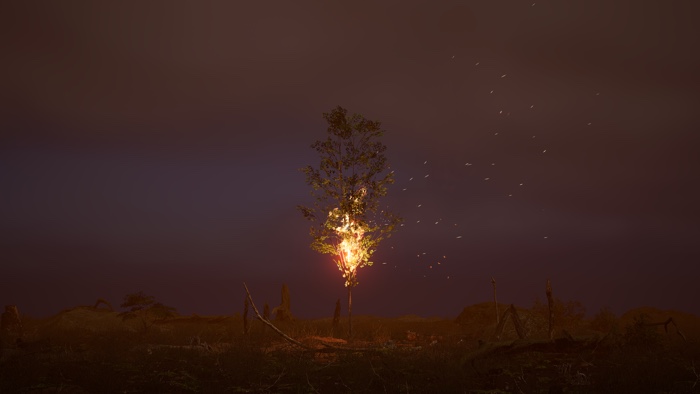
Priyageetha Dia, Lament H.E.A.T, 2023
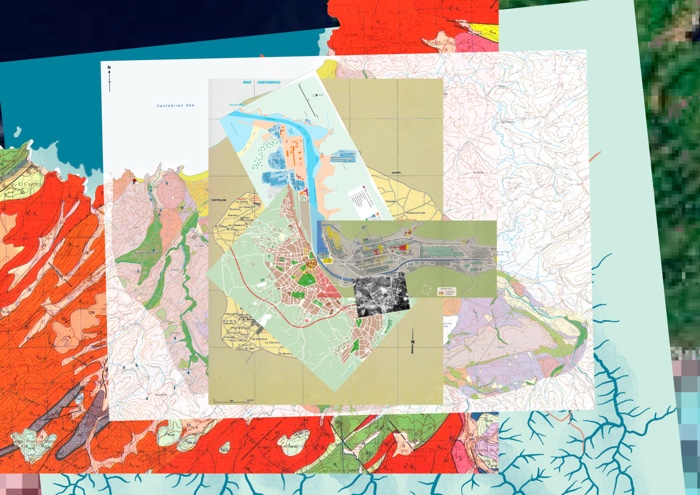
Elisa Cuesta, Cartographic Collage of Avilés, 2024
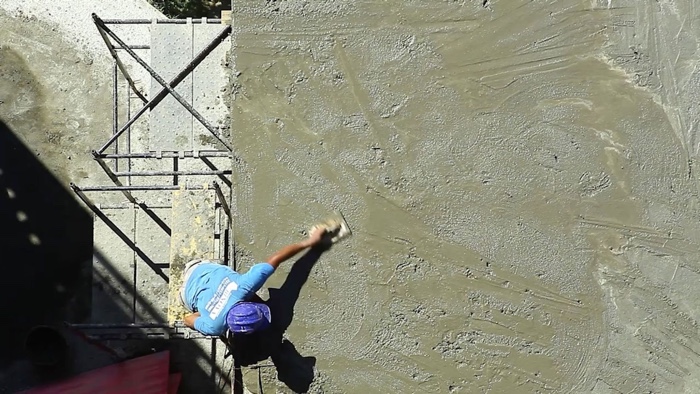
Antje Ehmann and Harun Farocki, Labour in a Single Shot. Concrete, Rio de Janeiro 2012, film still, © Cristián Silva-Avária
Hi Amanda! You are working on the 1st edition of the Climate Biennial: Art, Industry and Territory. The inclusion of “Industry” in the title is intriguing. Many of us might see industry as a root cause of environmental destructions. Could you share the reasoning behind this choice?
Thank you for the question, as it touches the cornerstone of our approach. Bienal Climática starts from the conviction that the ecological transition is not only technological or scientific; it is also cultural, political, emotional and institutional. We are facing both an environmental emergency — marked by global warming, ecosystem degradation and biodiversity loss — and a social crisis characterized by polarization, the erosion of social bonds and the absence of shared frameworks. The biennial approaches “climate” from a perspective of complexity. This is why its “surname” is “Art, Industry, Territory”.
As you point out, industry has been at the center of criticism from many social and activist movements. This criticism plays an important and legitimate role. However, Bienal Climática operates from a different standpoint. It was born from an alliance of organisations that include three Spanish Ministries (Culture, Ecological Transition and Urban Agenda), a regional and municipal government, and a foundation that operates mainly in the third sector, such as Atelier ITD and philanthropic endeavours. It is a multifaceted institutional entity.
Drawing on this diversity, we focus on the deep interconnection between the climate and social crises, and on the broader political and economic structures that cannot be addressed without considering the productive systems and power dynamics in which global conflicts are embedded.
The industrial sector occupies a central role in the so-called green transition — the global process of transforming production, energy, and economic systems toward a low-emission model capable of curbing climate change. Its position is paradoxical. Industry is one of the largest forces shaping the climate and remains one of the most polluting sectors. Yet it is also strategic and indispensable for achieving systemic transformation. The production of essential goods, energy, key materials, and millions of jobs worldwide depend on it.
To speak about industry is therefore to speak about climate in its multiple dimensions: not only atmospheric climate, but also the social climate shaped by global economies, technological shifts, and the future of work. It also means confronting the legacy of the industrial revolutions and extractivism that shaped (and continue to shape) our present. At the same time, discussing an industry currently undergoing reconfiguration requires us to project ourselves into the future — particularly within a geopolitical context in which “reindustrialization” is once again gaining prominence.
Another key element of Bienal Climática is that this conversation is conceived as cross-sectoral. It is not a proposal “from the cultural sector about industry,” but rather an experiment in creating an unexpected space — one where different, and often conflicting, sectors of society come together and engage in productive dissensus. Hence the title of its first edition: Rehearsing the unexpected. For instance, Present Industries, one of the main exhibitions in the programme, will take place at ArcelorMittal University, a campus that coordinates the training and knowledge development of one of Spain’s leading steel companies. There, visitors will encounter works by artists who explore the frictions of ecological transition, such as Carolina Caycedo, Andrea Molina, or Lawrence Abu Hamdan; alongside artists who investigate the imaginaries of innovation, including Elena Lavellés or Asunción Molinos. The programme also features works such as Labour in a Single Shot by Antje Ehmann and Harun Farocki, which examines labour practices across diverse global contexts; or Priyageetha Dia’s Lament H.E.A.T, which examines the historical and socio-cultural conditions of rubber plantations in Malaysia.
This approach is further strengthened by our public programme. The biennial seeks not only to represent tensions and imaginaries, but to create a shared space in which they can be confronted, negotiated, and reimagined collectively and at different levels.
What do we imagine when we speak about industry today? Which figures from the past dominate the collective imagination, and what future projections help construct the shared images, symbols, and beliefs that shape our understanding? How do these imaginaries influence the different climates we inhabit? These are some of the questions Bienal Climática seeks to raise collectively — not to provide definitive answers or an agreement between parties, but to open unexpected spaces for reflection.
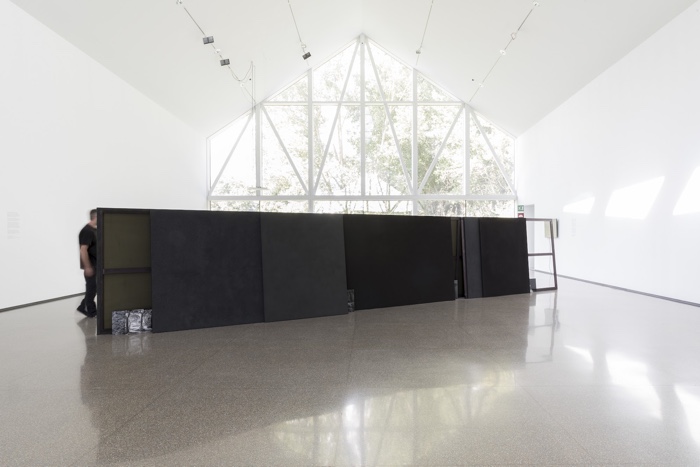
Irene Grau, Sobre A punto de ser nada / on the verge of being nothing (about), 2020 – 2023. Colección Estatal Arte y Clima. © MITECO
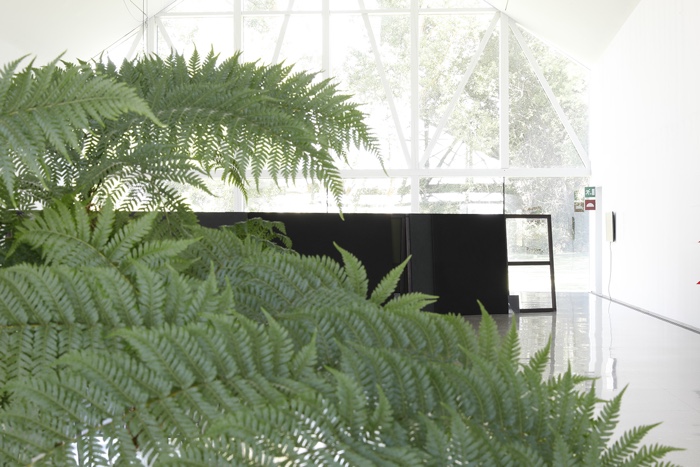
Irene Grau, Sobre A punto de ser nada / on the verge of being nothing (about), 2020 – 2023. Colección Estatal Arte y Clima
Avilés isn’t the first place that comes to mind when thinking about climate change in Spain, where drought in the south often dominates the conversation. How visible and tangible are the effects of climate change in Asturias, and what is Avilés’ unique relationship to this global issue?
The selection of Avilés and Asturias to host the first edition of Bienal Climática is very connected to our approach. Asturias is a territory shaped by a rich mining and industrial history, ongoing processes of reconversion and decarbonization, and rural areas that sustain alternative ways of relating to the land. At the same time, the region is undergoing a pivotal transformation, marked by industrial transition, climate challenges including its growing perception of the region as a “climate refuge” because of its still moderate temperatures in summer, and the urgent need to imagine new socio-economic models.
Public institutions — and particularly the Avilés City Council — are advancing an agenda for change aimed at building a more sustainable and inclusive city, one that is deeply connected to its surrounding territory. This process involves rethinking the industrial future, revitalizing neighborhoods, and empowering young people as active protagonists of both the present and the future. Our engagement with this context has been developed collectively, through dialogue and situated research. It includes a critical cartography project led by Asturian artist Elisa Cuesta (here is the link to the publication but I am afraid it is only in Spanish for now…), as well as cultural mediation processes carried out with local organizations under the guidance of researcher Zoe López. This approach to the territory has guided the curatorial proposal for the first edition, defining the themes that are of interest for citizens. The aim has been that the biennial becomes embedded within the region’s broader transformation or rather responds to it. It connects with the territory, its communities, and its public policies, while also situating these local processes within the wider international debates on climate governance and systemic change.
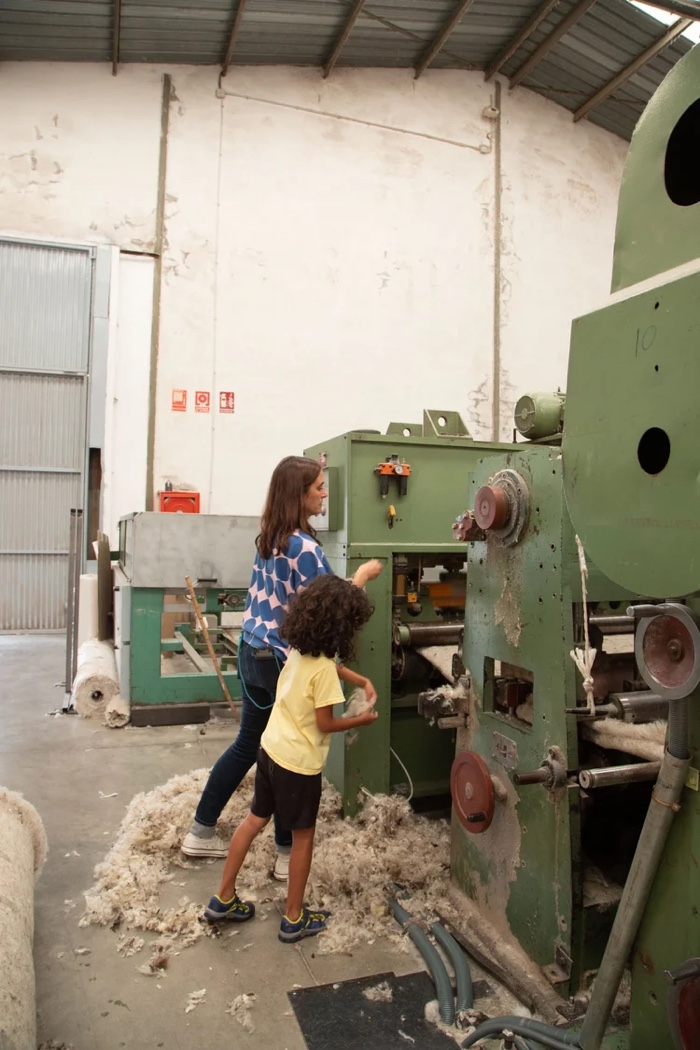
Asunción Molinos Gordo, Mil Leches (A Thousand Milks), 2024
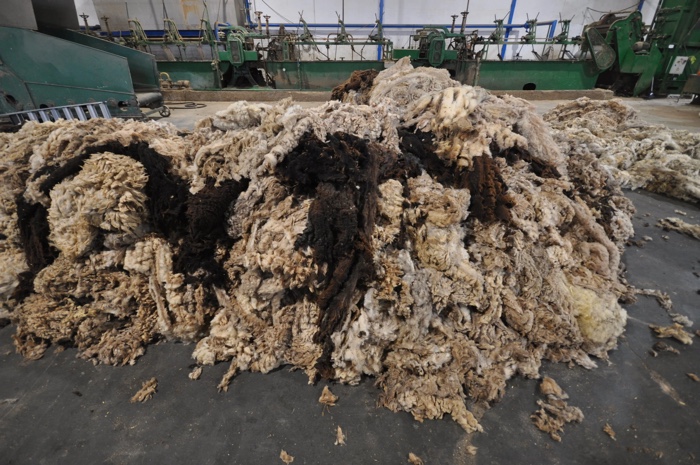
Asunción Molinos Gordo, Mil Leches (A Thousand Milks), 2024
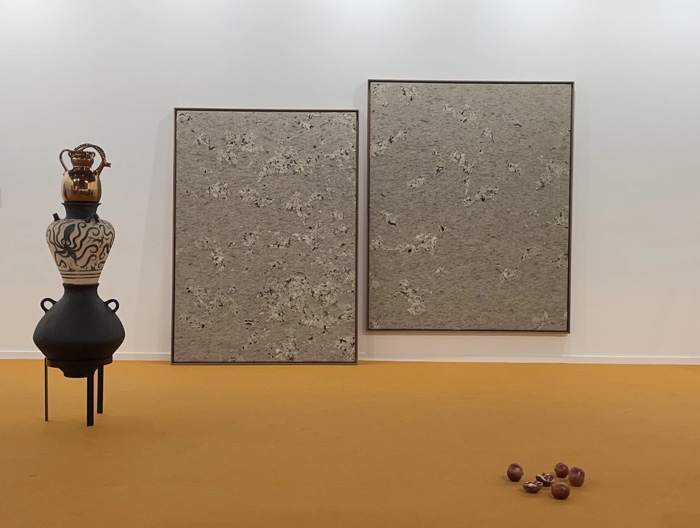
Asunción Molinos Gordo, Mil Leches (A Thousand Milks), 2024
How does the curation, production and running of the biennial reflect the urgency of moving towards sustainable models?
Aware of the structural challenges facing biennials today, Bienal Climática is critically reassessing its governance, curatorial, and production models, integrating sustainability not as an add-on, but as a foundational cultural principle.
Biennials, even when positioned as spaces for critical reflection, often reproduce unsustainable dynamics of production, mobility, and institutional governance. Acknowledging this contradiction, Bienal Climática has committed to revising the ways it creates, produces, curates, and collaborates. Together with Julie’s Bicycle and Smart & Cities, we are developing a comprehensive sustainability policy — conceived not as a closed manual or compliance tool, but as a living framework that remains open, iterative, and under continuous development.
One of the key insights emerging from this process has been the recognition that sustainable practice operates across multiple dimensions. As Julie’s Bicycle emphasizes, sustainability requires looking beyond carbon emissions toward a more holistic approach — one that considers both our areas of control and our areas of influence. While the former relates to operational decisions and measurable impacts, the latter concerns the narratives, relationships, and forms of influence that a platform such as a biennial can generate through its alliances with organizations, partners, and providers across different sectors.
This process is not understood as an isolated internal reform, but as a collaborative endeavour. For this reason, we actively promote and participate in European and international biennial networks. We see them as platforms to experiment collectively with alternative institutional models and more sustainable ways of working. We are learning a lot from other peers such as Autostrada Biennale, in Kosovo; Biennale Val Gherdëina in Italy or the Triennale of Architecture in Lisbon for instance. Ultimately, Bienal Climática approaches sustainability not merely as a technical requirement or thematic concern, but as a cultural question: the capacity to imagine and enact different modes of collective organization. This is, of course, a work in progress, there is still a lot of work to do.
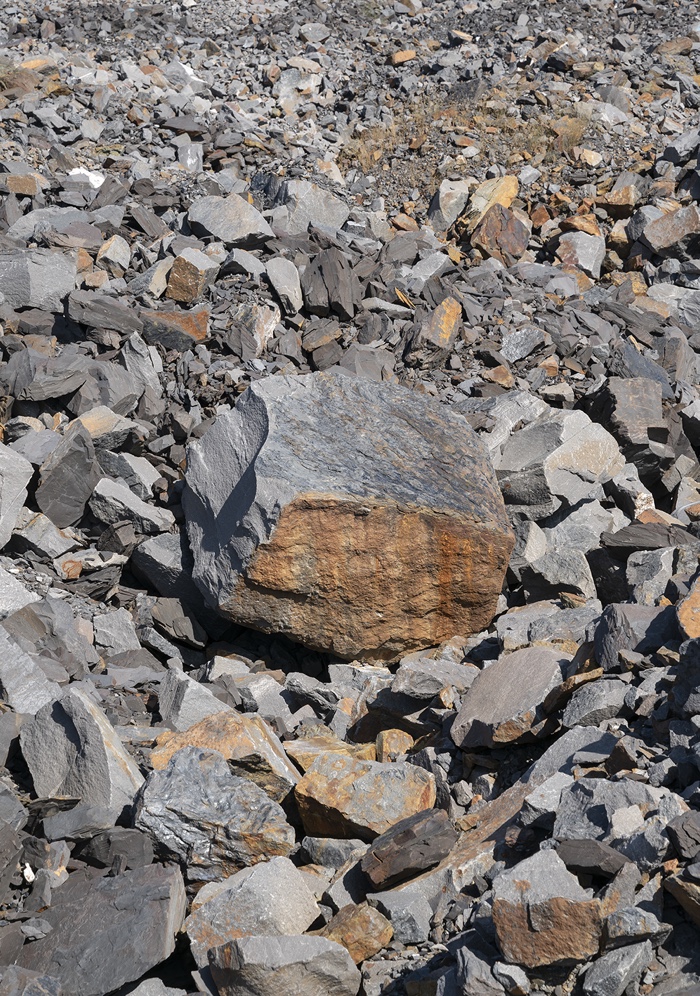
Jorge Yeregui, La escritura de las piedras
What are the challenges of producing and exhibiting art in a way that better aligns with climate goals?
There are two deeply interconnected dimensions: the narrative and the operational. On the narrative level, the challenge is not only what we show, but how and from where we speak. As an initiative rooted in Spain and within the European context, Bienal Climática must constantly reflect on its positionality. Climate change is a global reality, but its impacts and responsibilities are unevenly distributed. Therefore, aligning with climate goals also means incorporating diverse perspectives, knowledges, and lived experiences — particularly those that complicate or challenge dominant European narratives. It requires moving beyond a single authoritative voice and creating space for plural, sometimes uncomfortable, viewpoints.
The second dimension is operational. Here, the challenge is very concrete: how do we reduce emissions, rethink logistics, prioritize circular production processes, and minimize waste? Exhibition-making is traditionally resource-intensive — from transportation and construction to energy use and short-lived scenographies. If we are serious about climate alignment, sustainability cannot be an afterthought; it must shape budgets, timelines, materials, and decision-making structures from the outset.
As the directors of the Klima Biennale Wien have insightfully pointed out to this regard, there are two major operational obstacles: time and vanity. The less time you have, the more likely you are to rely on extractive, high-impact solutions. And the stronger the desire to produce something entirely “new” and spectacular, the harder it becomes to work sustainably.
The art world often rewards novelty and scale — yet sustainability frequently requires reuse, adaptation and continuity. We have identified yet a third challenge: how do we reconcile the narrative aim of incorporating non-western perspectives, with a no flight policy to be sustainable, for instance?
In response to these, our curatorial approach engages with artists and practices primarily. This means that we embrace projects at different stages of development and across different formats. Not every work needs to be newly commissioned or built from scratch. By welcoming artistic practices with varying levels of maturation — including works that can evolve, be recontextualized, or be reactivated — we reduce material impact while fostering long-term artistic research and relationships.
Alongside this, we are also working with the Asturian architecture studio longo+roldán on an exhibition design whose principal element is the cebatu — a traditional form of vernacular construction from Asturias consisting of a woven framework of hazel sticks that can be coated with earth and natural binders to create walls and partitions. This vernacular technique, rooted in local materials and knowledge systems, exemplifies reusable, low-impact building practices and connects the exhibition’s physical structure to broader questions about materiality, place, and climatic adaptation.
We also extend our understanding of artistic practice beyond the exhibition format itself. For example, projects rooted in participatory architecture allow us to engage directly with the long-term transformation of public infrastructure. A case in point is Bibliokepos by Nomad Garden, which focuses on the physical reconversion of the Biblioteca de la Luz in Avilés to adapt it to climate change. This is not a temporary installation but a durable, citizen-participated process that rethinks how public spaces function environmentally and socially. It also challenges and expands models of public governance, demonstrating that climate-responsive cultural work can operate through long-term structural change rather than short-term spectacle.
In this way, sustainability becomes not only a technical constraint but a conceptual and institutional framework that reshapes how we understand artistic production or public responsibility. Ultimately, aligning art production with climate goals is not a single technical adjustment; it is a cultural shift that touches storytelling, institutional structures, governance models, and the values we collectively prioritize.
Some of the participating artists are part of residency programs developed in collaboration with AEMET (the State Meteorological Agency), CIUDEN and the Cultural Factory of Avilés. Could you tell me more about these residencies and the kind of support these organizations provide to the artists?
The ACTS residencies function as living laboratories where art, science, technology and society intersect in the context of ecological and social transitions. Our starting point is the conviction that such transitions require new relationships between institutions, knowledge systems and communities — spaces where different forms of expertise and lived experience can meet on equal terms. The residencies therefore create contexts of research, dialogue and experimentation in which artists do not simply represent climate transformation, but engage directly with the infrastructures, data, territories and public institutions that are actively involved in shaping it.
The ACTS Meteo program, developed with AEMET, brings six artists into direct contact with meteorologists, climate scientists and data infrastructures. AEMET provides access to its observation networks, historical and real-time climate data, forecasting models, and the daily practices through which climate is measured and narrated. Through this collaboration, artists explore not only how climate is scientifically produced and communicated, but also its cultural, political and sensory dimensions — translating atmospheric data, extreme weather events and meteorological observation into new aesthetic and critical forms. The participating artists are Enar de Dios Rodríguez, Víctor Mazón, Rotor Studio, Marion Balac, Natalia Domínguez and filmmaker Nadia Penella.
In ACTS Just Transitions, developed with the Energy Foundation of Spain (CIUDEN), artists work exploring territories undergoing energy transition. CIUDEN contributes technical expertise in renewable energy innovation — including green hydrogen — as well as access to sites, infrastructures and research environments (mainly in their old thermal powerplant in Ponferrada). Here, the focus is both technological and social: artists investigate how regions reshape their identities when productive models shift, what imaginaries emerge around energy transition, and how these transformations are collectively narrated and experienced. In this case we count with the participation of artists Elena Lavellés, Andrea Molina and Mario Santamaría.
The collaboration with the Factoría Cultural de Avilés builds on its existing residency program, integrating local artists into the biennial’s framework. As a former industrial site turned cultural production center, the institution provides studios, production support and a strong connection to the local context. Artists Alba Matilla and Noemí Iglesias develop projects that reinterpret Asturias’ industrial legacy through the lens of ecological transition.
Across all three programs, the residencies unfold over approximately eight months in both on-site and remote formats. Bienal Climática provides curatorial guidance, funding and connects artists with institutional partners and local communities. In exchange, artists bring critical methodologies, imaginative frameworks and new ways of making complex climate processes publicly tangible. The aim is that the residencies become spaces not only of production, but of shared learning — testing how artistic practice can operate within public policy environments and help shape more inclusive, relational and imaginative approaches to ecological transition.
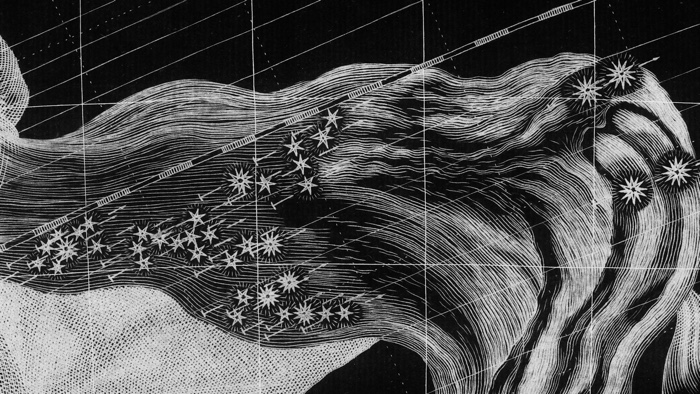
Enar de Dios Rodríguez, Above All, 2025–2026
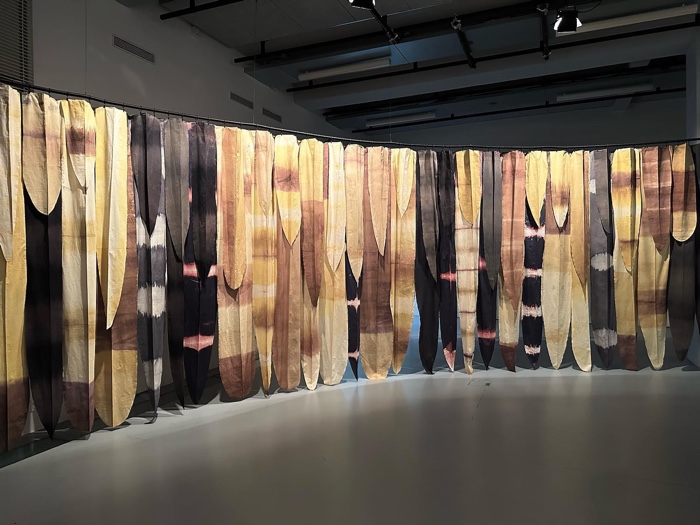
Belen Rodriguez, I danced myself out of the womb, 2023. Colección Estatal Arte y Clima © MITECO
If I understood well, one of the objectives of the biennial is also to engage meaningfully with local audiences. How do you achieve that?
One of the key ideas behind the Bienal Climática is to think of art as a tool that helps us expand the meaning of the public sphere. Throughout the interview I’ve mentioned three main defining features of the biennial: first, working from and with the territory; second, designing the public programme as a networked and cross-sectoral platform; and third, understanding art as a way to broaden what we consider “public”.
Within this framework, we develop initiatives that operate at different levels. On the one hand, we work on expanding the imaginaries of what an ecological transition could be. A key element here is the Bienal’s connection with the State Collection of Art and Climate, promoted by the Ministry for the Ecological Transition (MITECO) in collaboration with the Ministry of Culture. The collection aims to broaden cultural imaginaries around ecological transition, and the relationship with the Bienal is conceived as an ongoing dialogue: each edition and curatorial proposal contributes to building the collection, while the collection itself helps orient and give meaning to the exhibitions. In this way, heritage is understood not as something fixed, but as a living and evolving reality that remains connected to the ecosocial challenges of the present.
But together with such macro-level initiative related, it was also essential for us to gain capillarity across the territory through citizen participation. For that reason we launched the cultural mediation process “En Colectivo” that I mentioned before (guided by Zoe López). Rather than starting projects from scratch, this programme partners with local organisations that are already working with specific communities, in order to strengthen and amplify their work. This includes collaborations with Asturian initiatives and creators with long trajectories, such as La Benéfica in Piloña, Néxodos in Candamo, and the Escuela de Teitau in Somiedo and Teverga… Their projects are characterised by opening up artistic processes to public participation, and together they form a programme of interventions, pieces and activities that have already started, they don’t circumscribe to the event from June to September 2026. In this case, the biennial does not act as a new project imposed on the territory, but rather as a reactive medium that supports and connects existing initiatives.
We also have an art and education line. Through this we have launched a radio programme with three schools in the region — a project that will continue with the local organisation La Benéfica. As well as the participatory architecture project I mentioned by Nomad Garden, Bibliokepos, which is involving different communities of Avilés in the transformation of the library.
Finally, I’d love to hear your thoughts on the role of art in fostering fair climate transition processes.
We have an organised faith in the power of art, as you can probably tell! Art in itself won’t save us, but we do believe it has the capacity to help us live with the trouble, to use Donna Haraway’s terms.
What art can do is open up spaces to imagine other ways of inhabiting the world, to question dominant narratives of progress and development, and to make visible experiences and forms of knowledge that are often left out of policy or technical discussions around climate transition.
For us, a fair ecological transition is not only about technologies or regulations — it is also a cultural and collective process. It requires new imaginaries, new forms of collaboration, and new ways of understanding our relationship with territories and with each other. In that sense, art can play an important role: not by providing solutions, but by habilitating contexts where people can meet and rehearse the unexpected.
Thanks Amanda!
The 1st Climate Biennial: Art, Industry and Territory will take place in Avilés from 12 June to 20 September 2026 under the title Rehearsing the Unexpected.